
Belt and Road Initiative Disputes
Belt and road disputes arise from infrastructure, energy and financing projects with Chinese contractors and lenders across Asia, Africa and beyond. This note explains the typical claims, how contract and finance structures shape them, the main forum choices including ICC arbitration and the CICC, and how to plan enforcement.
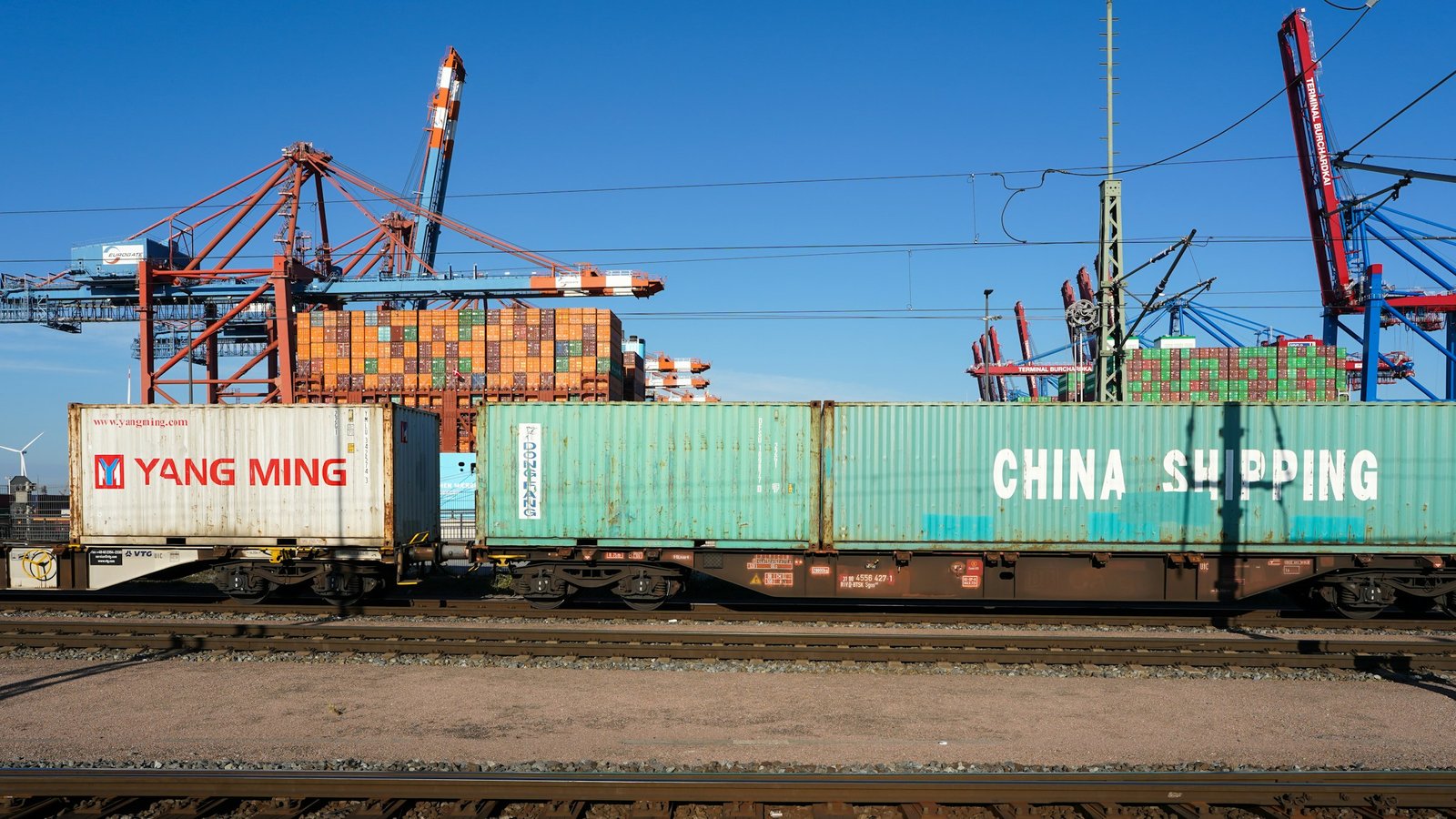
Key takeaways
- Belt and road disputes are mostly construction, energy, finance and state contract disputes with Chinese participants.
- Inconsistent clauses across EPC contracts, subcontracts and loans are a recurring source of parallel proceedings.
- The CICC provisions took effect on 1 July 2018 and expressly aim to serve Belt and Road construction.
- HKIAC joined the CICC one-stop platform on 22 June 2022 as the first institution outside the Mainland.
- Construction and energy made up 43% of new ICC cases in 2025.
- Enforcement planning must address immunity, reservations and Mainland prior reporting from the outset.
What belt and road disputes are
Belt and road disputes are the commercial and investment disputes that arise from projects connected with China's Belt and Road Initiative: ports, railways, roads, power plants, pipelines, industrial parks and telecommunications networks built, financed or operated with Chinese participation across Asia, Africa, the Middle East, Europe and Latin America. They are not a separate legal category. They are construction, energy, finance, joint venture and state contract disputes, but they share a recognisable pattern of parties, contracts, money and politics that shapes how they are best resolved.
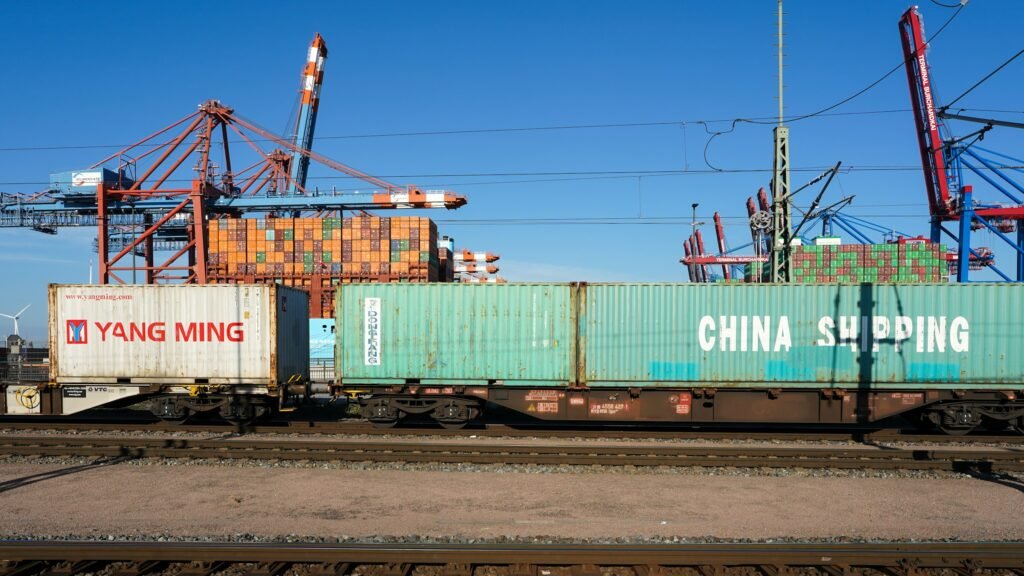
The typical project brings together a host state or state-owned utility as employer, a Chinese state-owned contractor under an engineering, procurement and construction (EPC) contract, Chinese policy or commercial banks as lenders, often a Chinese export credit insurer, and a mix of local and international subcontractors, consultants and suppliers. Each relationship has its own contract and, frequently, its own dispute resolution clause. When a project runs late, costs rise or a government changes, disputes cascade across these contracts.
The Initiative was launched in 2013 and has since shifted from very large flagship projects towards smaller and more commercially structured ones. Many of the projects signed in its first decade are now in operation or in difficulty, which means belt and road disputes increasingly concern completion, performance, payment, debt restructuring and termination rather than tendering. This note sets out the common dispute types, forum choices and enforcement routes, with a focus on ICC arbitration.
Typical belt and road disputes by sector
The table below summarises the disputes we most often see described in this field. The categories overlap, and a single project can produce claims in several of them.
| Sector or relationship | Typical issues | Common contract forms |
|---|---|---|
| Construction and EPC | Delay, extension of time, variations, ground conditions, defects, liquidated damages, termination | FIDIC Silver or Yellow Book, bespoke EPC contracts, Chinese standard forms for subcontracts |
| Power and energy | Tariff payments, capacity charges, change in law, curtailment, fuel supply | Power purchase agreements, implementation agreements, fuel supply agreements |
| Transport and ports | Concession terms, traffic risk, revenue sharing, step-in and termination compensation | Concession and PPP agreements, operation and maintenance contracts |
| Project finance | Payment defaults, restructuring, guarantees, insurance claims, security enforcement | Facility agreements, sovereign guarantees, export credit insurance policies |
| Joint ventures and M&A | Deadlock, capital calls, exit, warranty claims, governance | Shareholders' agreements, share purchase agreements |
| Investor-state | Expropriation, fair and equitable treatment, permits, currency controls | Bilateral investment treaties, investment laws, state contracts |
Construction and energy dominate. ICC's 2025 statistics report that construction and engineering accounted for 28% of new ICC cases and energy for 15%, and that 14% of new cases involved a state or state entity. Those are global figures, not belt and road figures, but they show that the ICC caseload is built around precisely the kinds of disputes the Initiative generates. Our pages on construction and FIDIC disputes and infrastructure and PPP disputes cover the substantive issues in more depth.
The contract and finance architecture
The structure of a belt and road project is often the key to understanding its disputes. Four features recur.
Back-to-back contracts with different clauses. The EPC contract with the employer may provide for ICC arbitration in a neutral seat, while the Chinese contractor's subcontracts with other Chinese companies provide for CIETAC or another Mainland institution, and local subcontracts provide for local courts. Claims that should be heard together end up in different forums. Consistent clauses across the contract chain are the single most valuable drafting step.
Lender influence. Facility agreements with Chinese banks frequently contain their own arbitration clauses, governing law and confidentiality provisions, and the lenders' consent may be needed before a contractor settles or terminates. The banks are often absent from the EPC arbitration but central to its commercial resolution.
Sovereign support. Host states commonly give guarantees, comfort letters or implementation agreements. These raise questions of capacity, authority, immunity and whether the state itself is bound by the project company's arbitration clause; see our page on sovereigns and state-owned entities.
Treaty protection. China has a large network of bilateral investment treaties, and many host states have their own. A Chinese investor may have a treaty claim in parallel with, or instead of, a contract claim. Treaty disputes are usually brought under ICSID or UNCITRAL rules rather than the ICC Rules, but the 2026 ICC Rules recognise the overlap: the emergency arbitrator carve-out for treaty-based disputes now extends to disputes under investment protection laws.
Forum choices for belt and road disputes
Parties to belt and road disputes choose among four broad options: ICC or another international institution with a neutral seat, a Mainland Chinese institution, a Hong Kong or Singapore institution, or the courts of the host state. Each has strengths.
ICC is often the compromise for the main EPC or concession contract because both the host state and the Chinese contractor can regard it as neutral, and because its Court and Secretariat have long experience of construction and state-party cases. ICC's 2025 statistics recorded 102 parties from China, 78 from the Mainland and 24 from Hong Kong SAR, and Singapore was the most selected seat in the region with 42 cases. ICC's offices in Singapore and Hong Kong are described in our note on the ICC Asia offices.
China has also built its own institutions for these disputes. The SPC's provisions establishing the China International Commercial Court (CICC), Fa Shi [2018] No. 11, took effect on 1 July 2018 and state expressly that their purpose includes serving Belt and Road construction, according to the SPC's published text. The CICC hears first-instance international commercial cases where the parties have chosen SPC jurisdiction and the amount in dispute is at least RMB 300 million, and it can deal with preservation measures and the setting aside or enforcement of awards in international arbitrations administered by designated institutions.
That designation is the CICC's "one-stop" mechanism, which links selected mediation and arbitration institutions with the court. According to HKIAC, the SPC added HKIAC to the platform on 22 June 2022 as the first institution outside the Mainland. Parties to arbitrations administered by institutions outside the platform, including ICC arbitrations, should check the current list; where their institution is not designated, they use the ordinary routes to the Intermediate People's Courts for interim relief in Hong Kong-seated cases and for enforcement.
Host state courts remain relevant for interim relief, for disputes with local subcontractors and for enforcement against local assets. They are rarely the preferred forum for the main contract, but they should not be ignored when planning the dispute resolution architecture.
State parties and state-owned enterprises
Almost every belt and road dispute involves a state-linked party on at least one side. On the Chinese side, the contractor is usually a state-owned enterprise. Chinese SOEs are separate legal persons engaged in commercial activity, and they typically arbitrate as ordinary commercial parties without raising immunity. On the host side, the employer may be a ministry, a state utility or a special purpose vehicle owned by the state.
Disputes with host states raise familiar issues: whether the entity that signed had authority under local procurement and constitutional rules, whether approvals were obtained, whether state immunity from execution protects the assets against which an award might be enforced, and whether a change of government affects performance. These issues are best addressed at the contract stage through express waivers of immunity, representations on authority and approvals, and clear identification of the state parties bound by the clause. Our note on ICC arbitration with state entities explains how the ICC Rules deal with them.
In belt and road disputes, the commercial solution often lies with parties that are not in the arbitration: lenders, insurers, ministries of finance and the Chinese parent company. Map these stakeholders at the outset, identify what each needs, and design the procedural timetable so that settlement windows, such as a stay for mediation after the first round of submissions, are built in rather than improvised.
Mediation and settlement in belt and road disputes
Many belt and road disputes settle, and many should. The parties are often locked into long-term relationships, such as an operation and maintenance contract that runs for years after completion, a power purchase agreement with a state utility, or a lending relationship with a policy bank that extends across several projects. A final award that ends the relationship may be worth less than a negotiated adjustment that keeps the project running.
Chinese parties are generally familiar with mediation, and Chinese institutions and courts actively promote it. The CICC framework itself allows the court, with the parties' consent, to refer a case to an expert committee member or a mediation institution within seven days of accepting it. On the ICC side, the 2014 ICC Mediation Rules can be used alongside or before an arbitration, and the ICC Rules allow a settlement reached after the file has reached the tribunal to be recorded as an award by consent under Article 36 of the 2026 Rules. Our page on ICC mediation explains the process.
Timing matters. Mediation tends to work best once each side has seen the other's case in writing and has a realistic view of quantum, but before the costs of document production, expert evidence and a hearing have been incurred. Building a mediation window into the procedural timetable at the first case management conference gives both sides a face-saving route to settlement, which can matter as much to a state-owned contractor as to a host-state ministry.
Enforcement routes and risks
Enforcement planning should start at the drafting stage. An award against a Chinese contractor will usually be enforced in Mainland China, where foreign awards are recognised under the New York Convention, subject to China's reciprocity and commercial reservations, and where any proposed refusal must be approved by the Supreme People's Court under the prior reporting system. Hong Kong-seated awards follow the bilateral Arrangement with the Mainland, which also gives access to Mainland interim measures for qualifying institutions.
An award against a host state or a state utility may need to be enforced in the host state, which can be difficult, or against commercial assets abroad, where immunity questions arise. Where the host state is not a party to the New York Convention, or has made restrictive reservations, the choice of seat and the availability of treaty protection become correspondingly more important. The UNCITRAL status table is the starting point for checking each state's position.
Belt and road disputes also have a political dimension. Projects can be renegotiated at government level, and debt restructurings may be agreed between states. Award creditors should consider how a pending or completed restructuring affects their leverage, and whether settlement through the project's financing structure is more realistic than execution.
Currency is a further practical risk. Many host states that host belt and road projects operate foreign exchange controls, and a state utility may hold its revenues in local currency. An award denominated in US dollars or renminbi may therefore be enforceable in principle but difficult to convert and remit in practice. Contract terms on the currency of payment, offshore accounts and the availability of foreign exchange, together with any sovereign undertakings on convertibility, deserve as much attention as the arbitration clause itself.
Practical steps for belt and road disputes
- Align the clauses. Use compatible ICC clauses across the EPC contract, subcontracts, guarantees and supply contracts, so that the joinder and consolidation provisions of the ICC Rules can operate.
- Use tiered resolution sensibly. Dispute boards and engineer's determinations under FIDIC forms resolve many issues during the project; draft the escalation steps so that they are clear and time-limited. See our page on multi-tier clauses.
- Choose the language and governing law expressly. Chinese, English and the host state's language may all be in play; specify one language for the arbitration.
- Keep contemporaneous records. Delay and disruption claims depend on programmes, site diaries and correspondence that are often kept in more than one language.
- Plan enforcement early. Identify where each counterparty's assets are and whether immunity, currency controls or sanctions could affect recovery.
Illustration: a Chinese contractor building a hydropower plant for a state utility in Central Asia has an ICC clause in its EPC contract, seated in Singapore, while its electromechanical subcontract with another Chinese company refers disputes to a Mainland institution. When the utility withholds payment over alleged defects, the contractor faces claims from its subcontractor in one forum while pursuing the utility in another. Aligned clauses would have allowed both disputes to be heard together.
How TRW & Co helps
We advise contractors, employers, investors, lenders and state entities on belt and road disputes, from clause design and project-stage claims through ICC arbitration and enforcement. Our work includes structuring dispute resolution across multi-contract projects, preparing and defending delay, disruption and termination claims, advising on interplay with financing and insurance arrangements, and planning recovery against state and private counterparties.
Our network offices in Dhaka, London, Dubai, New York, Singapore and Delhi work with independent local counsel in host states and with PRC-qualified counsel where Mainland law issues arise. This note is general information and not legal advice. To discuss a project or a dispute, please contact our team.
Frequently asked questions
Is there a special arbitration regime for Belt and Road projects?
No. Belt and road disputes are governed by the contracts, laws and treaties that apply to each project. Parties can choose ICC or another institution, a Mainland Chinese institution or national courts. China has created specialised bodies, notably the China International Commercial Court and its one-stop platform, but their use depends on the parties' agreement and on jurisdictional thresholds.
Can ICC arbitration be used for disputes with Chinese state-owned contractors?
Yes. Chinese state-owned enterprises regularly agree to ICC arbitration, particularly in EPC and supply contracts with foreign employers. They are separate legal persons engaged in commercial activity and generally participate as ordinary commercial parties. Enforcement against them usually takes place in Mainland China under the New York Convention or, for Hong Kong-seated awards, the bilateral Arrangement.
What is the CICC one-stop mechanism?
It is a platform created under the SPC's 2018 provisions that links the China International Commercial Court with selected mediation and arbitration institutions. Parties to cases administered by designated institutions that meet the thresholds can apply to the CICC for preservation measures, or for setting aside or enforcement of awards. HKIAC was added in June 2022 as the first institution outside the Mainland.
Are investment treaty claims available in Belt and Road projects?
Often, yes. China and many host states have bilateral investment treaties, and some host states have investment laws offering arbitration. Whether a claim is available depends on the treaty wording, the investor's nationality and structure, and the nature of the measure. Treaty claims are usually brought under ICSID or UNCITRAL rules rather than the ICC Rules.
How can parties reduce the risk of parallel proceedings?
Use consistent arbitration clauses, with the same institution, seat and language, across the EPC contract, subcontracts, guarantees and related agreements, and include express consent to joinder and consolidation. Where lenders or insurers will not accept the same clause, consider coordination provisions so that related disputes can be sequenced or heard together.
Sources
- Supreme People's Court: Provisions on Several Issues Regarding the Establishment of the International Commercial Court (Fa Shi [2018] No. 11)
- HKIAC press release: HKIAC included in the CICC One-Stop Platform
- ICC Dispute Resolution 2025 Statistics (PDF)
- UNCITRAL: Status of the New York Convention 1958
- ICC 2026 Arbitration Rules (English text, PDF)
General information only, not legal advice. References to the ICC, the ICC Court and the ICC Rules describe their published rules and practice; TRW & Co is independent of the ICC.
 China & Asia-Pacific
Arbitration in Mongolia and Myanmar
Mongolia and Myanmar arbitration combine modern statutes with frontier-market risk. Both countries have Model Law-based arbitration laws and belong to the New York Convention, but thin… 8 min read
 China & Asia-Pacific
ICC's Asia Offices in Singapore and Hong Kong
The ICC Asia office Singapore Hong Kong set-up lets the Secretariat administer ICC cases from two Asian cities under the same Rules, Court and fees. The… 8 min read
 China & Asia-Pacific
Enforcing Awards in Taiwan
Taiwan arbitration enforcement operates outside the New York Convention. Foreign awards are recognised under Articles 47 to 51 of the Arbitration Law, which mirror the Convention… 8 min read