
Guide · Arbitral Seats
Hong Kong as a Seat for ICC Arbitration
A Hong Kong seat gives an ICC arbitration a Model Law statute, specialist common-law courts and two arrangements with the Mainland that no other seat offers. This guide explains the Arbitration Ordinance, Mainland interim measures for ICC cases, setting aside under section 81, and reciprocal enforcement with the Mainland.
Key takeaways
- The Arbitration Ordinance (Cap. 609), in force since June 2011, applies a single Model Law-based regime.
- The ICC Asia Office qualifies under the Mainland interim measures arrangement, with designations running to 1 April 2027.
- Setting aside under section 81 follows Model Law Article 34, with a three-month time limit.
- The 2021 Supplemental Arrangement allows simultaneous enforcement of Hong Kong awards in Hong Kong and the Mainland.
- Schedule 2 appeals on questions of law apply only if parties opt in expressly.
Why choose a Hong Kong seat for ICC arbitration
A Hong Kong seat places an ICC arbitration under the Arbitration Ordinance (Cap. 609), a Model Law-based statute, and under the supervision of Hong Kong's common-law courts. Its distinctive feature is the link with Mainland China: Hong Kong-seated awards are enforced in the Mainland under a dedicated arrangement rather than the New York Convention, and parties to Hong Kong-seated arbitrations administered by qualifying institutions, including the ICC, can ask Mainland courts for interim measures. For contracts with Mainland counterparties or assets, those features can be decisive.
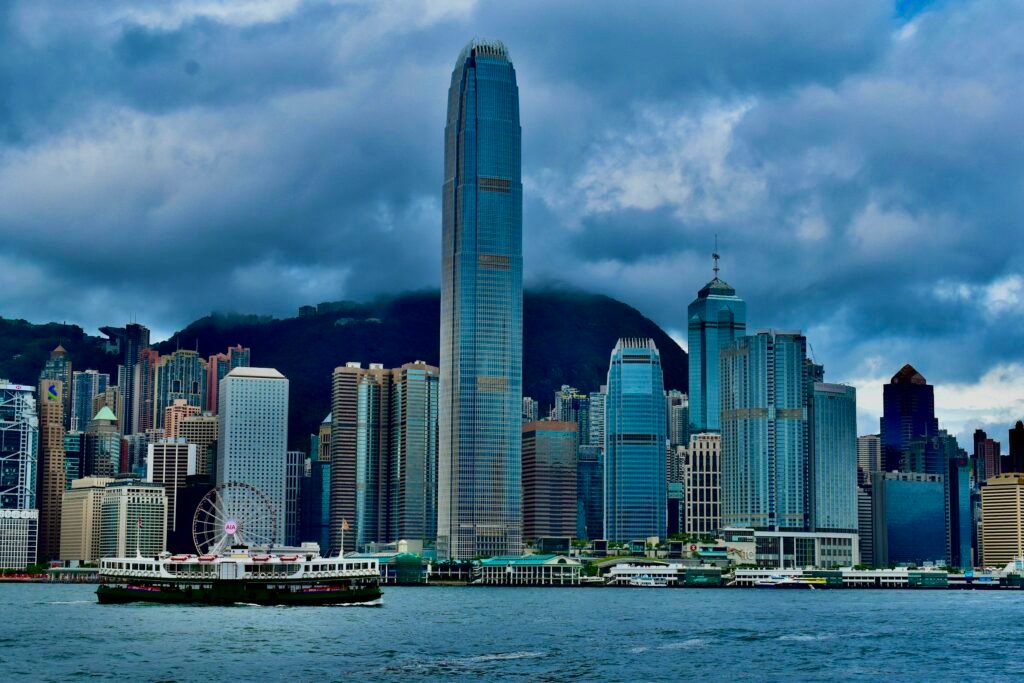
In ICC practice, Hong Kong is chosen less often than Singapore. The ICC Dispute Resolution 2025 Statistics record four ICC cases seated in Hong Kong SAR in 2025, two chosen by the parties and two fixed by the Court, compared with 42 in Singapore. Much Hong Kong-seated arbitration is administered by the Hong Kong International Arbitration Centre, but ICC users have their own local infrastructure: the ICC Secretariat has had an office in Hong Kong since 2008, and 24 parties from Hong Kong SAR took part in ICC cases filed in 2025.
The seat is a legal concept. Under Article 19 of the 2026 ICC Rules, the tribunal may hold hearings wherever it considers appropriate after consulting the parties, so a case with a Hong Kong seat can be heard in Hong Kong, elsewhere or online. What matters for the Mainland arrangements, however, is that the seat is Hong Kong and, for interim measures, that the arbitration is administered by a qualifying institution. Our insight on seat versus venue explains the distinction.
The Arbitration Ordinance (Cap. 609)
The Arbitration Ordinance came into effect in June 2011. It is based on the UNCITRAL Model Law and, unusually, applies a single regime to domestic and international arbitrations alike, limiting court intervention and strengthening confidentiality, as the Department of Justice summarises. Most of the Model Law is incorporated article by article, with Hong Kong-specific provisions around it.
| Topic | Cap. 609 provision | Position for a Hong Kong seat |
|---|---|---|
| Model Law base | Parts 2 to 8 | Model Law articles given effect with Hong Kong modifications; one regime for all arbitrations. |
| Confidentiality | s.18; ss.16 and 17 | Statutory prohibition on disclosure of information about the arbitration and award, subject to exceptions; related court hearings in private by default. |
| Emergency relief | ss.22A and 22B | Emergency arbitrator relief, whether granted in or outside Hong Kong, enforceable with leave of the court. |
| Tribunal interim measures | Part 6 | Model Law interim measures and preliminary orders; enforceable with leave. |
| Court interim measures | s.45 | Court may grant interim measures in support of arbitrations in or outside Hong Kong. |
| Setting aside | s.81 (Model Law Art. 34) | Exclusive recourse against an award; three-month time limit. |
| Opt-in provisions | Schedule 2 | Optional appeal on questions of law, serious irregularity challenge and consolidation, if expressly adopted. |
| Enforcement | Part 10 | Separate routes for Convention awards, Mainland awards, Macao awards and others. |
Schedule 2 deserves attention. Its provisions, including an appeal on questions of law, apply only if the parties opt in expressly (or in certain older domestic arbitration agreements). Few ICC users opt in, and the ICC waiver of recourse in Article 38(3) of the 2026 Rules points the other way. Without an opt-in, the only recourse against an award from a Hong Kong seat is setting aside under section 81.
Funding rules have also been modernised. Third-party funding of arbitration has been permitted since 1 February 2019, under Part 10A and a code of practice, and outcome related fee structures for arbitration, including conditional and damages-based fees, have been fully in force since 16 December 2022. Our insight on outcome related fees in Hong Kong covers the conditions.
The Mainland interim measures arrangement
The Arrangement Concerning Mutual Assistance in Court-ordered Interim Measures in Aid of Arbitral Proceedings was signed by the Department of Justice and the Supreme People's Court on 2 April 2019 and took effect on 1 October 2019. It made Hong Kong the first jurisdiction outside the Mainland where parties to arbitrations seated there can apply to Mainland courts for property, evidence or conduct preservation in support of the arbitration.
The arrangement applies only to Hong Kong-seated arbitrations administered by qualifying institutions or permanent offices. Under the list published on 2 April 2025, nine institutions qualify, including the International Court of Arbitration of the International Chamber of Commerce, Asia Office. The current designations run until 1 April 2027 and can be renewed on reapplication.
- Who can apply. A party to a qualifying Hong Kong-seated arbitration, before the award is made.
- Where. Generally the Intermediate People's Court where the respondent is domiciled or where the property or evidence is located.
- How. Before the arbitration is accepted, through the court directly; once the arbitration is under way, through the institution, which passes the application on.
- Measures. Mainland preservation measures under Mainland law, which may require security.
For ICC users the key point is that the arrangement is available because the ICC Asia Office is a qualifying institution. A Hong Kong seat therefore offers a route to Mainland asset preservation that neither a Singapore nor a London seat provides. Our insight on the HK-Mainland interim measures arrangement covers the procedure in more detail.
If Mainland preservation may be needed, choose Hong Kong as the seat and keep the ICC as the administering institution; do not agree a seat "in Asia" and leave it to the Court. Prepare a Chinese translation of key documents and evidence of the claim in advance, since Mainland courts act quickly and may require security for preservation.
Court support, tribunal powers and emergency relief
Hong Kong courts support arbitration at every stage. Where court proceedings are brought in breach of an arbitration agreement, the court must refer the parties to arbitration unless the agreement is null and void, inoperative or incapable of being performed, applying Article 8 of the Model Law as incorporated by the Ordinance. Applications for stays are common and are generally granted where there is a prima facie arbitration agreement covering the dispute.
Under section 45, the Court of First Instance may grant interim measures in support of arbitral proceedings that have been or are to be commenced in or outside Hong Kong. The court may decline where the measure is currently the subject of arbitral proceedings and it considers it more appropriate for the tribunal to deal with it. Interim measures and orders made by a tribunal, whether in or outside Hong Kong, are enforceable with leave in the same way as court orders.
Emergency relief granted by an emergency arbitrator under institutional rules is also enforceable with leave under sections 22A and 22B, whether the relief was granted in or outside Hong Kong. That gives practical value to the ICC emergency arbitrator provisions, which under the 2026 Rules include preliminary orders and remain unavailable for investment-treaty disputes. Article 29(2) of the 2026 Rules confirms that court applications for interim measures do not waive the arbitration agreement, provided they are notified promptly to the Secretariat and the tribunal.
Practical logistics are straightforward. Hong Kong has established hearing facilities, interpreters and transcription services in English and Chinese, and foreign lawyers may represent parties in arbitration without local qualification, although court applications require Hong Kong solicitors and counsel. Immigration facilitation schemes for arbitration participants have been extended, including, from 3 November 2026, to arbitrations administered by institutions outside Hong Kong with the support of a Hong Kong designated institution, according to the Department of Justice.
Setting aside awards from a Hong Kong seat
Under section 81, which gives effect to Article 34 of the Model Law, an award may be set aside only on the Model Law grounds: incapacity or invalid agreement, lack of proper notice or inability to present one's case, matters beyond the scope of the submission, irregular composition or procedure, non-arbitrability, or conflict with public policy. The application must be made within three months of receipt of the award. There is no review of the merits.
Hong Kong courts apply these grounds narrowly and with a strong pro-arbitration emphasis. Applications are heard in the Construction and Arbitration List of the Court of First Instance by specialist judges. The courts have repeatedly emphasised that the grounds are not a vehicle for re-arguing the case, that a breach must be serious enough to undermine due process, and that the court retains a discretion not to set aside even when a ground is made out. Unsuccessful challenges may attract costs on an indemnity basis.
A leading recent example is C v D, in which the Court of Final Appeal held in 2023 that a dispute about compliance with a pre-arbitration escalation clause went to admissibility rather than jurisdiction, so it was for the tribunal and could not be reopened in a setting-aside application. The decision gives useful certainty for multi-tier clauses in contracts with a Hong Kong seat.
The same restraint applies at the enforcement stage. In Gao Haiyan v Keeneye (2011), the Court of Appeal reversed a first-instance refusal to enforce a Mainland award made after a mediation attempt involving a member of the tribunal, holding that the objecting party, having taken no point at the time, could not rely on the alleged irregularity later. The case is often cited for the principle that parties must raise objections promptly and act in good faith.
Illustration: a Mainland respondent loses an ICC arbitration seated in Hong Kong and argues that the tribunal refused to admit a late expert report. The court will ask whether the refusal was a serious departure from due process that prevented the respondent from presenting its case, not whether the tribunal's case management was ideal. In most such cases the challenge fails, and the claimant can enforce in Hong Kong and the Mainland in parallel.
Enforcement in Hong Kong and the Mainland
Hong Kong-seated awards are enforced in Hong Kong with leave of the court, in the same way as a judgment. Abroad, they are New York Convention awards: the Convention applies to Hong Kong through China's extension of it from 1997, so awards can be enforced in more than 170 contracting states. The Convention does not apply between Hong Kong and the Mainland, which are parts of the same state, so a separate arrangement governs.
The 1999 Arrangement Concerning Mutual Enforcement of Arbitral Awards between the Mainland and Hong Kong was amended by a Supplemental Arrangement signed on 27 November 2020 and fully implemented in Hong Kong on 19 May 2021, as the Hong Kong Government announced. Among other things, the Supplemental Arrangement:
- defines its scope by reference to the seat, so it covers Hong Kong-seated awards under any institution's rules, including the ICC's, and ad hoc awards;
- removes the former bar on applying to enforce in both places at the same time, subject to a cap on total recovery;
- makes clear that recognition, as well as enforcement, may be sought; and
- allows preservation measures to be sought in connection with enforcement applications.
Grounds of refusal under the arrangement broadly mirror the New York Convention. For Mainland counterparties, Hong Kong is often the most predictable route into Mainland enforcement, especially when combined with the interim measures arrangement. The revised PRC Arbitration Law, in force since 1 March 2026, also affects Mainland-seated arbitration and Mainland courts' practice; see our insights on HK-Mainland award enforcement and the China Arbitration Law revision.
Drafting checklist for a Hong Kong seat
- State the seat. "The seat, or legal place, of arbitration shall be Hong Kong." Avoid "Hong Kong, China" ambiguities by referring to the Hong Kong Special Administrative Region if in doubt.
- Keep the ICC as administering institution. That keeps the interim measures arrangement available through the ICC Asia Office.
- Language. English and Chinese are both used in Hong Kong arbitration; choose one language for the proceedings and plan translations for Mainland steps.
- Schedule 2. Decide expressly whether to opt in to any of its provisions; most ICC users do not.
- Multi-tier clauses. After C v D, escalation steps are generally for the tribunal; draft them clearly if you want them to bite.
- Enforcement map. Identify Mainland, Hong Kong and third-country assets early, and consider which group entities hold them. Parallel enforcement under the Supplemental Arrangement is most effective when the claimant knows where to file on day one.
- Confidentiality. Section 18 gives statutory protection, but agree any additional confidentiality terms, for example on use of documents in related proceedings, at the outset.
Users weighing Hong Kong against Singapore should read our comparison of the Singapore and Hong Kong seats.
How TRW & Co helps with a Hong Kong seat
We advise claimants and respondents in ICC arbitrations seated in Hong Kong, typically in disputes involving Mainland Chinese counterparties and South Asian, Middle Eastern or European parties. Working from our offices in Singapore, London, Dubai, Dhaka, New York and Delhi, and with Hong Kong and Mainland counsel where court proceedings are required, we help clients choose and draft the seat clause, plan interim relief under the Mainland arrangement, run the arbitration with setting-aside and enforcement in view, and coordinate parallel enforcement in Hong Kong, the Mainland and elsewhere. To discuss a Hong Kong-seated matter, contact our team.
Frequently asked questions
Can I obtain Mainland Chinese interim measures in an ICC arbitration with a Hong Kong seat?
Yes, if the arbitration is seated in Hong Kong and administered by a qualifying institution. The International Court of Arbitration of the ICC, Asia Office, is on the list published by the Department of Justice on 2 April 2025, with designations running until 1 April 2027. A party can then apply to the competent Intermediate People's Court for property, evidence or conduct preservation before the award.
How are Hong Kong-seated ICC awards enforced in Mainland China?
Under the 1999 Mainland-Hong Kong enforcement arrangement, as amended by the Supplemental Arrangement fully implemented on 19 May 2021, rather than the New York Convention. The amended arrangement covers Hong Kong-seated awards under any rules, allows recognition and enforcement, permits applications in both places simultaneously subject to a cap on recovery, and provides for preservation measures.
How long do I have to set aside an award from a Hong Kong seat?
Three months from receipt of the award, under section 81 of the Arbitration Ordinance, which gives effect to Article 34 of the Model Law. Applications are heard in the Construction and Arbitration List of the Court of First Instance. The grounds are limited to those in Article 34, and the court applies them narrowly and with a discretion not to set aside.
Is an ICC arbitration with a Hong Kong seat confidential?
Largely, yes. Section 18 of the Arbitration Ordinance prohibits parties from publishing or disclosing information about the proceedings or the award, subject to limited exceptions, unless otherwise agreed. Related court proceedings are heard otherwise than in open court by default, although judgments may be published, sometimes anonymised. The 2026 ICC Rules add an express confidentiality duty for arbitrators.
Should I choose Hong Kong or Singapore for an ICC arbitration with a Chinese counterparty?
It depends on where the assets are. A Hong Kong seat gives access to Mainland interim measures and a dedicated enforcement arrangement, which can be decisive where assets are in the Mainland. Singapore offers broad neutrality and the largest ICC caseload in Asia. Both have supportive Model Law-based courts. Consider enforcement first, then the counterparty's preferences.
Sources
- Arbitration Ordinance (Cap. 609), Hong Kong e-Legislation
- Department of Justice: Arbitration in Hong Kong
- HKSAR Government: qualifying institutions under the Interim Measures Arrangement (2 April 2025)
- HKSAR Government: Arbitration (Amendment) Ordinance 2021 commencement (18 May 2021)
- ICC Dispute Resolution 2025 Statistics
General information only, not legal advice. References to the ICC, the ICC Court and the ICC Rules describe their published rules and practice; TRW & Co is independent of the ICC.