
Overview
ICC Arbitration by Sector
ICC arbitration applies one set of Rules across all sectors, but disputes in construction, energy, M&A, finance, trade, technology and state contracts each follow their own patterns. This hub explains how those sectors differ, what the ICC caseload shows and where to find our detailed guidance for each industry.
7In this section
- 01Construction and FIDIC DisputesFIDIC construction disputes pass through notices, Engineer's determinations and the DAAB before reaching ICC arbitration as the final…
- 02Energy, Oil & Gas and RenewablesICC energy arbitration handles a large share of the world’s cross-border oil, gas, LNG, power and renewables disputes.…
- 03M&A and Post-Closing DisputesM&A post-closing disputes over warranties, earn-outs, completion accounts and leakage are a mainstay of ICC arbitration. This guide…
- 04Banking and FinanceBanking and finance disputes are increasingly resolved in ICC arbitration where enforcement abroad, state counterparties or specialist expertise…
- 05Shipping, Trade and CommoditiesShipping and commodities disputes are mostly resolved under LMAA and trade association rules, but ICC arbitration is a…
- 06Technology, Life Sciences and IPTechnology and life sciences disputes, from software failures and SaaS outages to FRAND licensing and pharmaceutical milestone claims,…
- 07Sovereigns and State-Owned EntitiesContracts with sovereigns and state entities raise risks that private deals do not: missing approvals, immunity from execution,…
Key takeaways
- Construction and engineering made up 28% of new ICC cases in 2025, and energy 15%.
- Corporate contracts were 12.4% of contract types, and 14% of new cases involved a state or state entity.
- Contract forms, pre-arbitral steps, experts and remedies differ markedly between sectors.
- The 2026 Rules expedited threshold, early determination and joinder provisions matter differently by sector.
- Align dispute clauses across related contracts so one ICC arbitration can hear connected claims.
Why sectors matter in ICC arbitration
ICC arbitration uses one set of Rules for every industry, but disputes in different sectors look very different in practice. The contract forms, the pre-arbitral steps, the evidence that wins cases, the experts a tribunal needs and the remedies that matter all vary between a FIDIC infrastructure project, an LNG price review, a post-closing M&A claim and a pharmaceutical licence. These guides to sectors explain those differences for the industries that generate most ICC cases, so that general counsel and project teams can plan for the dispute they are most likely to face rather than a generic one.
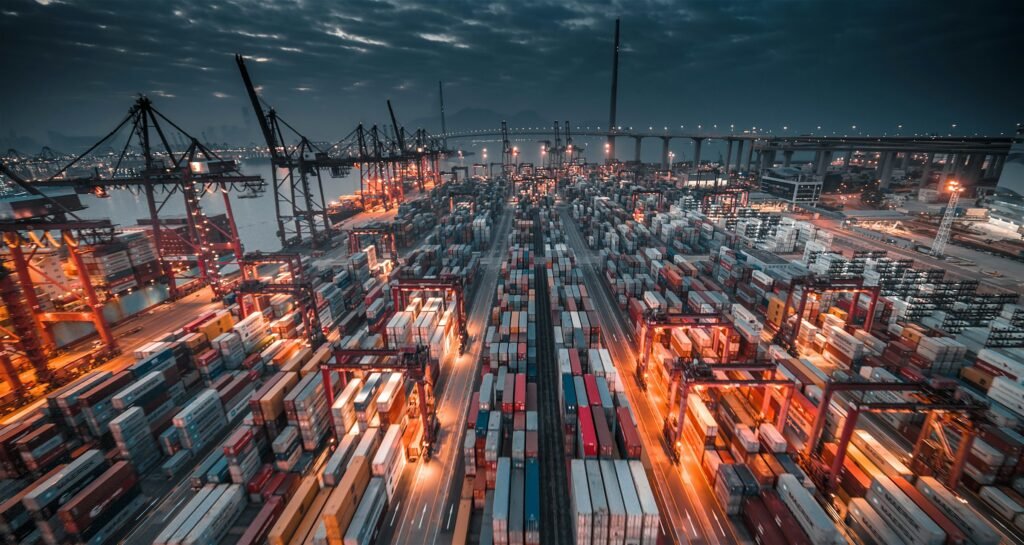
The ICC's own data shows how concentrated the caseload is. According to the ICC's dispute resolution statistics for 2025, 881 new cases were filed under the ICC Arbitration Rules that year. Construction and engineering accounted for 28% of them and energy for 15%, together more than two in every five cases. Health and pharmaceuticals, transportation, telecoms and specialised technologies, industrial equipment, and financing and insurance each accounted for around 4% to 6%.
Sector experience is not a substitute for knowledge of the Rules. The same procedural tools, from the expedited procedure to early determination, are available in every case. What changes is how and when to use them. The pages in this section sit alongside our core guides to ICC arbitration under the 2026 Rules and to enforcement and set-aside.
Industry issues also interact with geography. A construction dispute on a Gulf project, a power purchase dispute in South Asia and a commodity dispute involving an African state trader raise different questions of local law, courts and enforcement, even when the contract is similar. Our regional desks address those local factors, and the guides in this section cross-refer to them where a particular jurisdiction is commonly involved.
The guides are written for decision-makers as much as for lawyers. Each one starts with the questions a general counsel or project director is likely to ask at the outset, such as whether a claim is time-barred, whether a board decision must be paid or whether a state counterparty can be made to honour an award, before turning to procedure and evidence.
The ICC caseload by sectors
The table below sets out the largest sectors in the ICC's 2025 statistics and the guide on this site that addresses each. The figures are the ICC's; the mapping to our pages is ours, and some of our guides cover more than one ICC category.
| ICC sector category (2025) | Share of new cases | Our guide |
|---|---|---|
| Construction and engineering | 28% (246 cases) | Construction and FIDIC disputes |
| Energy | 15% (128 cases) | Energy, oil and gas and renewables |
| Health and pharma | 6% | Technology, life sciences and IP |
| Transportation | 5.5% | Shipping, trade and commodities |
| Telecoms and specialised technologies | 5% | Technology, life sciences and IP |
| Financing and insurance | 4.6% | Banking and finance |
| General trade and distribution | 3.4% | Shipping, trade and commodities |
Two further dimensions cut across these categories. The ICC's full 2025 report records that corporate contracts, such as share transfer, partnership and joint venture agreements, made up 12.4% of contract types, which is where post-closing M&A disputes sit. It also records that 14% of new cases involved a state or state entity as a party, which is why we treat sovereign and state-owned counterparties as a sector of their own. A single dispute may engage several industries at once: a state-owned utility's power project is at the same time an energy, a construction and a state-entity case.
Our guides to sectors
Each guide explains the typical disputes, contract forms, evidence and remedies in the sector, and the ICC Rules provisions that matter most.
Construction and FIDIC disputes
Our guide to construction and FIDIC disputes covers the largest single sector in the ICC caseload. It explains the claims procedure and time bars in Clause 20 of the 2017 FIDIC forms, the Dispute Avoidance/Adjudication Board under Clause 21, the 2022 amendments, the enforcement of binding but non-final board decisions, delay and disruption evidence, and how the 2026 Rules, including the expedited procedure and early determination, operate when ICC arbitration is the final tier. It also identifies the recurring issues of performance securities, delay damages, Exceptional Events and termination that appear on most large projects.
Energy, oil and gas and renewables
The energy, oil and gas and renewables guide addresses long-term relationships in which price, volume and political risk all matter: gas and LNG price reviews, production sharing contracts with host states, power purchase agreements and the growing number of disputes over renewable projects and the energy transition. It looks at expert evidence on markets and valuation, stabilisation clauses, and the overlap between contract claims and investment treaty protection. Because many energy counterparties are state-owned, the guide also flags immunity, approvals and the emergency arbitrator carve-out for treaty-based claims.
M&A and post-closing disputes
Our M&A and post-closing disputes guide covers warranty and indemnity claims, earn-outs, completion accounts and locked-box leakage claims, and the interface between expert determination clauses and arbitration. It considers the role of warranty and indemnity insurance, limitation and notice provisions in share purchase agreements, and the valuation and forensic accounting evidence on which these cases usually turn. It also explains how fraud and misrepresentation allegations, which often accompany warranty claims, affect contractual caps and time limits.
Banking and finance
The banking and finance guide explains when arbitration is chosen over court litigation in loan, derivatives and trade finance documents, and the trade-offs involved, including summary remedies, confidentiality and enforcement against borrowers in emerging markets. It also covers sanctions risk, Islamic finance disputes and the interaction between arbitration and ICC rules for documentary instruments. Lenders considering arbitration for the first time will find a practical comparison of the enforcement benefits and the absence of an appeal on the merits.
Shipping, trade and commodities
Our shipping, trade and commodities guide looks at shipbuilding contracts, disputes adjacent to charterparties, and commodity sale disputes where the parties have chosen ICC arbitration rather than trade-association or maritime arbitration such as LMAA or GAFTA. It deals with Incoterms, quality and quantity claims, letters of credit, sanctions and the speed that trade disputes often demand. It also considers when the expedited procedure, with its sole arbitrator and shortened timetable, is a better fit than a full three-member tribunal.
Technology, life sciences and IP
The technology, life sciences and IP guide covers licensing, SaaS and outsourcing disputes, standard-essential patents and FRAND terms, pharmaceutical research collaborations and milestone payment disputes. It focuses on confidentiality of trade secrets, technical and scientific experts, and tailored procedures such as confidentiality clubs and staged document production. It also addresses how milestone and royalty disputes interact with regulatory approvals and with parallel patent proceedings in national courts.
Sovereigns and state-owned entities
Our guide to sovereigns and state-owned entities deals with contracting with states and state-owned enterprises: capacity, internal and legislative approvals, public procurement constraints, immunity waivers and the special features of the ICC Rules for state parties, such as direct appointment of arbitrators by the Court. It links to our guidance on enforcing awards against states and explains why pre-signature checks on authority are often the most valuable work in the whole life of a state contract.
What changes between sectors
Across the sectors, the same procedural questions arise, but the answers differ. The table below summarises the main variables as we see them in practice.
| Sector | Typical contract forms | Pre-arbitral steps | Decisive evidence |
|---|---|---|---|
| Construction | FIDIC, bespoke EPC and design-build contracts | Engineer's determination, dispute boards | Programmes, site records, delay and quantum experts |
| Energy | Gas and LNG sale agreements, PSCs, PPAs | Negotiation periods, price review triggers, expert determination | Market and pricing experts, regulatory history |
| M&A | Share and asset purchase agreements, shareholder agreements | Notice of claim, completion accounts expert | Accounting and valuation experts, data room records |
| Banking and finance | Loan agreements, ISDA documentation, trade finance instruments | Often none; demand and default notices | Payment records, market data, sanctions analysis |
| Trade and shipping | Sale contracts, shipbuilding contracts, Incoterms | Notice of defects, surveyor reports | Inspection certificates, shipping documents |
| Technology and life sciences | Licences, development and collaboration agreements | Steering committee escalation | Technical and scientific experts, laboratory data |
| State contracts | Concessions, PPPs, procurement contracts | Approvals, negotiation and mediation tiers | Authority and approval records, public law expertise |
Remedies differ too. Construction and trade cases are mostly about payment and damages; energy price reviews ask the tribunal to adjust a contract price for the future; M&A cases may involve price adjustments or rescission; technology cases may require declarations, specific performance or licence terms. Interim relief is often central in commodity, banking and technology disputes, where assets move or trade secrets leak quickly. Our pages on interim measures and evidence and hearings cover the cross-sector tools.
Duration and cost
Duration varies with the size and complexity of the case more than with the industry label, but large construction and energy disputes tend to sit at the longer end. The ICC's 2025 report records an average duration of 27 months, and a median of 23 months, for cases concluded by a final award that year. It also records 169 new cases administered under the expedited procedure in 2025, most of them automatically under the monetary threshold.
Costs follow the ICC's ad valorem scales for administrative expenses and arbitrators' fees, so the amount in dispute drives the institutional element; counsel and expert fees, which usually dominate the budget, depend heavily on how evidence-intensive the industry is.
Funding and insurance
Third-party funding is now familiar in construction, energy and investment-related claims, where claims are large and claimants may prefer to share risk. In M&A disputes, warranty and indemnity insurers often stand behind the seller's position or step into the buyer's claim. In trade and finance, credit insurers and guarantors may be involved. Each of these interests can affect disclosure, conflicts and security for costs, and should be identified at the outset.
Confidentiality concerns also vary by industry. Pharmaceutical and technology parties may need protective orders for know-how, energy parties for commercially sensitive pricing, and state parties for information subject to public disclosure regimes. The 2026 Rules introduce an express confidentiality duty for arbitrators, but they do not make the arbitration as a whole confidential, so parties should agree confidentiality terms or ask the tribunal for orders under Article 23(3), which expressly allows measures to protect trade secrets and confidential information.
How the 2026 Rules apply across sectors
The 2026 ICC Rules, in force for arbitrations commenced on or after 1 June 2026 under Article 1(2), introduce several tools that matter differently from one industry to another.
- Expedited procedure. Under Appendix V, the expedited procedure applies automatically to disputes up to US$4 million for arbitration agreements concluded on or after 1 June 2026, unless the parties opt out. That captures many trade, distribution and smaller technology disputes.
- Highly Expedited Arbitration. The new opt-in track in Appendix VI, with a sole arbitrator and an award within three months of the case management conference, may suit straightforward payment or document-based disputes in trade and finance.
- Early determination. Article 30 allows a party to seek early determination of claims or defences manifestly without merit or manifestly outside jurisdiction, which may be useful against weak warranty claims or speculative counterclaims.
- Multi-party and multi-contract cases. Articles 8 to 11 on joinder, claims between multiple parties, multiple contracts and consolidation are central in construction and energy projects with layered contract structures.
- Disclosure and funding. Article 12 requires each party to give the Secretariat a list of persons and entities for arbitrators' conflict checks, and to disclose any non-party funder with an economic interest in the outcome, which matters in industries where funding is common.
- Emergency arbitrator. Article 31 and Appendix IV provide urgent pre-tribunal relief, but Article 1(3) of Appendix IV excludes agreements arising from a treaty or investment protection law, which matters for state-entity and energy disputes.
The full text is available on the ICC's 2026 Arbitration Rules page, and our guide to the 2026 ICC Rules explains each change.
ICC or specialist forums across sectors
In several industries, ICC competes with specialist institutions or procedures. Maritime disputes are often referred to LMAA arbitration in London, commodity disputes to trade associations such as GAFTA or FOSFA, intellectual property disputes sometimes to WIPO, and accounting disputes in M&A transactions to expert determination. Parties choose ICC in these sectors for reasons that recur: a neutral institution with global reach, administration and scrutiny of awards by the ICC Court, the ability to handle multi-party and high-value disputes, and enforceability under the New York Convention.
When choosing between ICC and a specialist forum, we usually work through the following questions with clients:
- Value and complexity. Is the likely dispute large or technically complex enough to justify full institutional administration and scrutiny of the award?
- Counterparty. Is the counterparty a state, state-owned enterprise or a party in a jurisdiction where enforcement may be contested?
- Related contracts. Will disputes need to be heard together with claims under other contracts in the same project or transaction?
- Industry practice. Does a trade association or specialist procedure offer expertise or speed that the parties value more than institutional features?
- Enforcement map. Where are the counterparty's assets, and what will a court there expect of the award?
The choice should be deliberate. A specialist forum may be faster and cheaper for routine disputes, while ICC may be better suited to complex, multi-contract or high-value cases, or to cases involving states. Hybrid structures are common: an expert determines a completion accounts dispute and an ICC tribunal decides everything else; a dispute board decides construction disputes during the project and ICC hears challenges. Our guide to drafting arbitration clauses explains how to fit these elements together without creating a pathological clause.
When a contract sits across two or more industries, for example an energy project with construction, supply and state-entity elements, align the dispute resolution clauses in all the related contracts. Use the same institution, seat and compatible procedures, so that Articles 8 to 11 of the 2026 Rules can bring related disputes into one arbitration if needed.
Illustration: a solar developer has an EPC contract, a supply contract for modules and a power purchase agreement with a state-owned utility. If all three refer disputes to ICC arbitration with the same seat, a dispute about grid connection delays can potentially be heard in a single proceeding under the multiple-contracts provisions. If the supply contract refers disputes to another institution, parallel proceedings and inconsistent outcomes become more likely. The example is hypothetical.
How TRW & Co helps across sectors
We act for claimants and respondents in ICC arbitrations across these sectors, from offices in Dhaka, London, Dubai, New York, Singapore and Delhi. Our teams combine knowledge of the ICC Rules with an understanding of the commercial context in each industry: project finance and construction in South Asia and the Gulf, energy and power, cross-border M&A, trade and commodities, technology and life sciences, and contracts with states and state-owned enterprises.
We advise on clause drafting before a dispute, early case assessment and budgeting when one arises, and the conduct of the arbitration through to enforcement. We work with independent experts suited to the sector. To discuss a matter, please contact our team.
Frequently asked questions
Which sectors generate the most ICC arbitration cases?
According to the ICC's statistics for 2025, construction and engineering was the largest sector with 28% of new cases filed, followed by energy with 15%. Health and pharmaceuticals, transportation, telecoms and specialised technologies, industrial equipment, and financing and insurance each accounted for roughly 4% to 6% of the 881 new cases filed under the Rules that year.
Do the ICC Rules differ by industry?
No. The same 2026 ICC Rules apply to every sector. The differences arise from the contracts, including tiered dispute clauses, dispute boards and expert determination provisions, and from how tribunals and parties use the procedural tools, such as the expedited procedure, early determination, tribunal-appointed experts and confidentiality orders, in light of the issues in dispute.
When should a party choose ICC over a specialist forum?
ICC is often preferred for complex, high-value, multi-party or multi-contract disputes, cases involving states, and contracts where neutrality and enforceability across many jurisdictions are priorities. Specialist forums such as trade associations or maritime arbitration may be faster and cheaper for routine sector disputes. The right answer depends on the contract, the counterparty and the likely disputes.
How common are state parties in ICC arbitration?
The ICC's 2025 statistics record that 14% of new cases involved a state or state entity as a party, across 42 states and 108 state-owned parties. State parties appear in many sectors, especially energy, infrastructure and construction, which is why capacity, approvals and immunity questions arise well beyond our dedicated state-entities guide.
Can disputes under several related contracts be heard together?
Often, yes. Article 10 of the 2026 ICC Rules allows claims arising under more than one contract to be made in a single arbitration, subject to the conditions in Article 7, and Article 11 allows the ICC Court to consolidate pending arbitrations in defined circumstances. Compatible arbitration clauses across the related contracts make this much easier.
Sources
General information only, not legal advice. References to the ICC, the ICC Court and the ICC Rules describe their published rules and practice; TRW & Co is independent of the ICC.