
Guide · Arbitrators
ICC National Committees and Groups
ICC National Committees and Groups propose candidates when the ICC Court has to appoint an arbitrator. This guide explains the proposal process and deadlines, the governance rules for Nominations Commissions, the nationality constraints, and what parties with links to Bangladesh, India and the UAE should expect under the 2026 Rules.
Key takeaways
- Under Article 14(3), the Court requests a non-binding proposal from a National Committee or Group it considers appropriate.
- Committees usually have 7 days to propose, or 4 days in expedited procedure cases.
- Nominations Commissions must publish their composition; otherwise the committee is not invited to propose.
- Committees cannot charge for proposals, propose their own members or require local institutional membership.
- A Court-appointed sole arbitrator or president must not share a party’s nationality, shaping which committee is asked.
- ICC lists Nomination Commissions for the national committees in Bangladesh, India and the UAE.
What ICC National Committees do in ICC arbitration
ICC National Committees and Groups are the country-level branches of the International Chamber of Commerce, and in ICC arbitration their main role is to propose candidates when the ICC Court has to appoint an arbitrator. Under Article 14(3) of the 2026 ICC Rules, the Court requests a proposal from the National Committee or Group it considers appropriate. The proposal is not binding: the Court may accept it, ask again, turn to another committee or appoint directly. Parties never deal with ICC National Committees on appointments; the channel runs between the Court’s Secretariat and the committee.
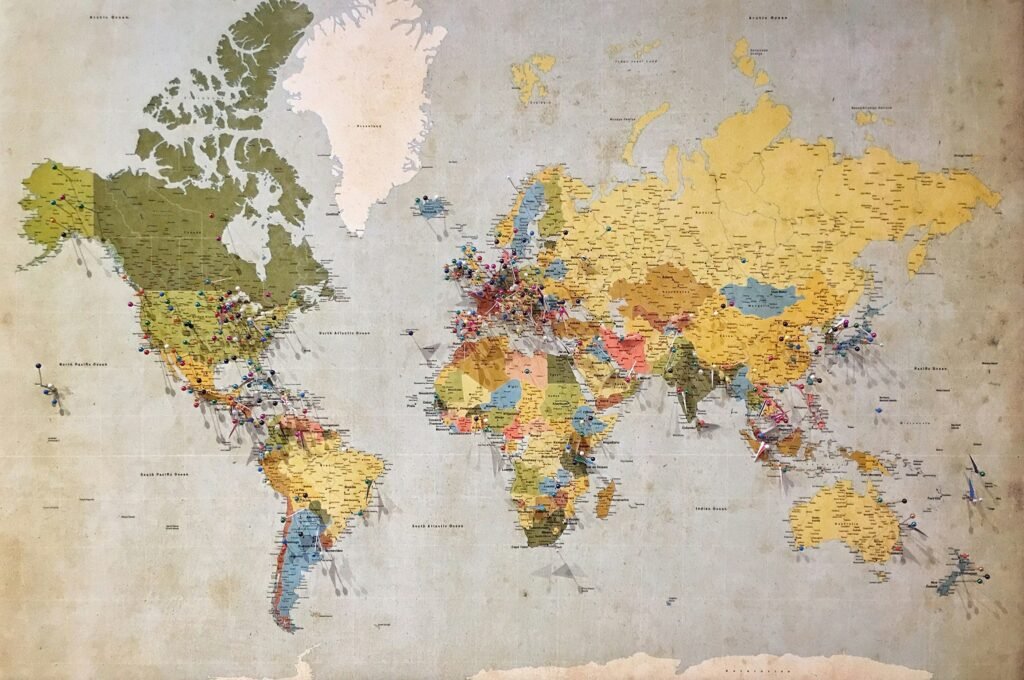
Outside arbitration, ICC describes its National Committees as the backbone of its global network: they bring together member businesses in a country, help shape ICC policy and relay business concerns to governments. The arbitration function is narrower and highly regulated. A dedicated ICC document, the Note to ICC National Committees and Groups on the Proposal of Arbitrators (updated with effect from 1 June 2026), sets out how committees must organise themselves, manage conflicts and choose candidates.
National Committees also matter to the Court’s own composition. Under Appendix I to the Rules, the ICC World Council appoints one Court member for each National Committee or Group, based on the committee’s proposal and criteria set by the Court’s President, although once appointed, Court members are independent from the committees. This page focuses on the proposal of arbitrators and on what parties with links to Bangladesh, India and the UAE should expect. For the wider appointment framework, see appointment by the ICC Court.
How a proposal from ICC National Committees works
The process is short and runs to tight deadlines. The Court chooses a committee, as a matter of principle, because it considers that a national or resident of that country would be an appropriate arbitrator in the case. It may invite several committees at once, and may ask a committee for more than one name. The Secretariat’s request letter describes the case: the parties and related entities, counsel, any arbitrators already in place, the seat, the language, the applicable law, the nature of the dispute and the amount in dispute where known.
| Stage | What happens | Source |
|---|---|---|
| Court decides to appoint | Party default, no agreed sole arbitrator or president, or multi-party deadlock | 2026 Rules, Art. 13 |
| Request for proposal | Court selects one or more National Committees or Groups; Secretariat sends case information | Rules Art. 14(3); NC Note paras 6–7, 36 |
| Conflict screen within the committee | Nominations Commission members confirm within one business day that they have no relationship with the parties, or step aside | NC Note para 22 |
| Candidate preparation | Candidate completes the ICC Case Connect profile or CV and the statement of acceptance, availability, impartiality and independence | Rules Art. 12(2); NC Note para 44 |
| Proposal deadline | Usually 7 days from the Secretariat’s letter, or 4 days in expedited procedure cases; limited extensions only exceptionally | NC Note para 30 |
| Court decision | Court appoints, repeats the request, asks another committee or appoints directly | Rules Art. 14(3); NC Note para 31 |
Committees are encouraged to consult the Secretariat before submitting a proposal, and those discussions are confidential: their content must not be passed to the candidate. The committee normally handles all communications with the candidate, must make clear that only the Court appoints, and tells the candidate if the Court decides not to appoint. If the candidate files a qualified statement, meaning one containing a disclosure, the committee must confer with the Secretariat about whether the proposal remains appropriate; a disclosure does not by itself rule out appointment.
One structural safeguard limits concentration: the Court will generally not appoint the same arbitrator more than once in any 12-month period, although the limitation does not apply to emergency arbitrators. The Court also informs committees promptly about direct appointments of their nationals or residents and shares annual statistics on such appointments with them.
Availability receives particular attention. Committees are told to draw candidates’ attention to the availability section of the statement, which must give thorough information on the number of pending cases and on existing commitments, although the nature and details of those commitments need not be disclosed. A well-qualified candidate who cannot hold a hearing within a reasonable time is unlikely to be appointed.
Nominations Commissions and the rules that bind them
To ensure neutrality, ICC National Committees are encouraged to set up a Nominations Commission in charge of proposing arbitrators; a committee that chooses another method must tell the Secretary General how proposals will be made. The Note sets clear governance standards. Members should be experienced in arbitration; in-house counsel cannot serve; members may not hold positions in another arbitral institution without the Secretary General’s agreement; and terms are normally limited to three years, renewable once. Membership should reflect the diversity of the local arbitration community, with best efforts towards gender parity.
Transparency is a condition of participation. Committees must publish the composition of their Nominations Commission, or their alternative method, on their own website or through a dedicated section of the ICC website, and keep it up to date. A committee that fails to do so will not be invited to propose arbitrators. ICC maintains a public table of National Committee Nomination Commissions for this purpose.
Each committee also designates a Contact Person, a staff member or commission member, who coordinates the Court’s requests and serves as the link between the Nominations Commission and the Secretariat. Members must be wholly excluded from any proposal in which they, their employer or their firm may be interested in any capacity, and anyone who fails to confirm the absence of a conflict within one business day may not work on that proposal.
The Note also contains firm prohibitions:
- Nominations Commissions may not propose their own members, and must disclose to the Secretariat any proposal of a relative or colleague of a member.
- Committees may not require candidates to be members of the committee, of any other institution, or to have sat for a local dispute resolution provider.
- Committees may not accept or require any payment, benefit or compensation for proposals or for listing arbitrators.
- Internal lists may be kept, but proposals must not be confined to them.
- Members and staff involved in proposals are bound by confidentiality and sign a non-disclosure agreement.
Court members cannot be proposed (Appendix II, Article 2(2) of the Rules). Prior ICC arbitrator experience is not a prerequisite unless the Court specifically requires it, and for lower-complexity cases committees are encouraged to propose new or younger arbitrators with counsel or tribunal-secretary experience to widen the pool.
Nationality, residence and the choice of committee
The Court’s choice of committee is effectively a choice of nationality or residence for the arbitrator. That makes the neutrality rules decisive. When the Court appoints a sole arbitrator or president, the appointee must not share the nationality of any party unless the Court derogates in appropriate circumstances and no party objects (Article 14(5)). The Note to ICC National Committees therefore tells committees to check whether a candidate for sole arbitrator or president holds more than one nationality and to ensure none coincides with a party’s nationality.
Committees are not limited to nationals. If the Secretariat so indicates, they may propose people domiciled or resident in the country. Where the amount in dispute is relatively low, the Court may ask for a candidate residing at or near the seat to keep costs down. In arbitrations based on a treaty or an investment protection law, Article 14(6) excludes any arbitrator sharing a party’s nationality unless the parties agree otherwise, which narrows the committees the Court can sensibly approach.
Illustration: a dispute between a Singapore contractor and a Bangladeshi employer, seated in London with English law governing, needs a Court-appointed president. Neither a Singaporean nor a Bangladeshi national can be appointed without derogation, so the Court is likely to look to ICC National Committees in third countries whose arbitrators are familiar with English law and construction disputes. If instead the Bangladeshi employer failed to nominate its own co-arbitrator, the Court could choose to approach the committee in Bangladesh for that seat on the tribunal, since the nationality bar applies only to the chair and sole arbitrators.
ICC Bangladesh, ICC India and ICC UAE
The ICC network includes National Committees in Bangladesh, India and the United Arab Emirates, and each appears in ICC’s published table of Nomination Commissions. That listing is the starting point for any party that wants to understand who may be proposing candidates from those jurisdictions. Each committee’s composition can change, so parties should check the current listing rather than rely on older information.
ICC Bangladesh is the national committee for a market where ICC clauses frequently appear in power, infrastructure, telecoms and trade-finance contracts with foreign counterparties. ICC India operates an India Arbitration Group that, according to its own website, promotes ICC dispute resolution in India and has constituted a selection committee for arbitrators. In the UAE, the ICC national committee runs a Commission on Arbitration and ADR alongside its wider business activities. The governance rules in the Note to ICC National Committees apply equally to each of them when they respond to a Court request.
For parties from these jurisdictions, the practical significance is twofold. First, where the Court needs a co-arbitrator for a defaulting party, or an arbitrator with deep knowledge of local law in a case seated elsewhere, it may approach the relevant committee. Second, because a Court-appointed chair cannot share a party’s nationality, cases involving Bangladeshi, Indian or Emirati parties will generally see presidents proposed by committees in other countries.
State participation changes the picture. Where a party is, or may be considered, a state, a state entity or an international organisation, Article 14(4)(a) allows the Court to appoint directly without asking any committee. Disputes with state-owned utilities, ports or development authorities in Bangladesh, India or the Emirates may therefore see Court-selected arbitrators with no National Committee involvement at all. Our South Asia desk and Middle East desk pages discuss regional practice in more detail.
What changed in 2026
The 2026 revision kept the National Committee route but adjusted its wording and surrounding powers. Under the 2021 Rules, the Court made appointments “upon proposal” of a National Committee or Group; the 2026 text says the Court “shall request a proposal”, which better reflects the non-binding nature of what committees provide. The time limit for a committee to respond is now fixed by the Secretariat rather than the Court, consistent with the practical reality that the Secretariat runs the request process.
The direct appointment powers were broadened and simplified. International organisations joined states and state entities as parties whose involvement allows direct appointment, and the residual power no longer depends on the President certifying exceptional circumstances to the Court; it is enough that the Court considers direct appointment necessary and appropriate. At the same time, Article 14(1) added experience and expertise to the listed factors, which committees are expected to apply when they choose whom to propose.
The updated Note to committees applies whichever version of the Rules governs the case, including the 2017, 2021 and 2026 Rules, and applies with necessary adjustments to other appointments ICC makes on committee proposals, such as mediators and experts. Parties in legacy arbitrations should therefore expect the same committee governance standards even where the older Rules apply to the procedure.
What parties can and cannot do
Parties have no right to be consulted by ICC National Committees and should not contact committee members about a pending proposal; doing so risks undermining the confidentiality and neutrality the Note is designed to protect. Their influence comes through the Secretariat and the Court. The Request, the Answer and any submissions on the constitution of the tribunal shape the case description sent to the committee, and the Article 12(5) list of relevant persons and entities shapes the conflict checks.
Describe the dispute’s governing law, technical subject matter, language needs and any required qualifications clearly in your first filing, and complete the Article 12(5) list carefully. The Secretariat’s request to ICC National Committees draws on that material, so it directly affects the profile of the candidate who is proposed.
Once the candidate is identified, the parties receive the statement and profile and may comment on any disclosure within the time fixed by the Secretariat. An objection goes to the Court, and an appointed arbitrator can still be challenged under Article 15 within 30 days of notification or of learning the relevant facts. Parties who prefer more control can agree a list procedure, described in the 2026 Note to Parties and Arbitral Tribunals, or jointly ask the Secretariat to suggest candidates. See also our guides to disclosure and independence and challenges and replacement.
How TRW & Co helps
We advise parties on how the ICC appointment machinery is likely to operate in their case, including which ICC National Committees the Court may approach given the parties’ nationalities, the seat and the governing law. Our teams in Dhaka, London, Dubai, New York, Singapore and Delhi prepare submissions that frame the profile of a Court-appointed arbitrator, compile the Article 12(5) list, review candidates’ statements and disclosures, and prepare objections or challenges where justified.
We work regularly with parties from Bangladesh, India and the Gulf on contracts that use ICC clauses, and we can review clause drafting before a dispute arises. TRW & Co is independent of ICC and its National Committees. To discuss a matter, contact our arbitration team.
Frequently asked questions
Are ICC National Committee proposals binding on the ICC Court?
No. The 2026 Note to ICC National Committees and Groups states that proposals are non-binding and the Court has full discretion whether to appoint a proposed candidate. If the Court does not accept a proposal, or none is made in time, it may repeat the request, approach another committee or group, or appoint directly any suitable person under Article 14(3) of the 2026 Rules.
Can a party contact the National Committee about a proposal?
Parties should not. The proposal process runs between the Secretariat and the committee, and the Note requires confidentiality from Nominations Commission members and staff. A party’s influence comes through its submissions to the Secretariat and Court, its Article 12(5) list of relevant entities, and its right to comment on or object to the candidate’s statement once circulated.
How quickly must a National Committee propose an arbitrator?
Within the deadline in the Secretariat’s request letter, which the Note says is usually seven days, or four days in cases under the Expedited Procedure Provisions. A committee may ask for a limited extension only in exceptional circumstances. In highly expedited cases, the Court appoints the sole arbitrator directly if the parties do not jointly nominate within 20 days.
Does ICC Bangladesh propose arbitrators in cases involving Bangladeshi parties?
It may, depending on the role to be filled. A Court-appointed sole arbitrator or president cannot share a party’s nationality without an agreed derogation, so chairs in such cases usually come from other countries. Where the Court must appoint a co-arbitrator for a defaulting party, or wants local-law expertise, it may choose to approach the committee in Bangladesh. The choice always rests with the Court.
Can a National Committee require that arbitrators be its members?
No. The Note prohibits committees from requiring that a candidate be a member of the committee, of any other institution, or have acted for a local dispute resolution provider. Committees also may not accept any payment or benefit for proposals or for listing arbitrators, and must not confine proposals to any internal list they maintain.
Sources
- ICC, Note to ICC National Committees and Groups on the Proposal of Arbitrators (1 June 2026)
- ICC, National Committee Nomination Commissions
- ICC, 2026 Arbitration Rules (official page and text)
- ICC, Note to Parties and Arbitral Tribunals on the Conduct of ICC Arbitration (1 June 2026)
- ICC, Global network and National Committees
General information only, not legal advice. References to the ICC, the ICC Court and the ICC Rules describe their published rules and practice; TRW & Co is independent of the ICC.