
Guide · Evidence & Hearings
Fact Witnesses and Expert Evidence in ICC Arbitration
Witnesses and experts give most of their evidence in writing in ICC arbitration, then face cross-examination and tribunal questions at the hearing. This guide explains Article 26 of the 2026 Rules, the IBA Rules on statements and reports, party versus tribunal experts, hot-tubbing and remote testimony.
Key takeaways
- Article 26 of the 2026 ICC Rules lets tribunals hear party witnesses and experts and appoint their own experts.
- Under IBA Article 4.2 a party’s own officers and employees may testify as witnesses.
- Witness statements usually replace oral evidence-in-chief; cross-examination tests them at the hearing.
- Party-appointed expert reports must disclose instructions and include a statement of independence.
- The 2026 Note to Parties encourages joint expert meetings, joint reports and hot-tubbing.
- Expedited cases may limit written witness evidence or proceed with no oral testimony.
How ICC tribunals treat witnesses and experts
In ICC arbitration, fact witnesses and experts usually give their evidence in writing first, through signed witness statements and expert reports filed with each round of submissions, and then appear at the hearing to be cross-examined and questioned by the tribunal. Under Article 26 of the 2026 ICC Rules the tribunal may hear witnesses and party-appointed experts and may appoint its own experts after consulting the parties. The detailed practice is set in the procedural order, almost always by reference to the IBA Rules on the Taking of Evidence.
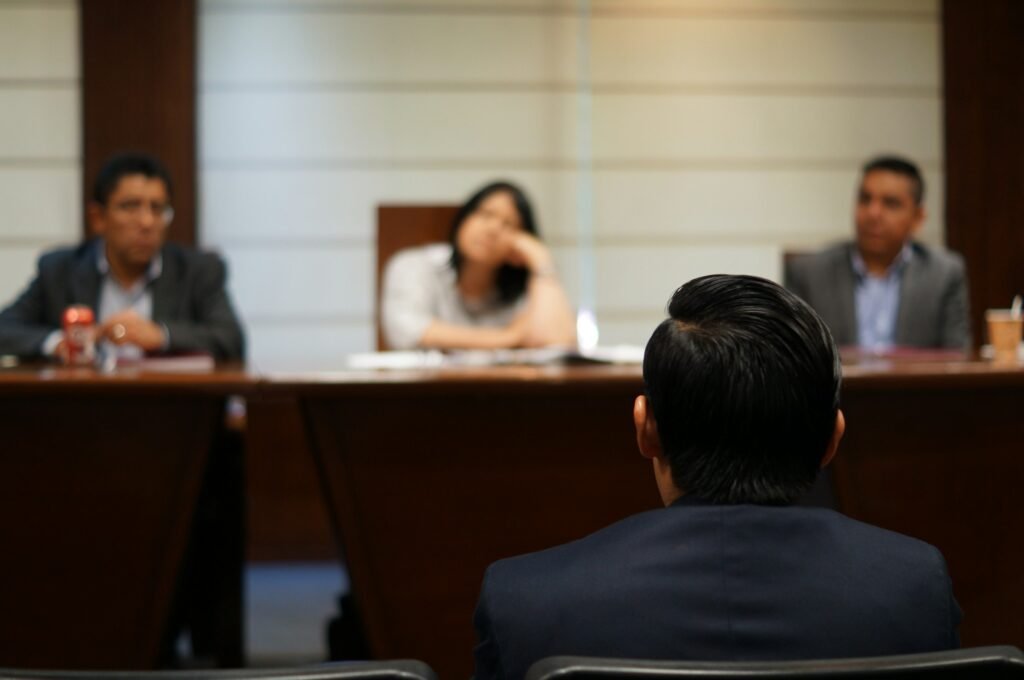
This written-first model is a hybrid. It borrows cross-examination from the common-law tradition but replaces long oral evidence-in-chief with written statements, and it gives the tribunal a more active role in questioning than many common-law judges would take. For parties, the result is that most of the work on witnesses and experts is done months before the hearing, in drafting statements and reports that will be read closely and tested hard.
Getting this right matters commercially as well as legally. Quantum is often decided by the tribunal's view of the expert evidence, and liability by its assessment of a handful of key factual witnesses whose credibility was tested at the hearing. This page covers the rules that apply in ICC cases, the preparation of fact witness statements, cross-examination, the choice between party-appointed and tribunal-appointed experts, expert independence, witness conferencing and expert hot-tubbing, and the adjustments made in expedited and virtual proceedings.
Fact witness statements
Article 26(2) of the 2026 ICC Rules (Article 25(2) of the 2021 Rules) allows the tribunal to hear witnesses, experts appointed by the parties or any other person, in the presence of the parties or in their absence if they were duly summoned. The Rules say nothing about who may be a witness or what a statement should contain, so the procedural order and the 2020 IBA Rules fill the gap.
- Who may testify. Under IBA Article 4.2 any person may present evidence as a witness, including a party or a party's officer, employee or other representative. This differs from some civil-law systems in which a party cannot be a witness in its own case.
- Interviews. Article 4.3 confirms that it is not improper for a party or its representatives to interview witnesses and discuss their prospective testimony.
- Content. Article 4.5 requires the witness's identity and relationship with the parties, a full and detailed description of the facts and the source of the witness's information, the language of the statement and of any testimony, an affirmation of truth, and a signature with date and place.
- Reply statements. Article 4.6 limits revised or additional statements to responding to matters in another party's evidence or submissions, or to new developments.
- Failure to appear. Under Article 4.7 if a witness whose appearance has been requested fails without valid reason to appear, the tribunal disregards the statement unless, in exceptional circumstances, it decides otherwise.
The weakest witness statements are written by lawyers in the language of a pleading. Tribunals notice when a statement reads like a submission, and cross-examination quickly exposes a witness who cannot explain words attributed to them. The ICC Commission report on the Accuracy of Fact Witness Memory in International Arbitration, dated November 2020, draws on memory science to explain how recollection is distorted by repeated retelling, exposure to documents and the drafting process itself. It encourages a case-by-case approach, for example recording the witness's unprompted account early and distinguishing what the witness remembers from what the documents show.
Ethical standards on witness preparation differ between jurisdictions: practices accepted in some countries would be regarded as coaching in others. The IBA Guidelines on Party Representation in International Arbitration (2013) offer a common reference point, and many procedural orders adopt them or state basic expectations. Our insight on drafting witness statements sets out a practical method.
Some important witnesses are unwilling or outside a party's control, such as former employees or employees of a subcontractor. IBA Article 4.9 allows a party to ask the tribunal to take whatever steps are legally available to obtain the testimony of such a person, or to seek leave to take those steps itself, and Article 4.10 allows the tribunal to order a party to provide for the appearance of any witness whose testimony it considers relevant and material.
Whether a court will help depends on the law of the seat and the place where the witness lives. In England, for example, section 43 of the Arbitration Act 1996 allows a party, with the tribunal's permission or the other parties' agreement, to use court procedures to secure a witness's attendance. Planning for reluctant witnesses should therefore start well before the hearing. Where compulsion is not realistic, a party may be able to rely on contemporaneous documents created by the absent person, or explain the absence in a way that avoids any adverse inference.
Cross-examination and the evidentiary hearing
Article 27 of the ICC Rules requires a hearing if any party requests one and places the tribunal in full charge of it. Under IBA Article 8.1 each party informs the tribunal and the other side of the witnesses whose appearance it requests; a party normally calls only its own witnesses to the extent the other side wishes to cross-examine them. Under Article 8.5 the written statement or report may serve as direct testimony, so examination-in-chief is short or dispensed with.
Article 8.4 sets a default order: the claimant's witnesses, then the respondent's, each with cross-examination and re-direct, followed by experts; and Article 8.3 lets the tribunal limit questions that are irrelevant, immaterial, unreasonably burdensome or duplicative, and requires that questions on direct and re-direct not be unreasonably leading. The tribunal may ask questions at any time, and in practice active tribunal questioning is common in ICC hearings.
Procedural orders often contain further rules. Fact witnesses are commonly asked not to attend the hearing, or read the transcript, before they testify, although party representatives who are also witnesses may be allowed to attend throughout. Witnesses should not discuss their evidence with counsel while under cross-examination, including over breaks. Tribunals also expect counsel to put their case to a witness: if a party intends to argue that a witness's account is untrue, it should give the witness a fair opportunity to respond.
When assessing weight, many international tribunals place more reliance on contemporaneous documents than on recollection, particularly about events several years earlier. Testimony is most valuable where it explains documents, fills genuine gaps, or describes context such as industry practice or how a decision was taken. A witness who concedes points fairly is usually more persuasive than one who defends every line of a statement.
Planning the time is a strategic exercise. Most ICC tribunals use a chess-clock system allocating total hearing time between the parties. Counsel must decide early which witnesses and experts to cross-examine, on which issues, and how much time to keep for the other side's experts, who often matter most to quantum. Interpreters, document presentation and witness integrity measures, especially for remote testimony, all need agreement in advance. The hearing logistics checklist covers practical steps.
Decide your cross-examination list before you file your reply evidence, not after. Knowing which of the other side's witnesses and experts you will challenge, and on what, tells you what your own reply statements and reports must address, and avoids a reply round that repeats the first one.
Party-appointed versus tribunal-appointed experts
In ICC practice the norm is for each party to appoint its own experts on quantum, technical, industry or foreign-law issues. Article 26(3) of the ICC Rules also allows the tribunal, after consulting the parties, to appoint one or more experts, define their terms of reference and receive their reports; at a party's request, the parties must be given the opportunity to question that expert at a hearing. The table compares the two models.
| Feature | Party-appointed expert | Tribunal-appointed expert |
|---|---|---|
| Legal basis | ICC Art. 26(2); IBA Art. 5 | ICC Art. 26(3); IBA Art. 6 |
| Instructions | From the appointing party, disclosed in the report (IBA Art. 5.2) | Terms of reference set by the tribunal after consulting the parties |
| Independence | Statement of independence required; paid by one side | Discloses qualifications and independence before appointment; parties may object (IBA Art. 6.2) |
| Cost | Recoverable as a party's costs if the tribunal so decides | Part of the costs of the arbitration under ICC Art. 41(1), usually funded by a separate deposit |
| Typical use | Quantum, delay, technical causation, foreign law | Narrow technical questions, or where party experts diverge on methodology |
Tribunal-appointed experts reduce the battle of the experts but transfer influence to one person whose reasoning the parties cannot fully control. Parties often respond by retaining their own shadow experts to comment on the tribunal expert's report, which can increase rather than reduce costs. Where a tribunal does need an expert, the ICC International Centre for ADR can propose candidates under the ICC Expert Rules, in force since 1 February 2015; the Note to Parties states that the proposal of the first expert is free of charge to arbitrators. See our guide to ICC expertise services.
Expert independence and the content of reports
An expert who appears to be an advocate for the instructing party loses credibility fast. IBA Article 5.2 requires a party-appointed expert's report to include the expert's full name, address and relationship with any party, counsel or the tribunal; background, qualifications and experience; a description of the instructions received; a statement of independence from the parties, their legal advisers and the tribunal; the facts relied on; the expert's opinions, methods, evidence and information; an affirmation of genuine belief in those opinions; and a signature.
Disclosing the instructions is important. Tribunals frequently test whether an expert was asked to assume facts that are disputed, or was given a narrow mandate that led to a convenient answer. Experts should state assumptions openly and, where appropriate, give alternative calculations on the other side's factual case. In quantum disputes this sensitivity analysis is often what makes a report useful to the tribunal; our insight on quantum experts discusses valuation methods and common pitfalls.
Selection deserves the same care as the choice of counsel. Conflict checks should cover the expert's firm as well as the individual, since large advisory firms may have audit or consulting relationships with the other side. The expert's prior published views and earlier testimony should be reviewed, because opposing counsel will do so. It is also worth agreeing at the outset how drafts and communications with the expert will be handled, as approaches to the confidentiality of draft reports differ between legal systems and procedural orders sometimes address the point expressly.
Under IBA Article 5.4 the tribunal may order experts on the same or related issues to meet and confer, and to record in writing the issues on which they agree and disagree and the reasons. The Note to Parties encourages early joint meetings, joint statements on method and approach, and substantive joint reports. A well-run joint process narrows the expert issues to the few that really need a hearing. Counsel should still review joint statements carefully before they are signed, since a concession recorded there is difficult to withdraw at the hearing.
Witnesses and experts together: conferencing and hot-tubbing
Witness conferencing means questioning two or more witnesses or experts together, so the tribunal can hear their competing views side by side. IBA Article 8.4(f) expressly allows the tribunal to vary the order of testimony, including by arranging witness conferencing. Part III of the Note to Parties and Arbitral Tribunals (1 June 2026) lists expert conferencing, or hot-tubbing, among recommended techniques.
Formats vary. In a common version, each expert gives a short presentation, the tribunal leads a structured discussion issue by issue, and counsel then put further questions. Hot-tubbing is used mainly for experts; conferencing of fact witnesses is rarer because it can expose witnesses to each other's accounts. The benefits are efficiency and direct engagement on points of disagreement; the risks are that a more confident expert dominates, and that counsel lose control of the narrative. Preparation of witnesses and experts for this format should include practising concise answers and respectful disagreement. See our insight on witness conferencing and hot-tubbing.
Illustration: two delay experts disagree on the critical path for a hypothetical pipeline project. After a joint meeting narrows the dispute to three windows, the tribunal hears both experts together, asking each in turn to explain their analysis of each window before counsel follow up. A hearing day that might have been spent on separate cross-examinations is completed in an afternoon, and the award addresses each window directly.
Witnesses and experts in expedited and virtual proceedings
In proceedings under the Expedited Procedure Provisions, Article 3(2) of Appendix V allows the tribunal, after consulting the parties, to limit the number, length and scope of written submissions and written witness evidence, both fact witnesses and experts. Under Article 3(3) it may decide the dispute solely on the documents, with no hearing and no examination of witnesses or experts. Articles 6(2) and 6(3) of Appendix VI contain equivalent powers for Highly Expedited Arbitration. In these procedures witnesses and experts should be chosen sparingly, and statements written on the assumption that they may never be tested orally.
Remote testimony is now routine. Article 27(1) of the 2026 Rules allows the tribunal, after consulting the parties, to decide that a hearing will be held in person, in hybrid form or by videoconference, and the Note explains that a tribunal proceeding without a party's agreement is expected to give reasons. IBA Article 8.2 requires a protocol that addresses, among other things, measures to ensure witnesses are not improperly influenced or distracted. Our page on virtual and hybrid hearings explains the safeguards.
Illustration: in a hypothetical ICC dispute over a power plant, a key engineer witness is based in Dhaka and the tribunal sits in Singapore. The procedural order provides for remote testimony from a hearing room with a neutral technician present, a 360-degree camera check, and an electronic bundle controlled by the hearing provider, so the witness sees only the documents counsel put to them.
How TRW & Co helps with witnesses and experts
We prepare and present the evidence of witnesses and experts in ICC arbitrations for claimants and respondents. Our work includes identifying witnesses early, taking unprompted accounts before documents are shown, drafting statements in the witness's own words, selecting and instructing experts on quantum, delay, technical and foreign-law issues, managing joint expert processes, and preparing cross-examination and conferencing strategy. We work with interpreters and hearing providers on remote testimony. Our teams in Dhaka, London, Dubai, New York, Singapore and Delhi support witnesses across time zones and languages. To discuss a case, contact us.
Frequently asked questions
Can an employee of a party be a witness in ICC arbitration?
Yes. Under Article 4.2 of the IBA Rules, which ICC tribunals usually apply as guidelines, any person may present evidence as a witness, including a party or its officers, employees or representatives. Tribunals assess the weight of that evidence in light of the witness’s interest in the outcome and its consistency with contemporaneous documents, so corroboration matters.
Is cross-examination used in ICC arbitration?
Yes. Witness statements and expert reports normally stand as evidence-in-chief, and the opposing party cross-examines the witnesses it wishes to challenge at the hearing. The tribunal controls the hearing, can limit irrelevant or repetitive questions, and often questions witnesses itself. A witness who is called but fails to appear without valid reason may have their statement disregarded.
When will an ICC tribunal appoint its own expert?
Article 26(3) of the 2026 Rules allows the tribunal to appoint experts after consulting the parties. It is less common than party-appointed expert evidence and tends to be used for narrow technical questions or where party experts disagree fundamentally on method. Parties can question a tribunal expert at a hearing on request, and the expert’s fees form part of the costs of the arbitration.
What is expert hot-tubbing?
Hot-tubbing, or expert conferencing, is a format in which opposing experts give evidence together and are questioned issue by issue, often led by the tribunal, before counsel ask further questions. IBA Article 8.4(f) permits witness conferencing, and the 2026 ICC Note to Parties lists expert conferencing among recommended case management techniques for controlling time and cost.
Can witnesses give evidence remotely in ICC arbitration?
Yes. Article 27(1) of the 2026 Rules allows the tribunal, after consulting the parties, to hold any hearing in person, in hybrid form or by videoconference. The tribunal should give reasons if it proceeds without a party’s agreement. Protocols typically address technology, time zones, document presentation and measures to ensure the witness is not improperly influenced during testimony.
Sources
- ICC 2026 Arbitration Rules (Articles 26 and 27; Appendices V and VI)
- IBA Rules on the Taking of Evidence in International Arbitration (2020), Articles 4 to 8
- ICC Note to Parties and Arbitral Tribunals on the Conduct of ICC Arbitration (1 June 2026)
- ICC Commission Report on the Accuracy of Fact Witness Memory in International Arbitration
- ICC Expert Rules (in force 1 February 2015)
General information only, not legal advice. References to the ICC, the ICC Court and the ICC Rules describe their published rules and practice; TRW & Co is independent of the ICC.