
Guide · Regional Desks
Europe Desk: ICC Arbitration, EU Law and Sanctions
The TRW & Co Europe desk advises on ICC arbitration with a European seat, party or asset. This guide compares the major European seats, explains how Achmea, Komstroy and PL Holdings constrain intra-EU arbitration, summarises the arbitration-related EU sanctions measures, and sets out how to enforce ICC awards across Europe under the 2026 Rules.
Key takeaways
- Paris, Geneva, Zurich, Stockholm and London remain the leading European seats, each with different annulment rules.
- Achmea, Komstroy and PL Holdings make intra-EU investor-state arbitration very difficult to enforce within the EU.
- Purely commercial ICC arbitration is unaffected by Achmea, but EU competition law remains part of public policy.
- Article 11 of Regulation 833/2014 can bar satisfaction of claims by sanctioned Russian persons.
- Since 1 August 2025, English law applies the law of the seat to arbitration agreements by default.
- Arbitration is outside the Brussels I Recast Regulation, so awards travel under the New York Convention.
What the Europe desk covers
The TRW & Co Europe desk advises on ICC arbitration with a European seat, a European party or European assets. In practice that means three overlapping areas: choosing between the major European seats, managing the constraints that EU law places on arbitration, and handling the sanctions regimes that now affect many cross-border contracts. Clients come to the Europe desk from Asia, the Middle East and the Americas as often as from Europe itself, because so many of their contracts nominate Paris, Geneva, Zurich, Stockholm or London as the seat.
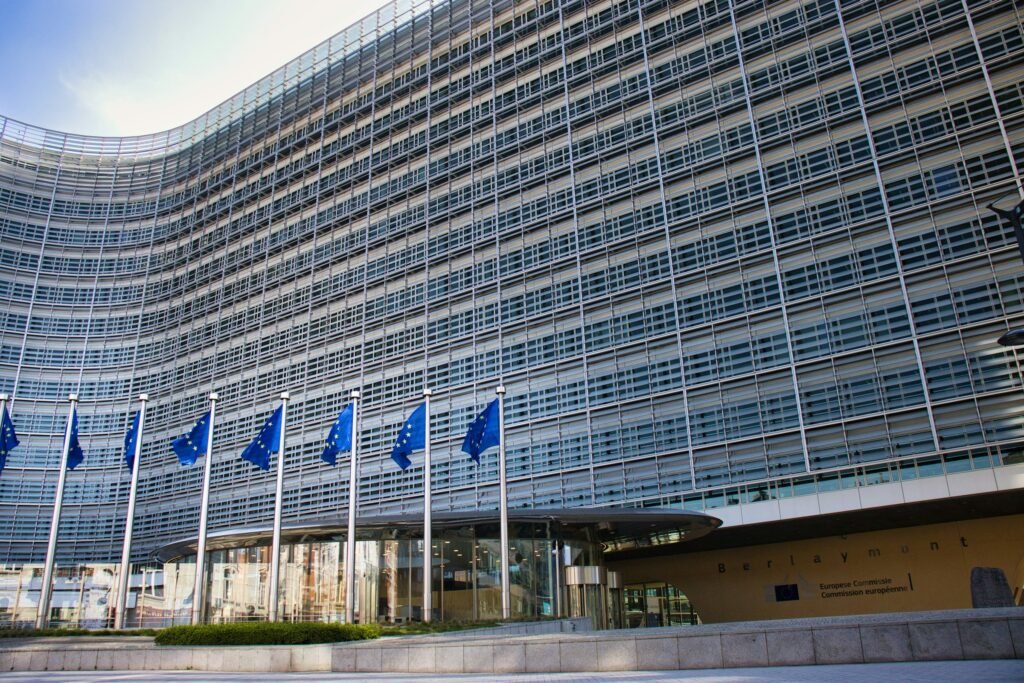
Europe is home to the ICC itself. The ICC International Court of Arbitration and its main Secretariat office are in Paris, and the 2026 ICC Rules, in force since 1 June 2026, were drafted with input from users across the continent. Even so, the legal environment varies sharply between seats. A French annulment court, a Swiss Federal Supreme Court and the English Commercial Court each apply different tests, and EU membership adds a layer of public policy that non-EU seats do not share.
We advise from London and work with our offices in Dubai, Singapore, New York, Delhi and Dhaka on matters where European arbitration meets Asian, Middle Eastern or American counterparties. Where a question turns on the domestic law of a particular European state, we work alongside independent local counsel.
The major European seats compared
Most European ICC arbitrations are seated in a handful of cities. Each has a modern arbitration statute and courts accustomed to international cases, but the route and grounds for challenging an award differ. The table summarises the main features.
| Seat | Arbitration law | Court hearing challenges | Points to note |
|---|---|---|---|
| Paris, France | Code of Civil Procedure, Articles 1442 to 1527 | Paris Court of Appeal | Separate regime for international arbitration; liberal approach to enforcement |
| Geneva and Zurich, Switzerland | Private International Law Act, Chapter 12 (revised 2021) | Federal Supreme Court | Single level of challenge on narrow grounds; parties may waive challenge in some cases |
| Stockholm, Sweden | Swedish Arbitration Act (amended 2019) | Court of Appeal | Long tradition in East–West and investment disputes |
| London, England | Arbitration Act 1996 as amended by the Arbitration Act 2025 | Commercial Court | Outside the EU; amendments in force since 1 August 2025 |
| Frankfurt and other German cities | Code of Civil Procedure, Book 10 | Higher Regional Court | Model Law-based; strong commercial courts |
| Amsterdam and The Hague, Netherlands | Code of Civil Procedure, Book 4 (revised 2015) | Court of Appeal | Frequent venue for state and treaty-related proceedings |
Paris
French law draws a sharp line between domestic and international arbitration. For international awards made in France, the grounds for annulment are limited to matters such as lack of jurisdiction, irregular constitution of the tribunal, failure to respect the tribunal's mandate, breach of due process and violation of international public policy. The Paris Court of Appeal has an international chamber that hears many of these cases, and the French courts' long-standing pro-arbitration stance is one reason Paris remains the most frequently chosen seat for ICC cases.
Geneva and Zurich
Swiss law offers finality. A challenge to an international award goes directly to the Federal Supreme Court on a short list of grounds, and the 2021 revision of Chapter 12 of the Private International Law Act confirmed that submissions may be made in English. Parties with no domicile or seat in Switzerland may, by express agreement, exclude challenges altogether or limit them to particular grounds, which some sophisticated users value for high-value disputes.
Stockholm and London
Sweden's statute applies to domestic and international cases alike, and its courts have a long history with disputes involving Eastern European and Central Asian parties. London sits outside the EU, which matters for parties who want distance from EU public policy and sanctions rules, though UK sanctions regimes apply in their own right. The 2025 amendments also introduced a statutory duty of disclosure for arbitrators and a power to make awards on a summary basis.
For detailed analysis, see our seat guides for Paris, Geneva and Zurich and London. London deserves special mention: since the Arbitration Act 2025 came into force, the law of the seat governs the arbitration agreement unless the parties expressly agree otherwise, a change that simplifies clauses in contracts governed by a foreign law.
EU law constraints the Europe desk manages
The Court of Justice of the European Union (CJEU) has reshaped arbitration involving EU member states. In Achmea (Case C-284/16, judgment of 6 March 2018) it held that the investor-state arbitration clause in an intra-EU bilateral investment treaty was incompatible with EU law because it removed disputes that could involve EU law from the EU judicial system. The Court distinguished commercial arbitration, which rests on the free consent of the parties. The judgment is available on the CJEU's case-law database.
Two later decisions extended that reasoning. In Komstroy (Case C-741/19, 2 September 2021) the CJEU held that the investor-state dispute clause of the Energy Charter Treaty does not apply to intra-EU disputes. In PL Holdings (Case C-109/20, 26 October 2021) it held that a member state may not conclude an ad hoc arbitration agreement with an investor that replicates an invalid treaty clause. Most member states also concluded an agreement in 2020 to terminate their intra-EU bilateral investment treaties.
For ICC users the consequences are concrete. An intra-EU investment claim brought under the ICC Rules faces jurisdictional objections and serious enforcement risk inside the EU, while courts outside the EU may take a different view. Purely commercial ICC arbitration between EU parties is not affected by Achmea as such, but EU public policy still applies: since Eco Swiss (Case C-126/97, 1999) courts of member states must be able to review awards for compliance with EU competition law. Our analysis of Achmea and Komstroy sets out the case law in more detail.
State aid and the enforcement of intra-EU awards
The long-running Micula litigation illustrates the tension between EU state aid law and enforcement of treaty awards. The UK Supreme Court allowed enforcement to proceed in England in 2020, holding that the UK's obligations under the ICSID Convention took precedence, while EU institutions maintained that payment would constitute unlawful state aid. For investors, the practical lesson is to map enforcement outside the EU at the earliest stage.
Sanctions and ICC arbitration in Europe
EU sanctions against Russia have become one of the most frequent issues on the Europe desk. Article 11 of Council Regulation (EU) No 833/2014 prevents the satisfaction of claims by sanctioned Russian persons in connection with contracts affected by the sanctions. That provision can bar recovery even where an award is otherwise valid, and tribunals seated in the EU must take it into account.
Successive sanctions packages have added arbitration-specific protections. According to the German Arbitration Institute (DIS), the 20th package adopted on 23 April 2026 introduced a new Article 11ca of Regulation 833/2014, allowing EU persons to ask member state courts to uphold an arbitration or exclusive jurisdiction clause and order the discontinuance of Russian court proceedings brought in breach of it, including proceedings under Articles 248.1 and 248.2 of the Russian Arbitrazh Procedure Code.
The EU's 21st package, adopted in July 2026, widened the procedure to other Russian proceedings brought in frustration of EU restrictive measures and allowed courts also to bar reliance on, or enforcement of, resulting judgments. The same package added a mechanism for releasing frozen funds to pay the costs element of an award, under defined conditions.
Sanctions also affect the arbitral process itself. Payments of advances, the appointment of arbitrators and the participation of experts may all require licences or compliance checks. The ICC's payment guidance asks parties with sanctions concerns to contact its compliance team before filing a Request. Our insight on sanctions compliance in ICC arbitration covers screening and licensing in practice.
Enforcing ICC awards in Europe
All EU member states, the United Kingdom, Switzerland and Norway are parties to the New York Convention, so a foreign ICC award will generally be recognised across the continent on the limited Convention grounds. Arbitration is excluded from the scope of the Brussels I Recast Regulation, which means recognition of awards within the EU still runs through the Convention and national law rather than through the EU judgment regime.
Differences between national approaches remain significant. France will enforce an award even if it has been annulled at the seat, because French law treats an international award as not anchored in any national legal order. Most other European jurisdictions give considerable weight to annulment at the seat. Where an award debtor holds assets in several European countries, the Europe desk sequences enforcement to start where the legal position is strongest and assets are easiest to identify.
Timing also varies. In some jurisdictions recognition is granted on a short ex parte application, with the debtor's objections heard afterwards; in others the debtor is heard before any order is made. Where the award debtor has applied to annul the award at the seat, the enforcement court may adjourn its decision and order security. These procedural differences can add months to recovery, so the choice of the first enforcement forum deserves the same care as the choice of seat. We also consider whether assets can be preserved by a conservatory attachment while recognition is pending.
Award debtors increasingly argue that enforcement should be refused because of sanctions, EU law or alleged corruption. Courts treat these arguments seriously but apply them narrowly, and a well-reasoned award that has passed ICC scrutiny is usually well placed to withstand them.
State immunity adds another layer. European states apply restrictive immunity, but the rules on execution against central bank assets and diplomatic property differ. Our page on the New York Convention explains the refusal grounds and how courts apply them.
Drafting and strategy for European contracts
Good drafting avoids most of the problems described above. The checklist below reflects the issues the Europe desk sees most often in contracts with a European seat or counterparty.
- Choose the seat deliberately. Consider annulment grounds, the speed of the supervisory court and whether the seat is inside or outside the EU legal order.
- State the law of the arbitration agreement. Even after the Arbitration Act 2025, an express choice avoids debate in other jurisdictions.
- Address sanctions risk. Include clauses on licences, payment channels and suspension of performance, and consider whether a non-EU seat is appropriate for counterparties exposed to sanctions.
- Plan for confidentiality. The 2026 ICC Rules allow tribunals to make confidentiality orders and protect trade secrets, but confidentiality is not automatic in every seat.
- Consider the expedited procedure. For agreements concluded on or after 1 June 2026 it applies automatically to disputes up to US$4 million unless the parties opt out.
Where one party is an EU state or state entity and the other is an investor from another member state, do not assume that an ICC clause in the investment contract will be treated like an ordinary commercial clause. Following PL Holdings, check whether the clause could be characterised as a substitute for a terminated treaty mechanism before relying on it.
Strategy also extends to interim relief. European courts are generally willing to grant interim measures in support of arbitration, but approaches to freezing orders, saisies conservatoires and disclosure differ. An ICC emergency arbitrator can act quickly, yet a court order is often more effective against third parties such as banks. Under the 2026 Rules, an emergency arbitrator may also issue a preliminary order without notice, directing a party not to frustrate the application, which narrows the gap between arbitral and court relief in urgent cases.
Sectors and disputes on the Europe desk
European ICC arbitration covers almost every sector, but several types of dispute recur. Energy transition disputes arise from changes to renewable subsidy schemes, grid connection and long-term gas supply contracts, and price review clauses in particular continue to produce arbitrations as markets shift. Post-acquisition disputes involve warranty claims, earn-outs and completion accounts, often between private equity sellers and strategic buyers. Construction and infrastructure disputes involve rail, offshore wind and public-private partnership projects, frequently under FIDIC or bespoke forms.
Technology and life sciences disputes are growing, including licensing, research collaborations and distribution agreements. These cases bring confidentiality and trade secret protection to the foreground, and the power in the 2026 Rules for tribunals to make confidentiality orders is directly relevant. Finally, the unwinding of commercial relationships with Russian counterparties since 2022 continues to generate claims over termination, force majeure and frustrated payments, almost always overlaid by sanctions questions.
Each of these dispute types brings its own evidential profile. Price reviews depend on economic experts and market data; M&A claims depend on accounting evidence and the disclosure letter; construction disputes depend on delay and quantum experts. The Europe desk plans the evidence from the first case management conference so that document production and expert issues are framed narrowly.
How TRW & Co helps through the Europe desk
We act for claimants and respondents in ICC arbitrations seated in Europe or involving European parties and assets. Our work covers clause review and seat selection, EU law and intra-EU objections, sanctions screening and licensing strategy, emergency arbitrator and court interim relief, document production and hearings, and enforcement planning across European jurisdictions. We coordinate with independent local counsel where national law questions arise and keep procedural strategy, evidence and enforcement aligned throughout. Our London team works with colleagues in Dubai, Singapore, New York, Delhi and Dhaka for clients whose European disputes involve Asian or Middle Eastern counterparties. To discuss a matter, please contact us.
Frequently asked questions
Does Achmea affect ordinary commercial ICC arbitration between EU companies?
Not directly. In Achmea the CJEU distinguished commercial arbitration, which is based on the parties' free consent, from investor-state arbitration under intra-EU treaties. Commercial ICC awards involving EU parties remain enforceable under the New York Convention, but member state courts can still review them for compliance with mandatory EU rules such as competition law, which forms part of public policy.
Which European seat is best for an ICC arbitration?
There is no single best seat. Paris offers a liberal, pro-enforcement regime; Switzerland offers a single, narrow challenge before the Federal Supreme Court; London offers an experienced Commercial Court and a statute updated in 2025; Stockholm has a long record in East–West disputes. The choice should reflect annulment grounds, the counterparty's assets and whether an EU or non-EU seat suits the contract.
Can EU sanctions prevent enforcement of an ICC award?
Yes, in some cases. Article 11 of Council Regulation 833/2014 prohibits satisfying claims by sanctioned Russian persons connected with contracts affected by the sanctions. Courts and tribunals in the EU must apply it, which can block recovery even under a valid award. Parties should obtain specialist sanctions advice and check whether a licence or exemption is available before taking enforcement steps.
What changed for London-seated arbitration in 2025?
The Arbitration Act 2025 amended the Arbitration Act 1996 and came into force on 1 August 2025. Among other changes, it introduced a default rule that the law of the seat governs the arbitration agreement unless the parties expressly agree otherwise, codified an arbitrator's duty of disclosure and gave tribunals a power to make awards on a summary basis.
Are intra-EU treaty awards enforceable outside the EU?
Courts outside the EU are not bound by CJEU rulings and have in several cases allowed enforcement to proceed. The UK Supreme Court's 2020 decision in the Micula litigation is the best-known example. Outcomes depend on the treaty framework, the applicable immunity rules and local law, so investors should map enforcement options outside the EU early.
Sources
General information only, not legal advice. References to the ICC, the ICC Court and the ICC Rules describe their published rules and practice; TRW & Co is independent of the ICC.