
Guide · Sectors
ICC Energy, Oil and Gas and Renewables Arbitration
ICC energy arbitration handles a large share of the world’s cross-border oil, gas, LNG, power and renewables disputes. This guide explains the typical disputes, how price reviews and state counterparties are handled, which 2026 Rules tools matter most, and how to draft clauses for long-term energy contracts.
Key takeaways
- Energy was 15% of new ICC cases in 2025, second only to construction and engineering at 28%.
- Price review tribunals set new formulas only within the powers the clause gives them.
- Articles 8, 10 and 11 help bring linked PSC, JOA, EPC and supply contract disputes together.
- Emergency arbitrator relief is unavailable where the arbitration agreement arises from a treaty or investment law.
- Article 23(3) allows confidentiality orders protecting pricing data and trade secrets.
How ICC energy arbitration works for oil, gas and power
ICC energy arbitration is the default forum for a large share of the world's cross-border oil, gas, LNG, power and renewables disputes. Long-term supply contracts, production sharing contracts, joint operating agreements, engineering contracts for plants and pipelines, and power purchase agreements very often refer disputes to arbitration under the ICC Rules, frequently with a neutral seat such as London, Paris, Geneva or Singapore. The 2026 Rules, in force since 1 June 2026, apply to cases commenced on or after that date unless the parties agreed otherwise (Article 1(2)).
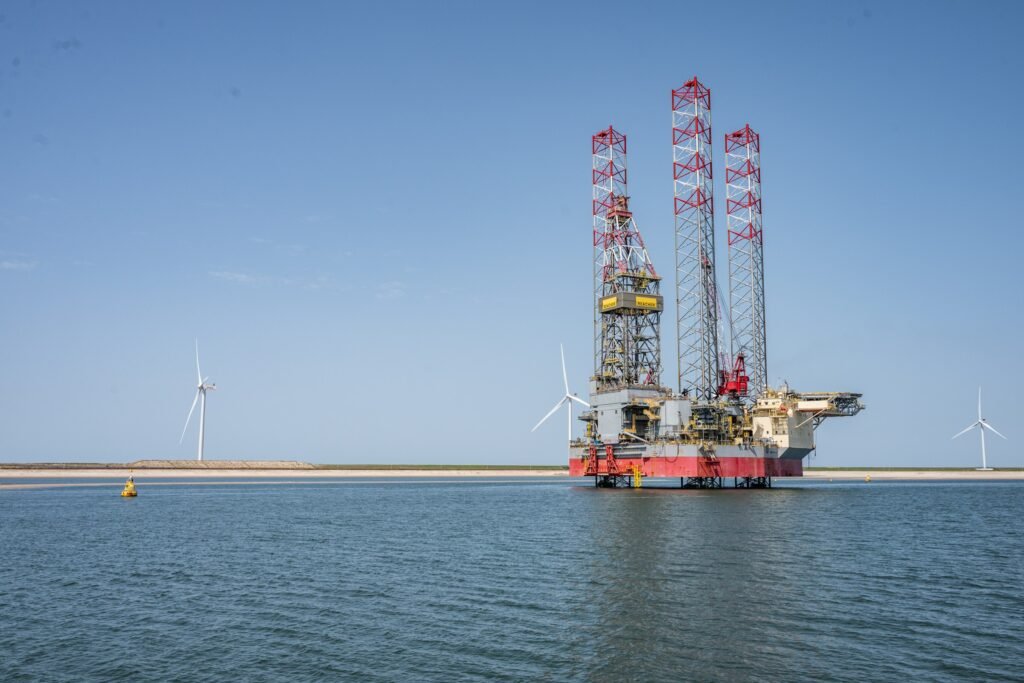
The numbers explain why the sector matters to the institution. In its published statistics for 2025, the ICC reported 881 new cases under the Arbitration Rules, with energy accounting for 15% of filings, second only to construction and engineering at 28%. Many construction cases are themselves energy projects: refineries, LNG trains, offshore platforms, transmission lines and solar or wind farms.
Energy disputes share features that shape how they are run. Contracts are long and relational, so parties often keep performing while they arbitrate. Sums at stake can be very large, and quantum frequently turns on market modelling rather than invoices. States and national oil companies are common counterparties. And disputes often span a web of linked contracts. The sections below explain how the 2026 Rules handle each of those features and what to put in the clause before a dispute arises.
Typical ICC energy disputes and the contracts behind them
The table summarises the dispute types we see most often in ICC energy work and the procedural tools that tend to matter. It is a planning aid, not an exhaustive list.
| Dispute type | Typical contracts | Recurring issues | 2026 Rules tools that often matter |
|---|---|---|---|
| Gas and LNG price reviews | Long-term gas sales agreements, LNG SPAs | Trigger conditions, market comparables, retroactivity of a revised price | Tribunal-appointed experts (Art. 26(3)); confidentiality orders (Art. 23(3)) |
| Upstream disputes | Production sharing contracts, concessions, JOAs, farm-outs | Cost recovery, cash calls, operator liability, default and forfeiture, stabilisation | Joinder (Art. 8); multi-contract claims (Art. 10) |
| LNG and cargo disputes | SPAs, master sale agreements, shipping and terminal use agreements | Failure to deliver or take, diversion, off-spec cargoes, force majeure | Emergency arbitrator (Art. 31, Appendix IV); interim measures (Art. 29) |
| Power and renewables | PPAs, implementation agreements, EPC and O&M contracts | Tariff indexation, curtailment, change in law, grid delay, performance guarantees | Expedited procedure (Appendix V) for smaller claims; consolidation (Art. 11) |
| Midstream and infrastructure | Pipeline transportation, tolling, storage and processing agreements | Capacity reservation, ship-or-pay, tariff disputes | Early determination of manifestly unmeritorious points (Art. 30) |
Upstream contracts
Upstream disputes often involve a host state or national oil company as one party and a consortium of international companies as the other. Joint operating agreements add internal disputes between co-venturers over budgets, sole-risk operations and defaulting partners. Because several contracts govern a single project, Article 10 of the 2026 Rules, which allows claims under more than one contract to be brought in one arbitration, and Article 8 on joinder are frequently in play. The ICC Court's prima facie review under Article 7 then decides whether the arbitration proceeds against each party and on each set of claims.
Joint operating agreement disputes have their own rhythm. A non-paying partner may face default notices, suspension of voting rights and, ultimately, forfeiture of its participating interest. Those remedies are drastic, and challenges to them often turn on strict compliance with notice provisions and on the governing law's approach to penalties and relief from forfeiture. Because the operator usually continues to run the asset, the tribunal's procedural timetable has to accommodate ongoing operations and further cash calls.
Gas and LNG sale agreements
Long-term gas and LNG sale agreements generate two families of dispute. The first is pricing, discussed below. The second concerns volumes and delivery: take-or-pay and deliver-or-pay obligations, make-up and carry-forward rights, annual delivery programmes, off-specification cargoes and the allocation of shortfalls when supply is constrained.
Force majeure claims arise when upstream production, liquefaction trains or shipping fail, and the contractual definition, notice requirements and mitigation duties usually decide them. LNG chains also involve shipping, terminal use and regasification agreements with different counterparties, so it is worth checking at the outset whether all the relevant agreements contain compatible ICC clauses. Our note on LNG SPA disputes looks at these issues in more depth.
Power purchase agreements and renewables
Power disputes typically concern tariffs, capacity payments, delays to grid connection, curtailment and changes in law or tax. Where the offtaker is a state utility, the dispute sits at the junction of commercial and public law. Our note on renewable energy PPA disputes covers the contract mechanics in more detail.
Price reviews, hardship and long-term supply
Price reviews are a distinctive kind of energy case. Long-term gas and LNG contracts commonly allow either party to request a revision of the price formula where specified conditions are met, typically a significant change in market circumstances beyond the parties' control. If negotiation fails, the clause usually refers the question to arbitration. The tribunal is then asked to do something unusual: not only to decide who is right about the past, but to set a new price formula for the future.
That raises three recurring questions. First, has the trigger been met? Tribunals look closely at the wording, the reference period and the baseline against which change is measured. Second, what is the tribunal's mandate? Its powers derive from the clause, and an award that rewrites more of the contract than the clause allows invites an excess-of-mandate challenge at the seat. Third, from when does the revised price apply? Many clauses specify the date of the review notice; others are silent, and the point can be worth more than the formula itself.
Article 22 of the 2026 Rules lets parties choose the rules of law applicable to the merits and requires the tribunal to take account of the contract and any relevant trade usages. It also confirms that a tribunal may act as amiable compositeur or decide ex aequo et bono only if the parties have expressly agreed. A price review is not equity jurisdiction: the tribunal applies the contractual criteria, however open-textured they are.
In a price review, the clause is the tribunal's charter. Before triggering a review, map the precise conditions, the evidence needed to show a change in circumstances, and the remedy the tribunal can grant. Ask for a formula the tribunal is empowered to set, and plead an alternative if your primary case fails, so that a partial win still produces a workable price.
Hardship and force majeure arguments overlap with price reviews but are distinct. Our note on force majeure and hardship claims explains how governing law and drafting interact, and the companion piece on oil and gas price review arbitration goes further into trigger tests and evidence.
States, national oil companies and treaty overlay
Energy contracts are often signed with ministries, state utilities and national oil companies. That affects capacity, approvals, immunity and enforcement. Our guide to sovereigns and state-owned entities covers those issues in depth. Three points are specific to ICC energy arbitration.
- Stabilisation and change-in-law clauses. Upstream and power contracts frequently protect the investor against adverse changes in law or fiscal terms, either by freezing the law or, more often today, by requiring economic rebalancing. Disputes about rebalancing are well suited to contract arbitration under the ICC Rules.
- Treaty claims. Some investors also enjoy treaty protection. The Energy Charter Treaty has historically been the most-used energy treaty, but the European Union, Euratom and the United Kingdom have withdrawn from it, subject to its sunset protection for existing investments. See our note on Energy Charter Treaty withdrawal.
- Emergency arbitrator limits. Appendix IV states that the emergency arbitrator provisions do not apply where the arbitration agreement arises from a treaty or an investment protection law. Contract-based ICC cases against state entities are not caught by that exclusion.
Capacity and approvals deserve attention before any claim is filed. Some state entities need ministerial or cabinet consent to agree to arbitration or to settle, and some national laws restrict arbitration of disputes over public contracts or natural resources. A defect in authority may surface first as a jurisdictional objection and later as a ground to resist enforcement. Checking the approvals chain behind the arbitration agreement is therefore part of early case assessment, not a formality.
Climate-related claims are an emerging category. The ICC Commission's report on resolving climate change related disputes, published in November 2019, identifies features that can improve these cases, including access to scientific expertise, faster procedures, transparency where appropriate and thought about third-party participation. Those points are relevant to energy transition contracts, from carbon capture projects to green hydrogen offtakes.
Evidence, experts and interim relief in energy cases
Energy cases are expert-heavy. Quantum may rest on reserves estimates, forward price curves, discount rates or plant performance data. Technical liability may depend on reservoir engineering, metallurgy or grid studies. Under Article 26 of the 2026 Rules, the tribunal may hear party-appointed experts and, after consulting the parties, appoint its own expert under Article 26(3). Tribunal experts can narrow technical disputes efficiently, but parties lose some control over the narrative, so the decision is strategic.
Confidentiality is also a recurring concern. Pricing data, cost-recovery figures and seismic data are commercially sensitive. Article 23(3) allows the tribunal, at a party's request, to make confidentiality orders and to take measures to protect trade secrets and confidential information. Many tribunals put tiered access arrangements in an early procedural order.
Urgent relief is common in cargo and supply disputes: preventing the diversion of a cargo, preserving a performance bond or stopping the drawing of a letter of credit. Before the tribunal is constituted, a party can apply to an emergency arbitrator under Article 31 and Appendix IV, unless the clause opted out or the agreement predates 1 January 2012. Once the file is transmitted, the tribunal may order interim measures under Article 29. National courts remain available in appropriate circumstances. See our page on the ICC emergency arbitrator.
Document production in energy cases can be heavy: daily production reports, cost-recovery ledgers, operating committee minutes, trading desk communications and SCADA or metering data. The 2026 Rules leave production to the tribunal's procedural management, and many tribunals use the IBA Rules on the Taking of Evidence as guidance. Setting realistic limits at the case management conference, and agreeing protocols for large datasets, keeps costs proportionate.
Illustration (hypothetical): a buyer under an LNG master sale agreement learns that the seller intends to divert a contracted cargo to a higher-priced market. The buyer files an application for emergency measures seeking an order preserving the cargo's delivery schedule pending the main arbitration, while also preparing a Request for Arbitration. Whether relief is granted will depend on urgency, a reasonable case on the merits and the balance of harm, all of which the applicant must evidence quickly. Because an emergency arbitrator's order binds the parties but may not be directly enforceable everywhere, the buyer should also consider parallel court relief where the cargo is located.
Enforcement and award strategy
An award is only as good as its enforcement. In energy disputes, the respondent may be a project company with few assets beyond the plant, a joint venture partner with assets in several countries, or a state entity whose property may be protected by immunity. Enforcement planning should begin before the Request for Arbitration is filed.
Three practical points recur. First, identify where the counterparty holds commercial assets, such as receivables from cargo sales, bank accounts used for trading, shares in offshore holding companies or vessels, and check whether those jurisdictions are party to the New York Convention. Second, consider whether to seek an award in a currency and form that local courts will readily recognise, including clear dispositive paragraphs and interest provisions. Third, for state counterparties, examine any waiver of immunity in the contract and whether it extends to execution as well as jurisdiction.
The ICC Court's scrutiny of draft awards under Article 37 helps, because the Court may draw the tribunal's attention to points of substance and to the mandatory requirements of the seat. It does not guarantee enforceability, however, and parties should not treat scrutiny as a substitute for their own planning. Where a long-term contract continues during the arbitration, the parties should also think about how the award will operate in future periods: a price review award, for example, may need to set out the revised formula precisely enough to be applied to future invoices without further dispute.
Settlement is common in energy disputes, often once the tribunal has ruled on liability or a key interpretation point. Bifurcation, early determination under Article 30 of manifestly unmeritorious points, and ICC mediation running alongside the arbitration can all create windows for a negotiated outcome.
Drafting ICC energy clauses under the 2026 Rules
Most energy contracts last decades, so clauses drafted today must work with Rules that will themselves change. Key choices for ICC energy arbitration clauses include the following.
- Seat. Choose a seat with a supportive court and predictable set-aside law. Our seat, law and language guide compares the options.
- Linked contracts. Use compatible clauses across the PSC, JOA, EPC, gas sales and financing documents, with the same Rules, seat and language, so that Articles 8, 10 and 11 can operate.
- Expedited procedure. For agreements concluded on or after 1 June 2026, Appendix V applies automatically to disputes up to US$4 million unless the parties opt out. For a high-value supply contract, consider whether that suits smaller invoice disputes or whether you want full three-member tribunals for all claims.
- Highly Expedited Arbitration. Appendix VI is opt-in and produces an award within three months of the case management conference before a sole arbitrator. It may suit narrow, document-based disputes such as invoice reconciliations under an O&M contract.
- Expert determination. Many energy contracts send purely technical questions, such as measurement or quality, to an expert. Make clear which issues go to the expert, whether the determination is binding, and how it interacts with ICC arbitration.
- Price review mechanics. Define the trigger, the reference market, the effective date and the tribunal's powers.
Our page on ICC model clauses explains the standard wording and the opt-in and opt-out language.
How TRW & Co helps with ICC energy disputes
We advise energy companies, investors, lenders, contractors and state entities on ICC energy arbitration from the earliest stage. That includes reviewing clauses across project documents, assessing price review and change-in-law positions, preparing emergency and interim applications, and coordinating technical and quantum experts.
Our teams in Dhaka, London, Dubai, New York, Singapore and Delhi work across seats and legal systems, which matters where a project in South Asia or the Middle East is financed in London and arbitrated in Paris or Singapore. We also plan enforcement early, particularly against state-owned counterparties. TRW & Co is independent of the International Chamber of Commerce. To discuss a current or prospective energy dispute, contact our arbitration team.
Frequently asked questions
Why is ICC arbitration so common in energy contracts?
Energy contracts are long, high value and usually cross-border, often with a state or national oil company on one side. ICC arbitration offers a neutral forum, a supervised process including scrutiny of draft awards by the ICC Court, and awards enforceable in the many states party to the New York Convention. Energy has consistently been one of the largest sectors in the ICC caseload, accounting for 15% of new cases in 2025.
Can an ICC tribunal rewrite the price in a gas contract?
Only if the contract gives it that power. Price review clauses typically allow a tribunal to revise the price formula once defined trigger conditions are met. The tribunal applies the contractual criteria; it is not acting as amiable compositeur unless the parties expressly agreed under Article 22(3). An award that exceeds the clause risks challenge at the seat for excess of mandate.
Can I get emergency relief in an ICC energy dispute with a state entity?
Yes, where the claim is contractual. Appendix IV excludes emergency arbitrator proceedings only where the arbitration agreement arises from a treaty or an investment protection law, where the agreement predates 1 January 2012, or where the parties opted out. A contract claim against a state utility under an ICC clause is not excluded, although enforcement of any order against the state raises separate immunity questions.
Does the expedited procedure apply to large energy contracts?
It depends on the amount in dispute, not the contract value. For arbitration agreements concluded on or after 1 June 2026, Appendix V applies automatically where the amount in dispute does not exceed US$4 million, unless the parties opted out or the Court decides it is inappropriate. Lower thresholds apply to older agreements, and agreements concluded before 1 March 2017 are excluded.
How are technical issues handled in ICC energy arbitration?
Through party-appointed experts, tribunal-appointed experts under Article 26(3), or a separate expert determination mechanism in the contract. Many energy contracts send measurement, quality or accounting questions to an expert and reserve legal disputes for arbitration. Clear drafting on which issues go where, and whether the expert decision is binding, avoids satellite disputes.
Sources
General information only, not legal advice. References to the ICC, the ICC Court and the ICC Rules describe their published rules and practice; TRW & Co is independent of the ICC.