
Overview
ICC Court and Secretariat
The ICC Court does not decide disputes; it administers them. It confirms arbitrators, rules on challenges, takes prima facie jurisdiction decisions and scrutinises every award, while the Secretariat runs each case. This guide explains how the institution is structured, what it decides and where its powers stop.
4In this section
- 01The Secretariat and Case Management TeamsICC Secretariat case teams administer every ICC arbitration from filing to award, working from Paris and five overseas…
- 02Prima Facie Jurisdiction Decisions (Article 7)ICC prima facie jurisdiction is the Court's early filter on whether an ICC arbitration agreement may exist. Under…
- 03Scrutiny of Draft AwardsICC scrutiny of awards is the Court's review of every draft award before signature, now in Article 37…
- 04Confidentiality, Transparency and Award PublicationICC confidentiality and transparency are balanced by design: arbitrators and the institution must keep the case confidential, but…
Key takeaways
- The ICC Court administers ICC arbitrations; tribunals decide the merits and courts at the seat hear challenges.
- Committees of three, Special Committees, Single-Member Committees and the plenary share the Court's work.
- Secretariat case teams, led by a Counsel, operate from Paris, New York, São Paulo, Singapore, Abu Dhabi and Hong Kong.
- Every draft award is scrutinised for form, validity and enforceability before signature.
- Decisions on appointments and challenges are final; reasons are available on request for key decisions.
- The 2026 Rules give the President power to fix award time limits and remove alternate members.
What the ICC Court Is and What It Does
The ICC Court, formally the ICC International Court of Arbitration, is the body that administers arbitrations under the ICC Rules. Despite its name, it does not decide disputes. Arbitral tribunals decide the merits; the ICC Court supervises the process. It confirms and appoints arbitrators, decides challenges, takes prima facie decisions on whether an arbitration can proceed, consolidates cases, fixes advances and arbitrators' fees, and scrutinises and approves every draft award before it is signed. Its Secretariat manages each case day to day.
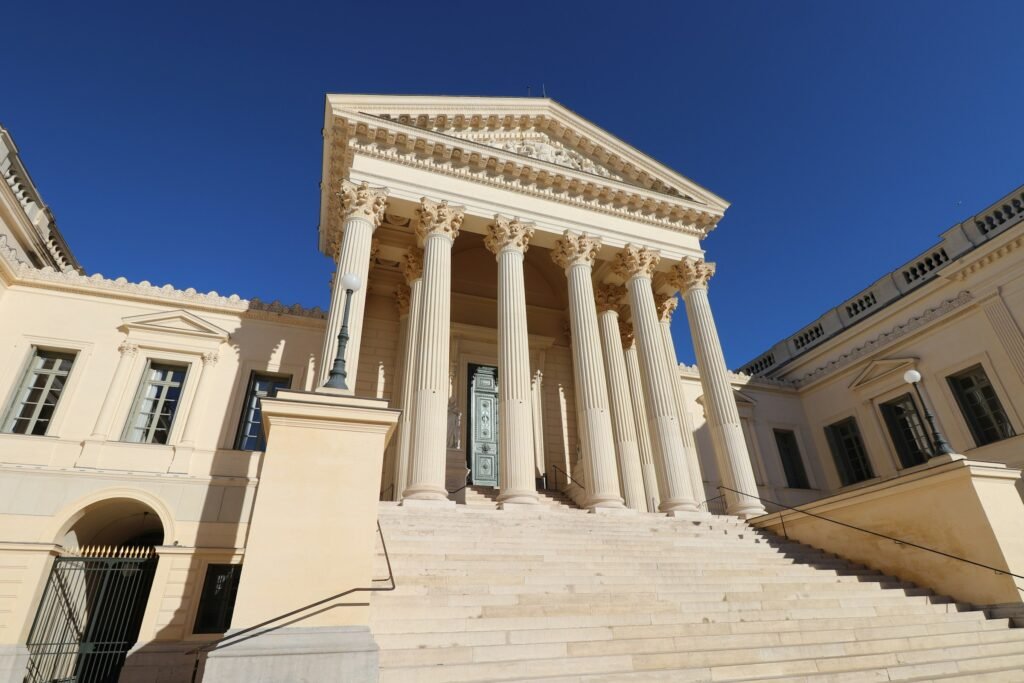
The Statutes in Appendix I to the 2026 ICC Rules describe the Court as "ICC's independent arbitration body". It ensures the application of the Rules and is the only body authorised to administer arbitrations under them, including the scrutiny and approval of awards (Appendix I, Article 1). As an autonomous body it acts in complete independence from ICC and its organs, and its members are independent from the ICC National Committees and Groups that propose many of them. Court decisions are deemed to be made in Paris (Appendix I, Article 16), regardless of where the arbitration is seated.
The Court dates from 1923 and marked its centenary in 2023, according to the ICC's own description. For users, its significance is practical. The ICC model is "administered" arbitration in the fullest sense: an institution with defined powers stands behind the tribunal, can replace arbitrators who do not perform, and reviews awards for form and enforceability. That supervision is a large part of what parties pay for in administrative expenses, and understanding it helps parties use the system well.
TRW & Co is an independent law firm and is not affiliated with or endorsed by the International Chamber of Commerce. This page describes the ICC Court and its Secretariat as they appear in the Rules and in ICC's published guidance.
ICC Court Structure: Members, Committees and the Bureau
The ICC Court consists of a President, Vice-Presidents and members, collectively "Members" (Appendix I, Article 3). The ICC World Council elects the President on the recommendation of the ICC Executive Board, based on a proposal from an independent selection committee that includes respected arbitration practitioners. It appoints the Vice-Presidents on the President's proposal, one member for each National Committee or Group on that Committee's or Group's proposal, and may appoint further members proposed by the President (Appendix I, Article 4).
Terms are three years, renewable once, and no Member may normally serve more than two full consecutive terms. The 2026 Statutes no longer provide for alternate members.
The Court works in four formations (Appendix I, Articles 7 to 12):
- Committees of three Members, chaired by the President or a Vice-President, which take most routine decisions. Their decisions must be unanimous; if they cannot agree, or prefer to abstain, they refer the matter to a Special Committee.
- Special Committees of the President or a Vice-President and at least six other Members, deciding by majority. They handle challenges and replacements, draft awards with dissenting opinions, draft awards in cases involving states, state entities or international organisations, and referred matters.
- Single-Member Committees, which may scrutinise draft awards under the Expedited Procedure and Highly Expedited Arbitration provisions.
- The plenary, which meets at the annual working session and when convened by the President.
Sessions may be held in person, in hybrid form or remotely. The President may take urgent decisions on the Court's behalf, reporting them to the Bureau each quarter (Appendix I, Article 8). The Bureau comprises the President, the Vice-Presidents and the Secretary General, and the President consults it on the Court's policies and practices (Appendix I, Article 13).
Conflict rules are strict. Under the Internal Rules in Appendix II, the President and Secretariat staff may not act as arbitrators or counsel in ICC cases, the Court may not appoint Members as arbitrators, and Members (other than the President) may be nominated by parties only subject to confirmation. Members involved in a pending case must withdraw from the Court's discussion and decisions on it. National Committees play their own role in proposing arbitrators; see our guide to ICC National Committees and Groups.
The Secretariat and Case Management Teams
The Court is assisted by its Secretariat, led by the Secretary General (Appendix I, Article 14). The ICC Note to Parties and Arbitral Tribunals explains that the Secretary General, the Deputy Secretary General and the Managing Counsel oversee case management teams, each headed by a Counsel. On receipt of a Request for Arbitration, the Secretary General assigns the case to a team; the office that administers the case has no bearing on the place of arbitration.
ICC lists Secretariat offices in Paris, New York, São Paulo, Singapore, Abu Dhabi and Hong Kong, with more than 100 lawyers and support staff. Cases are administered in English, French, Spanish, Portuguese and German, and awards can be scrutinised in other major languages including Chinese and Arabic. Where the Secretary General assigns a case to the São Paulo office under the Brazilian office note, the Schedule of Fees applies the Brazilian real rather than the US dollar.
The Secretariat monitors each arbitration, recommends courses of action to the Court on every decision the Court must take, and answers questions from parties and tribunals while maintaining strict neutrality. It notifies the Request, Answer and any Request for Joinder, runs the ICC Case Connect platform for communications, reviews draft awards before they reach the Court, and provides post-award services such as certified copies. Some Secretary General powers are significant in their own right: confirming uncontested arbitrator nominations, fixing advances on costs and extending certain time limits. Our page on the Secretariat and case management teams explains how to work with them effectively.
Key Decisions Taken by the ICC Court and Its Officers
The Court's powers are spread across the Rules and are exercised by different decision-makers. The table maps the most important ones under the 2026 Rules.
| Decision | Provision | Who decides | Reasons on request? |
|---|---|---|---|
| Whether the arbitration proceeds (prima facie jurisdiction) | Art 7(2) | Court, if the Secretary General refers | Yes (Art 43) |
| Consolidation of arbitrations | Art 11 | Court | Yes |
| Number of arbitrators where not agreed | Art 13(2) | Court | No |
| Confirmation of nominated arbitrators | Art 14(2) | Secretary General if no objection; otherwise Court | No |
| Appointment of all tribunal members in multi-party or exceptional cases | Arts 13(9), 13(10) | Court | Yes |
| Challenges and replacement of arbitrators | Arts 15, 16 | Court | Yes (Arts 15 and 16(3)) |
| Time limit for the final award | Art 34 | President | No |
| Scrutiny and approval of draft awards | Art 37 | Court | No |
| Advances on costs | Art 40 | Secretary General | No |
| Fixing arbitrators' fees and ICC expenses | Art 41 | Court | No |
| Emergency arbitrator: applicability and appointment | App IV | President | No |
The prima facie jurisdiction stage is one of the Court's most consequential functions in multi-party and multi-contract cases. The Court asks only whether an ICC arbitration agreement binding the parties may exist; it does not decide jurisdiction finally, and the tribunal remains free to rule. Our guide to prima facie jurisdiction decisions explains the test and the strategy.
Appointment is another. When the Court appoints an arbitrator, it ordinarily requests a proposal from a National Committee or Group, but it may appoint directly where a party is a state or state entity, where no National Committee exists in the relevant country, or where it considers a direct appointment necessary (Article 14(3)–(4)). A sole arbitrator or president appointed by the Court must not share the nationality of any party unless the Court derogates and no party objects. See our page on direct appointment by the ICC Court.
Challenges and replacements show the Court's supervisory role most clearly. A challenge for lack of impartiality or independence, or otherwise, must be filed with the Secretariat within 30 days of notification of the appointment or of learning the relevant facts, whichever is later; the Court decides admissibility and, if necessary, the merits after the arbitrator, the other parties and the co-arbitrators have commented (Article 15).
The Court must replace an arbitrator on death, accepted resignation, an accepted challenge or a request of all parties, and it may start replacement proceedings itself where an arbitrator is prevented from acting or is not performing in accordance with the Rules or within time limits (Article 16(1)–(3)).
After the last hearing or last substantive submissions, whichever is later, the Court may decide that the remaining arbitrators should continue as a truncated tribunal instead of replacing an arbitrator who has died or been removed, taking into account the views of the parties and the remaining arbitrators (Article 16(5)). When a replacement is made, the Court decides whether to follow the original nominating process, and the reconstituted tribunal decides what, if anything, must be repeated (Article 16(4)).
Money is the other recurring theme. The Secretary General fixes the advance on costs by reference to the amount in dispute and may fix separate advances for claims and counterclaims (Article 40).
If a party fails to pay, the Secretary General may, after consulting the tribunal, direct it to suspend work and fix a time limit of at least 15 days, after which the relevant claims are treated as withdrawn; the affected party can ask the Court to decide the matter (Article 40(9)). At the end of the case the Court fixes the arbitrators' fees and ICC administrative expenses, and in Expedited Procedure cases it can also decide that the procedure no longer applies (Appendix V, Article 1(6)).
Scrutiny of Awards by the ICC Court
Scrutiny is the feature most closely associated with ICC arbitration. Before signing any award, the tribunal submits a draft to the ICC Court, which may require modifications to form and may draw the tribunal's attention to substantive points without affecting its liberty of decision (Article 37). The 2026 Rules add to the Rules themselves that the Court considers, so far as practicable, the validity and enforceability of the award and mandatory law at the seat.
According to the Note, a draft is reviewed first by the Counsel in charge and then by the Secretary General, Deputy Secretary General or Managing Counsel before reaching the Court.
Most drafts are scrutinised by a three-member Committee within three to four weeks; drafts with dissents or involving states go to Special Committees and are typically scrutinised within five weeks; expedited drafts are scrutinised within two to three weeks of receipt. The Court may reduce its administrative expenses by up to 20% if it delays scrutiny for reasons within its control. Our guide to scrutiny of draft awards covers what the Court typically looks for and how parties can prepare.
Scrutiny improves award quality but is not an appeal. Parties cannot make submissions to the ICC Court on the merits of a draft award, and the Court will not substitute its view for the tribunal's. Arguments must be made to the tribunal before the proceedings close; after the award, the remedies are those in Article 39 and at the seat.
What the ICC Court Does Not Decide
Understanding the limits of the Court is as important as understanding its powers. The Court does not decide the merits, does not hear appeals from procedural orders or awards, and does not set aside awards; annulment is a matter for the courts at the seat. Its decisions on the appointment, confirmation, challenge or replacement of arbitrators are final (Article 12(7)), and a party wishing to challenge an arbitrator's independence after the award must look to national law.
The Court also does not decide jurisdiction definitively. A negative prima facie decision leaves parties free to ask a competent court whether a binding arbitration agreement exists (Article 7(5)) and to reintroduce claims in other proceedings (Article 7(6)). A positive decision leaves every jurisdictional objection open before the tribunal.
Transparency about reasons has grown. Under Article 43, the Court will communicate reasons on request for decisions on prima facie jurisdiction, consolidation, appointment of all tribunal members, challenges and certain replacements, unless exceptional circumstances justify not doing so. The request must be made before the decision is taken.
Where the Rules are silent, Article 46 requires the Court and the tribunal to act in the spirit of the Rules and to make every effort to ensure the award is enforceable at law, a principle that guides many Court and Secretariat decisions. The Secretariat may also, with the Bureau's approval, issue guidance notes for parties and arbitrators (Appendix II, Article 4(2)); the Note to Parties is the most important of these and should be read alongside the Rules. Finally, Article 45 limits the liability of the Court, its members, ICC and its staff to the extent permitted by applicable law.
Confidentiality, Transparency and the ICC Court in Numbers
The work of the Court and Secretariat, including communications between the Secretariat and tribunals, is confidential, and everyone taking part in that work must maintain confidentiality (Appendix I, Article 2). Only Members and the Secretariat attend Court sessions, save for observers invited in exceptional circumstances. The 2026 Rules also impose an express confidentiality duty on arbitrators (Article 12(8)). At the same time, the Court publishes information about tribunals in many cases, and the ICC's award publication policy allows anonymised awards made from 2019 to be published after two years unless a party objects. Our page on confidentiality, transparency and award publication explains how to protect sensitive information.
Scale is part of the institution's value. ICC's preliminary 2025 statistics report 881 new cases under the ICC Arbitration Rules in 2025, involving 2,531 parties from 147 countries and territories, with tribunals seated in 123 cities across 70 countries or territories. There were 169 new Expedited Procedure cases and 30 emergency arbitrator applications, and the Court approved 607 awards: 444 final, 118 partial and 45 by consent. Those figures, which are preliminary, give a sense of the Court's institutional experience.
The 2026 reforms touch the Court directly. The President now fixes the time limit for the final award; scrutiny expressly addresses validity and enforceability; Single-Member Committees may scrutinise awards in the new Highly Expedited Arbitration track; Article 13(10) allows the Court to appoint all members of a tribunal in exceptional circumstances; and alternate members have been removed from the Statutes. Our guide to the 2026 ICC Rules sets out the wider changes.
How TRW & Co Helps
We represent claimants and respondents in ICC arbitrations and deal with the ICC Court and Secretariat at every stage. That includes preparing submissions on prima facie jurisdiction and consolidation, requesting reasons under Article 43, commenting on arbitrator disclosures, bringing or resisting challenges, addressing advances on costs and bank guarantees, and planning for scrutiny and notification of awards. Our teams in Dhaka, London, Dubai, New York, Singapore and Delhi work across the Secretariat's offices and time zones. We are independent of ICC and describe its institutions factually. To discuss how the ICC Court's procedures affect your case, contact our arbitration team.
Frequently asked questions
Is the ICC Court a real court?
No. Despite its name, the ICC International Court of Arbitration is an administrative body. Appendix I to the ICC Rules states that it does not resolve disputes; it administers their resolution by arbitral tribunals. It confirms and appoints arbitrators, decides challenges, takes prima facie decisions, fixes costs and scrutinises awards, but it does not decide the merits or hear appeals.
Who sits on the ICC Court?
The Court consists of a President, Vice-Presidents and members. The ICC World Council elects the President, appoints Vice-Presidents on the President's proposal, and appoints one member per National Committee or Group as well as members proposed by the President. Terms are three years, renewable once. Members are independent of the National Committees, and the President and Secretariat staff cannot act as arbitrators or counsel in ICC cases.
Can the ICC Court overturn an arbitral award?
No. The Court scrutinises draft awards before signature and may require changes of form or draw attention to points of substance, but it cannot change the tribunal's decision. Once an award is made, remedies lie in correction, interpretation or additional award applications under Article 39 and in annulment proceedings before the courts at the seat.
Which Secretariat office will handle my case?
The Secretary General assigns each case to one of the Secretariat's case management teams, which are based in offices including Paris, New York, São Paulo, Singapore, Abu Dhabi and Hong Kong. According to the ICC Note, the office administering a case has no bearing on the place of arbitration, which is determined by the parties' agreement or the Court.
Will the ICC Court explain its decisions?
For certain decisions, yes. Under Article 43 the Court communicates reasons on request for decisions on prima facie jurisdiction, consolidation, appointment of all tribunal members, arbitrator challenges and some replacements, unless exceptional circumstances justify withholding them. The request must be made before the decision, typically when the Secretariat invites the parties to comment.
Sources
General information only, not legal advice. References to the ICC, the ICC Court and the ICC Rules describe their published rules and practice; TRW & Co is independent of the ICC.