
SIAC Rules 2025 Explained
The SIAC Rules 2025 took effect on 1 January 2025 and are now the default text for most new SIAC arbitrations. They introduce a Streamlined Procedure, raise the Expedited Procedure ceiling, add preliminary determination, pre-commencement emergency relief and coordinated proceedings, and expand funding disclosure. This guide compares them with the 2026 ICC Rules.

Key takeaways
- The SIAC Rules 2025 apply to new SIAC arbitrations from 1 January 2025 unless parties agreed otherwise.
- Disputes up to S$1 million follow a Streamlined Procedure with an award due within three months.
- The Expedited Procedure ceiling rose from S$6 million to S$10 million.
- Tribunals may make preliminary determinations where this saves time and cost.
- Funded parties must disclose the funder's identity and contact details at the outset.
- Older SIAC clauses usually lead to the 2025 Rules, including the faster tracks.
The SIAC Rules 2025 in Brief
The SIAC Rules 2025 are the seventh edition of the arbitration rules of the Singapore International Arbitration Centre. They took effect on 1 January 2025 and apply to new SIAC arbitrations unless the parties agreed otherwise. The headline changes are a new Streamlined Procedure for disputes of S$1 million or less, a higher S$10 million ceiling for the Expedited Procedure, an express power to make preliminary determinations, emergency relief before the Notice of Arbitration, ex parte protective preliminary orders, coordinated proceedings, and fuller third-party funding disclosure.
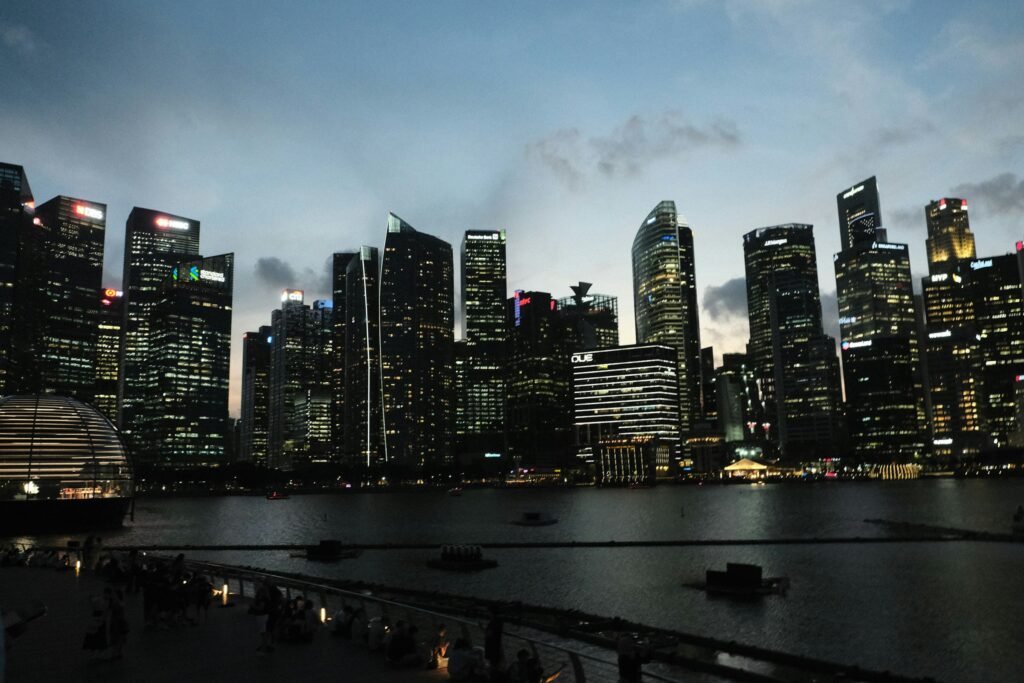
Nearly two years on, the 2025 edition has become the operative text for most SIAC cases, because typical SIAC clauses incorporate the rules in force at commencement. This note explains the main features, compares them with the 2026 ICC Rules, and identifies the drafting and strategy points for parties who must decide between the two institutions for contracts with an Asian dimension. The official text and SIAC's explanatory materials are available from the SIAC Rules 2025 page.
Three Tracks: Streamlined, Expedited and Standard
The most visible structural change is a three-tier system that matches procedure to value and complexity.
Streamlined Procedure (Rule 13)
The Streamlined Procedure applies where the parties agree to it before the tribunal is constituted or where the amount in dispute does not exceed S$1 million. The case goes to a sole arbitrator, the process is pared down, and the final award is due within three months of constitution of the tribunal. Tribunal fees and SIAC's administration fees are capped at half of the maximum in the Schedule of Fees. The President of SIAC can disapply the procedure on application in appropriate cases.
Expedited Procedure (Rule 14)
The Expedited Procedure threshold rises from S$6 million under the 2016 Rules to S$10 million. It also applies where the parties agree or where the circumstances of the case warrant it, a test that replaces the earlier reference to exceptional urgency. If a party asks for a hearing, one must be held. The final award is due within six months of constitution of the tribunal, unless the Registrar extends time.
Standard procedure
Cases above S$10 million, or excluded from the faster tracks, follow the standard procedure. Even here, the tribunal must, after consulting the parties, use reasonable efforts to identify the issues for determination and record them in a procedural order that can be updated as the case develops.
New Tribunal and Institutional Powers
Preliminary determination (Rule 46)
A tribunal may decide an issue on a preliminary basis where the parties agree, where the applicant shows that doing so is likely to save time and cost, or where the circumstances of the case otherwise warrant it. The 2016 Rules already contained an early dismissal power for claims and defences manifestly without legal merit; the 2025 power is broader and can address any issue whose early resolution would make the arbitration more efficient.
Emergency relief before commencement and protective preliminary orders
A party may now apply for emergency interim relief before filing its Notice of Arbitration, provided it files the Notice within seven days. The emergency arbitrator may also issue a protective preliminary order on an ex parte basis, for example to prevent dissipation of assets while the respondent is notified; such applications are to be decided within 24 hours of the emergency arbitrator's appointment.
Coordinated proceedings (Rule 17)
Where the same tribunal is constituted in two or more arbitrations that share a common question of law or fact, a party may ask for them to be coordinated: conducted concurrently or sequentially, heard together with aligned procedures, or with one suspended pending another. This sits alongside the existing joinder and consolidation powers.
Security for costs and security for claims
The tribunal has express power to order security for costs and, separately, security for claims, meaning provisional security for a claim, counterclaim or cross-claim pending the final award.
Third-party funding disclosure (Rule 38)
A party must disclose the existence of a funding agreement and the identity and contact details of the funder in its Notice or Response, or as soon as practicable after concluding the agreement. The tribunal may order disclosure of further details, including the funder's interest in the outcome and whether it has committed to cover adverse costs. Singapore law permits funding of international arbitration under the Civil Law Act 1909 and its regulations; our note on third-party funding in Singapore covers the framework.
Information security, settlement and digital filing
Parties may propose information security measures, which the tribunal discusses at the first case management conference and may direct and sanction. The Rules also encourage settlement, including through the SIAC-SIMC Arbitration-Mediation-Arbitration Protocol, and introduce SIAC Gateway, the centre's online case management platform for filing, payments and document storage.
Tribunal Constitution, Challenges and Case Management
Less publicised, but often decisive in practice, are the changes to how tribunals are formed and supervised.
- Nationality of the chair. Where the parties are of different nationalities, a sole or presiding arbitrator must be of a different nationality from the parties, unless the parties agree otherwise or the President decides otherwise. This mirrors the long-standing ICC approach.
- Availability. When appointing, the President must consider whether a candidate has sufficient availability to conduct the case efficiently, a point that matters in the faster tracks.
- Unequal appointment mechanisms. If an agreed method of constituting the tribunal creates a substantial risk of unequal treatment, typically in multi-party cases where one side would otherwise appoint alone, the President may, after hearing the parties, take the measures necessary to protect the integrity of the process.
- Challenges for inability to act. A new challenge ground covers an arbitrator who is de jure or de facto unable to perform their functions, for instance through prolonged illness or an unmanageable schedule.
- Pre-constitution administrative conferences. The Registrar may convene conferences with the parties before the tribunal is in place, including by video, to deal with practical issues such as the track, the number of arbitrators or consolidation.
These provisions give SIAC a more interventionist profile at the start of a case than the 2016 Rules did. For parties used to ICC, where the Court and the Secretariat case team play a similar role, the change will feel familiar. For parties who chose SIAC precisely because they expected a lighter touch, it is worth knowing that the institution now has clearer tools to shape the tribunal and timetable.
Why this matters for enforcement
Most SIAC awards are enforced outside Singapore, frequently in India, Indonesia, mainland China and other New York Convention states. A well-constituted tribunal and a documented, consultative procedure reduce the scope for due process objections at the enforcement stage. The new requirement to record the issues for determination in a procedural order is particularly useful: it creates a contemporaneous record that the tribunal addressed each issue the parties put to it, which helps resist arguments that an award failed to deal with a claim or went beyond the submission.
The same logic applies to the faster tracks. A respondent that loses under the Streamlined Procedure may argue at enforcement that a documents-only process denied it a fair hearing. That argument is weaker where the clause or the parties’ conduct shows agreement to the procedure, where the tribunal consulted the parties before deciding not to hold a hearing, and where the award explains briefly how each submission was considered. Counsel should build that record from the first procedural conference rather than trying to reconstruct it later.
SIAC Rules 2025 vs the 2026 ICC Rules
The 2026 ICC Rules, in force from 1 June 2026, adopted several features that SIAC users already had. The comparison is now about detail, cost and institutional style rather than missing tools.
| Issue | SIAC Rules 2025 | 2026 ICC Rules |
|---|---|---|
| Smallest cases | Streamlined Procedure up to S$1 million; award within three months of constitution | Opt-in Highly Expedited Arbitration (Appendix VI); award within three months of the case management conference |
| Expedited track | Up to S$10 million; award within six months of constitution | Automatic up to US$4 million for agreements concluded on or after 1 June 2026 (Appendix V) |
| Early resolution | Preliminary determination of any issue on efficiency grounds (Rule 46) | Early determination of manifestly unmeritorious claims or defences (Article 30) |
| Emergency relief | Available before the Notice; ex parte protective preliminary orders | Emergency arbitrator (Appendix IV), with power to issue preliminary orders; Request must follow within 10 days |
| Funding disclosure | Existence, identity and contact details; further details on order (Rule 38) | Existence and identity of funder with an economic interest (Article 12) |
| Award scrutiny | Draft awards reviewed by the Registrar before issue | Court scrutiny of draft awards (Article 37) |
For many parties the choice turns on cost and seat. SIAC's tiered tracks and fee caps give it an edge in low and mid-value disputes. ICC's scrutiny process, global case management network and familiarity to counterparties in Europe, the Middle East and Latin America remain strong reasons to prefer ICC for large, multi-jurisdictional disputes. Both institutions are commonly used with a Singapore seat, which brings the supervisory framework of the International Arbitration Act 1994. For a three-way comparison see ICC vs LCIA vs SIAC, and for HKIAC's equivalent changes see the HKIAC Rules 2024.
Strategy Points Under the SIAC Rules 2025
- Check the amount in dispute early. Claimants with claims near S$1 million or S$10 million should consider how framing the claim and any counterclaim affects the track. Respondents should consider whether a counterclaim will move the case out of the Streamlined Procedure.
- Use the pre-commencement emergency route deliberately. Applying before filing the Notice can save days, but the seven-day deadline to file the Notice is strict; prepare both together.
- Treat preliminary determination as a case management tool. It is wider than a strike-out power: a limitation defence, a contractual cap or a point of construction may be suitable even if not manifestly hopeless.
- Plan funding disclosure. Funded parties should agree with their funder, before filing, what will be disclosed and how adverse costs cover will be described if the tribunal asks.
- Consider coordination in project disputes. In construction or supply chains with multiple contracts, appointing the same tribunal across related arbitrations allows Rule 17 to operate.
Under the SIAC Rules 2025, a party facing a mid-value dispute should compare the Expedited Procedure under SIAC with the ICC Expedited Procedure before agreeing a clause. Thresholds are expressed in different currencies, award deadlines run from different starting points, and the fee caps differ. Model the likely cost of each with real numbers rather than assuming one is cheaper.
Drafting Clauses for the SIAC Rules 2025
SIAC's model clause refers disputes to arbitration administered by SIAC in accordance with the SIAC Rules for the time being in force. That wording means clauses signed under the 2016 edition now lead to the SIAC Rules 2025 for new cases, including the Streamlined Procedure. Parties who want a different result must say so expressly. In practice, a well-drafted clause should state:
- the seat, typically Singapore, rather than leaving it to the institution or tribunal;
- the number of arbitrators, with a value-based switch if appropriate, bearing in mind that the faster tracks override a three-member clause only in defined circumstances;
- the language of the arbitration;
- the law governing the arbitration agreement, especially where the main contract is governed by Indian, Indonesian, PRC or another law; and
- any opt-out from the Streamlined or Expedited Procedure, if the parties genuinely want a full procedure in all cases.
Parties choosing between the institutions can use our guide to Singapore as a seat and our analysis of the ICC Expedited Procedure to compare the alternatives on equal terms.
Transition and older clauses
Arbitrations commenced before 1 January 2025 continue under the 2016 Rules unless the parties agree otherwise. Clauses that refer expressly to the 2016 edition will normally be administered on that basis, although parties may agree to adopt particular 2025 features, such as coordinated proceedings, by consent. When a dispute arises under an older contract, confirm which edition applies before advising on emergency relief or early determination, because the available tools and time limits differ.
Illustration: a Singapore distributor and a Vietnamese manufacturer have a 2023 contract with SIAC's standard clause and a three-member tribunal. A S$800,000 claim is filed in 2026. Unless the parties agreed otherwise or the President disapplies it, the Streamlined Procedure applies, with a sole arbitrator and a three-month award deadline, even though the contract was signed under the 2016 Rules. A party that wanted three arbitrators should have said so expressly and excluded the Streamlined Procedure.
How TRW & Co Helps
We advise companies, state entities and funders on choosing between SIAC, ICC and other institutions, draft dispute resolution clauses for Asian and cross-border contracts, and act for claimants and respondents in SIAC and ICC arbitrations. Our Singapore team works with colleagues in London, Dubai, Dhaka, Delhi and New York, so a single team can advise on procedure, interim relief in several jurisdictions and enforcement planning. We help clients model the cost of each procedural track, prepare emergency applications and manage funding disclosure. To review a clause or discuss a dispute, please contact us.
Frequently asked questions
When did the SIAC Rules 2025 take effect?
The seventh edition of the SIAC Rules took effect on 1 January 2025. It applies to SIAC arbitrations commenced on or after that date unless the parties agreed otherwise. Because the SIAC model clause refers to the rules for the time being in force, most clauses signed under the 2016 Rules now lead to the 2025 edition for new cases.
What is the SIAC Streamlined Procedure?
It is a simplified track for disputes of S$1 million or less, or where the parties agree to it before the tribunal is constituted. A sole arbitrator decides the case, the procedure is pared down and the final award is due within three months of constitution. Tribunal and SIAC fees are capped at half of the maximum in the Schedule of Fees.
How does SIAC preliminary determination differ from ICC early determination?
ICC Article 30 targets claims or defences that are manifestly without merit or manifestly outside jurisdiction. The SIAC power is broader: the tribunal may decide any issue early where the parties agree, where it is likely to save time and cost, or where the circumstances warrant it. In practice SIAC tribunals can use it for construction points or limitation defences that are not hopeless.
Can I obtain emergency relief before starting a SIAC arbitration?
Yes. Under the 2025 Rules a party may apply for emergency interim relief before filing its Notice of Arbitration, provided it files the Notice within seven days. The emergency arbitrator may also grant a protective preliminary order without notice to the other side, with such applications to be decided within 24 hours of the emergency arbitrator's appointment.
Is SIAC cheaper than ICC?
Often for small and mid-value disputes, because of the Streamlined Procedure fee caps and the higher Expedited threshold. For larger disputes the answer depends on the number of arbitrators, the length of the case and the fee scales. Parties should model both institutions with realistic figures rather than rely on general reputations, and factor in counsel costs, which usually dominate.
Sources
General information only, not legal advice. References to the ICC, the ICC Court and the ICC Rules describe their published rules and practice; TRW & Co is independent of the ICC.
 China & Asia-Pacific
Arbitration in Mongolia and Myanmar
Mongolia and Myanmar arbitration combine modern statutes with frontier-market risk. Both countries have Model Law-based arbitration laws and belong to the New York Convention, but thin… 8 min read
 China & Asia-Pacific
ICC's Asia Offices in Singapore and Hong Kong
The ICC Asia office Singapore Hong Kong set-up lets the Secretariat administer ICC cases from two Asian cities under the same Rules, Court and fees. The… 8 min read
 China & Asia-Pacific
Enforcing Awards in Taiwan
Taiwan arbitration enforcement operates outside the New York Convention. Foreign awards are recognised under Articles 47 to 51 of the Arbitration Law, which mirror the Convention… 8 min read