
The Singapore Convention on Mediation
The Singapore Convention on Mediation allows international commercial settlement agreements reached through mediation to be enforced directly in the courts of its 25 parties. This note explains its scope, the grounds for refusal, the reservations that matter in practice and how it fits with ICC mediation and consent awards.

Key takeaways
- The Convention entered into force on 12 September 2020 and has 25 parties according to UNCITRAL.
- China, India and the United States have signed but not ratified; the UK signed in 2023.
- Settlements recorded as consent awards or court judgments fall outside the Convention.
- Several parties, including Japan and the UAE, apply it only where the parties agree.
- Refusal grounds are limited and include serious mediator misconduct and non-disclosure.
- Add an express opt-in clause and mediator attestation to every international settlement.
What the Singapore Convention on Mediation does
The Singapore Convention on Mediation, formally the United Nations Convention on International Settlement Agreements Resulting from Mediation, gives mediated settlements in international commercial disputes a direct route to enforcement in the courts of contracting states. A party holding a qualifying settlement agreement can ask a court in a state party to enforce it, or rely on it as a defence to a claim that the agreement has already resolved, without first suing for breach of contract. The Convention does for mediated settlements what the New York Convention does for arbitral awards, although it is younger and has far fewer parties.
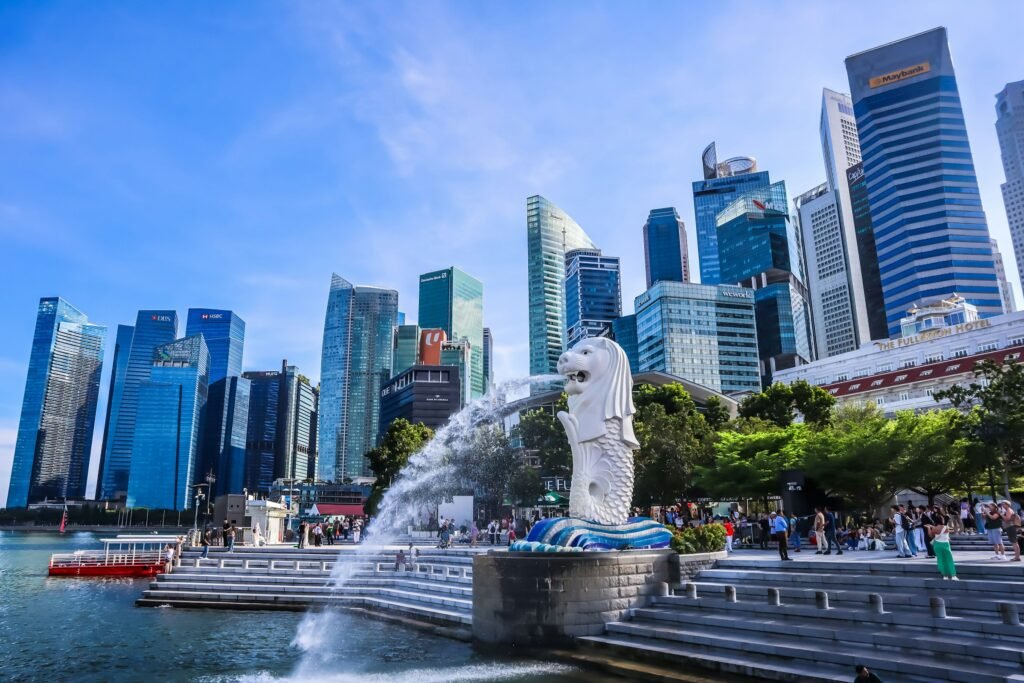
The Convention was adopted by the United Nations General Assembly on 20 December 2018 and opened for signature in Singapore on 7 August 2019, which is why it carries the city's name. It entered into force on 12 September 2020. According to the UNCITRAL status table, it now has 25 parties, including several whose ratification or accession takes effect in 2027.
For ICC users, the Convention matters in three ways: it strengthens the value of settlements reached in ICC mediation, it affects how settlements reached during an ICC arbitration should be recorded, and it influences the drafting of multi-tier clauses. This note explains its scope, the requirements and defences, the reservations states have made, and practical drafting points.
Status and key states
The Convention's reach depends on which states have joined. A large number of states signed on the opening day in 2019, including China, India, the Republic of Korea and the United States, but signature alone does not bind a state to apply it. The table below highlights a selection of parties from the UNCITRAL status table.
| State | Instrument deposited | In force for that state | Declarations under Article 8 |
|---|---|---|---|
| Singapore | 25 February 2020 | 12 September 2020 | None |
| Qatar | 12 March 2020 | 12 September 2020 | None |
| Saudi Arabia | 5 May 2020 | 5 November 2020 | Government agencies |
| Türkiye | 11 October 2021 | 11 April 2022 | None |
| Japan | 1 October 2023 (accession) | 1 April 2024 | Applies only where parties agree |
| Sri Lanka | 28 February 2024 | 28 August 2024 | None |
| Brazil | 6 August 2025 | 6 February 2026 | Government agencies |
| United Arab Emirates | 8 October 2026 (accession) | 8 April 2027 | Government agencies; applies only where parties agree |
Other parties include Bahrain, Belarus, Colombia, Costa Rica, Ecuador, Fiji, Georgia, Honduras, Israel, Kazakhstan, Kyrgyzstan, Mauritius, Nigeria, Oman, Paraguay, Uruguay and Uzbekistan. The United Kingdom signed in May 2023 but, according to the status table, has not ratified. China, India and the United States remain signatories only. Ratifications continue to arrive: Mauritius and Uzbekistan deposited instruments in August 2026, with entry into force in February 2027, and Oman's accession took effect in September 2026. For transactions involving the non-ratifying signatories, a mediated settlement must still be enforced as a contract, unless it is converted into an arbitral award or court judgment.
Scope of the Singapore Convention on Mediation
Under Article 1, the Singapore Convention on Mediation applies to an agreement resulting from mediation, concluded in writing by parties to resolve a commercial dispute, that is international at the time it is concluded. An agreement is international if at least two parties have their places of business in different states, or if the place of performance of a substantial part of the obligations, or the place with which the subject matter is most closely connected, differs from the state where the parties have their places of business.
Two groups of agreements are excluded. The first covers consumer settlements for personal, family or household purposes and agreements relating to family, inheritance or employment law. The second avoids overlap with other instruments: the Convention does not apply to settlements approved by a court or concluded in court proceedings that are enforceable as a judgment, or to settlements recorded and enforceable as an arbitral award. That second exclusion is central for ICC users and is discussed below.
"Mediation" is defined broadly as a process in which parties attempt to reach an amicable settlement with the assistance of a third person who lacks authority to impose a solution, regardless of what the process is called. Mediation under the ICC Mediation Rules plainly qualifies, as do many conciliation and facilitated negotiation processes.
Requirements and grounds for refusal
Article 4 keeps the formal requirements light. The party relying on the settlement must supply the agreement signed by the parties and evidence that it resulted from mediation, such as the mediator's signature on the agreement, a document signed by the mediator confirming that the mediation took place, or an attestation by the institution that administered it. Electronic communications can satisfy the writing and signature requirements. The competent authority may ask for further documents to verify compliance.
Article 5 sets out the only grounds on which relief may be refused. At the request of the resisting party, the court may refuse if:
- a party to the settlement was under some incapacity;
- the agreement is null and void, inoperative or incapable of being performed under the applicable law, is not binding or final under its terms, or has been subsequently modified;
- the obligations have been performed or are not clear or comprehensible;
- granting relief would be contrary to the terms of the agreement;
- the mediator seriously breached standards applicable to the mediator or the mediation, without which the party would not have entered into the agreement; or
- the mediator failed to disclose circumstances raising justifiable doubts about impartiality or independence, and that failure had a material impact or undue influence on the party.
The court may also refuse on its own motion if relief would be contrary to its public policy or if the subject matter is not capable of settlement by mediation under its law. Article 6 allows a court to adjourn where a parallel application relating to the settlement is pending before another court or tribunal, and Article 7 preserves any more favourable law or treaty. The UNCITRAL page on the Convention sets out the text and an explanatory overview.
No seat and no set-aside
One structural difference from arbitration deserves emphasis. The Singapore Convention on Mediation has no concept of a seat and no mechanism for annulling a settlement agreement in its place of origin. There is no equivalent of setting aside an award, and no court whose ruling on validity binds the others. Each enforcing court applies Article 5 for itself, so a settlement could in principle be enforced in one state and refused in another. Challenges to the agreement's validity are decided under the law the enforcing court considers applicable.
The Convention also says nothing about how the mediation must be conducted. It does not require an institution, a particular set of rules or a qualified mediator, although the conduct of the mediator becomes relevant through the refusal grounds. Parties therefore gain flexibility, but the quality of the process, and the record of it, matters if enforcement is later resisted.
Why it matters in Asia and the Middle East
The geographic pattern of ratifications is striking. Singapore, Japan, Sri Lanka and Kazakhstan in Asia, and Saudi Arabia, Qatar, Bahrain, Oman, Israel and now the UAE in the Middle East, have joined, while several major European economies have not. For parties doing business across the Gulf and Asia, the Singapore Convention on Mediation is therefore becoming a practical tool rather than a theoretical one, particularly in construction, energy and supply relationships where mediated settlements are common.
Reservations under Article 8
Article 8 permits two reservations, and they significantly affect how the Singapore Convention on Mediation works in practice. A state may declare that it will not apply the Convention to settlement agreements to which it, or any of its government agencies or persons acting on its behalf, is a party, to the extent specified. And a state may declare that it will apply the Convention only to the extent that the parties to the settlement agreement have agreed to its application.
The status table shows that several parties have made one or both declarations, including Japan, the UAE, Saudi Arabia, Brazil, Kazakhstan, Georgia, Israel and Uzbekistan. The opt-in reservation is the one most likely to catch parties out. Where a settlement will need to be enforced in a state that has made it, the agreement should state expressly that the parties agree to the application of the Convention. Japan, for example, made the opt-in declaration when it acceded; its implementing legislation, Act No. 16 of 2023, is described on the Ministry of Justice's page and in our note on Japan's amended Arbitration Act.
Add a short clause to every international settlement agreement confirming that it results from mediation, that the parties agree to the application of the Singapore Convention, and identifying the mediator and any administering institution. Have the mediator sign or attest the agreement. These steps cost nothing and remove the most common formal objections in opt-in states.
The Singapore Convention on Mediation and ICC proceedings
ICC mediation is conducted under the 2014 ICC Mediation Rules, which remain in force alongside the 2026 Arbitration Rules. ICC's 2025 statistics record 36 requests under the Mediation Rules. A settlement reached in an ICC mediation, signed by the parties and evidenced by the mediator or the ICC International Centre for ADR, is a natural candidate for enforcement under the Convention where the relevant state is a party. Our page on ICC mediation explains the procedure, and our note on the cost of ICC mediation covers fees.
The position differs when settlement is reached during an ICC arbitration. Under Article 36 of the 2026 ICC Rules, if the parties settle after the file has been transmitted to the tribunal, the settlement is recorded as an award by consent if the parties request it and the tribunal agrees. A consent award is enforceable under the New York Convention and is therefore excluded from the Singapore Convention. For enforcement in the many states that are party to the New York Convention but not the Singapore Convention, that is usually the stronger option.
The Rules also connect the two processes financially. Under the ICC's schedule of costs, when an arbitration follows proceedings under the ICC Mediation Rules, ICC credits half of the administrative expenses paid for the mediation towards those of the arbitration.
Mediation can also run in parallel with an ICC arbitration. Tribunals often build a window for settlement into the procedural timetable, and parties may agree to stay the arbitration while an ICC mediation takes place. If the mediation succeeds, the parties then choose between asking the tribunal for a consent award and signing a free-standing settlement agreement. The choice should be made deliberately, by reference to where the settlement may need to be enforced, whether the counterparty is a state entity covered by a government-agency reservation, and whether the parties want the confidentiality of a private agreement rather than an award notified through the Secretariat.
Drafting points for clauses and settlements
- Multi-tier clauses. Where an ICC clause provides for mediation before arbitration, make the mediation step clear and time-limited, and consider whether the parties want a resulting settlement to be enforceable under the Convention. See our page on multi-tier clauses.
- Choose the enforcement route. If an arbitration is already on foot, compare a consent award with a free-standing settlement agreement in the light of where enforcement may be needed.
- Check reservations. Identify the likely place of enforcement and whether it has made an opt-in or government-agency declaration.
- Draft clear obligations. A court may refuse relief where obligations are not clear or comprehensible, so specify amounts, currencies, dates and conditions precisely.
- Record mediator disclosures. Keep the mediator's disclosure statement on file to answer any later challenge based on impartiality.
- Plan for non-party states. Where enforcement may be needed in a state that has not ratified, consider including an arbitration clause in the settlement agreement itself, so that any dispute about performance can be resolved by an award enforceable under the New York Convention.
Illustration: a Saudi contractor and a Turkish supplier settle a supply dispute through ICC mediation. The settlement agreement, signed by both parties and attested by the mediator, records that the parties agree to the application of the Convention. When the supplier fails to pay the second instalment, the contractor can apply to a court in Türkiye, a party to the Singapore Convention on Mediation, to enforce the agreement directly, rather than starting a new contractual claim. The supplier's defences would be confined to the Article 5 grounds.
How TRW & Co helps
We advise clients on mediation strategy in international commercial disputes, including ICC mediation run alongside or before ICC arbitration. Our work includes drafting multi-tier clauses, preparing for and representing parties in mediation, drafting settlement agreements with enforcement in mind, and advising on whether to record a settlement as a consent award or rely on the Convention.
Our network offices in Dhaka, London, Dubai, New York, Singapore and Delhi coordinate enforcement of settlements and awards across jurisdictions, working with local counsel where needed. This note is general information and not legal advice. To discuss a mediation or settlement, please contact our team.
Frequently asked questions
Does the Singapore Convention apply to settlements reached in an ICC arbitration?
Only if the settlement is not recorded as an award. Under Article 36 of the 2026 ICC Rules, parties who settle after the file reaches the tribunal can ask for a consent award, which is enforceable under the New York Convention and excluded from the Singapore Convention. A free-standing mediated settlement agreement may fall within the Singapore Convention instead.
Is the Singapore Convention in force in the UK, the US, China or India?
Not according to the UNCITRAL status table. The United States, China and India signed on 7 August 2019, and the United Kingdom signed on 3 May 2023, but none has ratified. In those states, a mediated settlement is enforced as a contract unless it has been converted into an arbitral award or court judgment.
What evidence is needed to show that a settlement resulted from mediation?
Article 4 accepts the mediator's signature on the settlement agreement, a document signed by the mediator confirming that the mediation was carried out, or an attestation by the institution that administered the mediation. If none is available, other evidence acceptable to the court may be used. The court may request further documents to verify compliance.
What is the opt-in reservation?
Under Article 8, a state may declare that it will apply the Convention only where the parties to the settlement agreement have agreed to its application. Japan, the UAE and several other parties have made this declaration. To be safe, every international settlement agreement should state expressly that the parties agree to the application of the Convention.
Can a party resist enforcement because of mediator misconduct?
Yes, but only in limited cases. A court may refuse relief if the mediator seriously breached applicable standards and the party would not otherwise have entered into the settlement, or if the mediator failed to disclose circumstances raising justifiable doubts about impartiality or independence and that failure had a material impact or undue influence on the party.
Sources
- UNCITRAL: United Nations Convention on International Settlement Agreements Resulting from Mediation
- UNCITRAL: Status of the Singapore Convention on Mediation
- Ministry of Justice of Japan: Amended Arbitration Act and Singapore Convention implementation act
- ICC 2026 Arbitration Rules and 2014 Mediation Rules (English text, PDF)
- ICC Dispute Resolution 2025 Statistics (PDF)
General information only, not legal advice. References to the ICC, the ICC Court and the ICC Rules describe their published rules and practice; TRW & Co is independent of the ICC.
 China & Asia-Pacific
Arbitration in Mongolia and Myanmar
Mongolia and Myanmar arbitration combine modern statutes with frontier-market risk. Both countries have Model Law-based arbitration laws and belong to the New York Convention, but thin… 8 min read
 China & Asia-Pacific
ICC's Asia Offices in Singapore and Hong Kong
The ICC Asia office Singapore Hong Kong set-up lets the Secretariat administer ICC cases from two Asian cities under the same Rules, Court and fees. The… 8 min read
 China & Asia-Pacific
Enforcing Awards in Taiwan
Taiwan arbitration enforcement operates outside the New York Convention. Foreign awards are recognised under Articles 47 to 51 of the Arbitration Law, which mirror the Convention… 8 min read