
Singapore vs Hong Kong for Asia-Pacific Disputes
The Singapore vs Hong Kong seat choice matters most when China is involved. Both are trusted common-law seats with Model Law foundations, but only Hong Kong offers Mainland arrangements for award enforcement and court-ordered interim measures. We compare neutrality, enforcement, interim relief and finality for ICC users.

Key takeaways
- Singapore had 42 ICC-seated cases in 2025; Hong Kong SAR had four, according to ICC statistics.
- Hong Kong awards are enforced in the Mainland under a dedicated arrangement, supplemented in 2020.
- Hong Kong-seated ICC arbitrations can access Mainland court interim measures through the ICC Asia Office.
- Singapore adds fraud, corruption and natural justice to the Model Law set-aside grounds.
- Both seats apply a three-month time limit for setting aside awards.
- Neutrality perceptions and the likely direction of claims should drive the choice.
Singapore vs Hong Kong Seat: The Short Answer
The Singapore vs Hong Kong seat question usually comes down to China. Both are Model Law-based, common-law jurisdictions with experienced courts and New York Convention status. Singapore is the more frequent ICC choice and is widely regarded as a neutral hub between Asian, Western and Middle Eastern parties. Hong Kong offers something no other seat does: dedicated arrangements with Mainland China for enforcing Hong Kong awards and for obtaining Mainland court interim measures in support of Hong Kong-seated arbitrations administered by qualifying institutions, including the ICC.
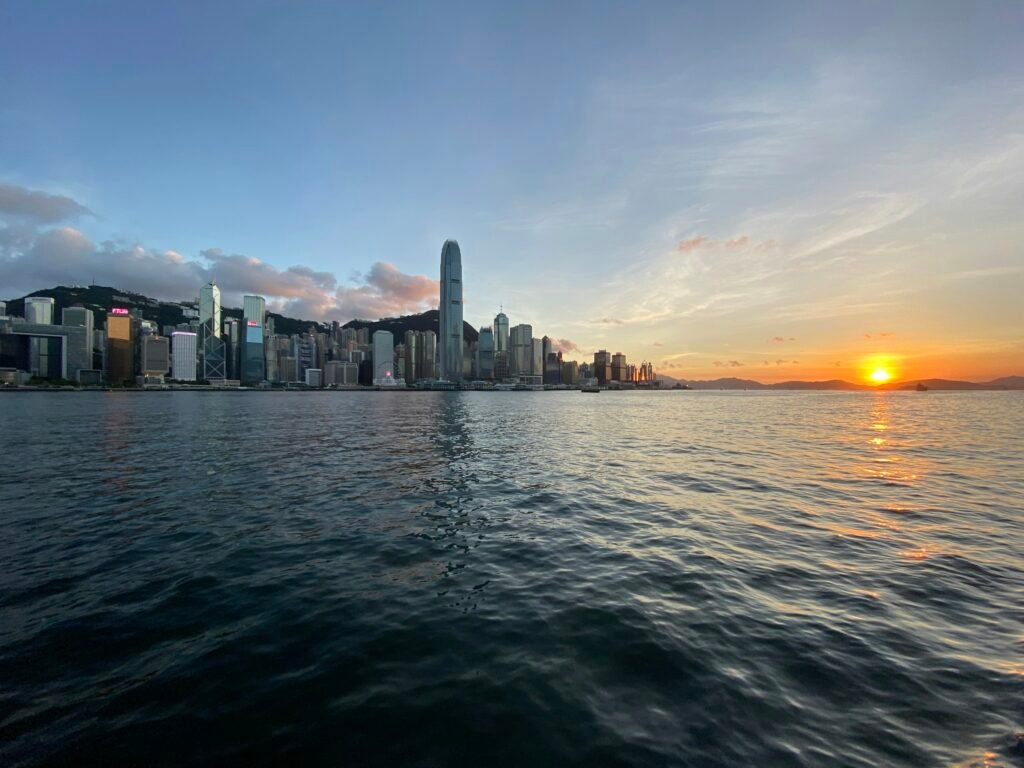
In ICC practice the gap in usage is wide. The ICC Dispute Resolution 2025 Statistics record 42 Singapore-seated cases in 2025, making it the fourth most selected city worldwide, against four cases seated in Hong Kong SAR. Much Hong Kong-seated arbitration is administered by other institutions, so those figures understate Hong Kong's overall role, but they show where ICC users have tended to go. The right answer for a given contract depends on the counterparty, its assets and the relief that may be needed.
Legal Frameworks Side by Side
Both jurisdictions build on the UNCITRAL Model Law, but in different ways. Singapore's International Arbitration Act 1994 gives the Model Law the force of law for international arbitrations and adds its own provisions. Hong Kong's Arbitration Ordinance (Cap. 609), in force since June 2011, incorporates the Model Law article by article within a single regime for domestic and international arbitration.
| Issue | Singapore | Hong Kong |
|---|---|---|
| Statute | International Arbitration Act 1994 (IAA) with the Model Law | Arbitration Ordinance (Cap. 609), Model Law-based |
| Setting aside | Model Law Art. 34 plus IAA s.24 (fraud or corruption; natural justice); three months | Section 81 (Model Law Art. 34); three months |
| Optional appeals | None on the merits | Schedule 2 opt-in appeal on questions of law and serious irregularity challenge |
| Emergency arbitrator relief | Enforceable with permission; emergency arbitrators within the definition of arbitral tribunal | Enforceable with leave under ss.22A and 22B, whether granted in or outside Hong Kong |
| Court interim measures | Section 12A, including for foreign-seated arbitrations | Section 45, including for arbitrations outside Hong Kong |
| Confidentiality | Implied duty; tribunals may enforce it by order since 2020 | Statutory duty under s.18; court hearings in private by default |
| Mainland China award enforcement | New York Convention | Mainland-Hong Kong Arrangement, as supplemented in 2020 |
| Mainland interim measures | Not available | Available for qualifying institution-administered arbitrations, including the ICC Asia Office |
| ICC cases seated there in 2025 | 42 | 4 |
The statutory texts are available on Singapore Statutes Online and Hong Kong e-Legislation. Our seat pages for Singapore and Hong Kong cover each regime in depth.
China Enforcement: The Decisive Factor in the Singapore vs Hong Kong Seat Choice
Because Hong Kong and the Mainland are parts of the same state, the New York Convention does not apply between them. Instead, a 1999 Arrangement on mutual enforcement of arbitral awards governs. It was amended by a Supplemental Arrangement signed on 27 November 2020 and fully implemented in Hong Kong on 19 May 2021, as the Hong Kong Government announced. The Supplemental Arrangement defines its scope by the seat, so it covers Hong Kong-seated ICC awards, and it removed the former bar on enforcing in the Mainland and Hong Kong at the same time.
A Singapore award is enforced in the Mainland under the New York Convention, to which China has been a party since 1987, with reciprocity and commercial reservations. Mainland courts have a long-standing internal reporting system under which a proposed refusal to enforce a foreign or Hong Kong award is referred to higher courts, which has supported consistency. In practice, both routes are workable; the Hong Kong route is tailored to the Mainland relationship and allows parallel enforcement in both places.
The legal backdrop in the Mainland is also changing. The revised PRC Arbitration Law came into force on 1 March 2026, affecting Mainland-seated arbitration and court practice. See our insights on the China Arbitration Law revision and enforcing foreign awards in Mainland China.
Interim Relief: Mainland Preservation and Court Support
For many parties, interim relief is the real distinction in a Singapore vs Hong Kong seat analysis. The Arrangement Concerning Mutual Assistance in Court-ordered Interim Measures in Aid of Arbitral Proceedings took effect on 1 October 2019. It allows a party to a Hong Kong-seated arbitration administered by a qualifying institution to apply to the Mainland courts for property, evidence or conduct preservation. The Hong Kong Government's announcement listed the ICC International Court of Arbitration's Asia Office among the qualifying institutions.
No equivalent arrangement exists for Singapore-seated arbitrations. A party arbitrating in Singapore against a Mainland counterparty can seek emergency arbitrator relief or Singapore court orders, but those will not bind assets in the Mainland directly. For a claimant worried that a Mainland respondent will dissipate assets, that difference can outweigh every other factor.
Outside the Mainland context, the two seats are closely matched. Singapore's section 12A and Hong Kong's section 45 each let the courts grant interim measures in support of arbitrations seated at home or abroad, and each jurisdiction enforces emergency arbitrator relief. Article 29(2) of the 2026 ICC Rules preserves recourse to courts without waiving the arbitration agreement, provided the Secretariat and tribunal are notified without delay.
If Mainland preservation may be needed, choose Hong Kong as the seat and keep the ICC as the administering institution so that the case falls within the interim measures arrangement. Do not simply agree "arbitration in Asia" and leave the seat to the ICC Court. Prepare Chinese translations of key documents in advance, as Mainland courts act quickly and may require security.
Set-Aside Practice and Finality
Both seats limit challenges to the Model Law grounds, with Singapore adding fraud or corruption and breach of natural justice. Both apply a three-month time limit. Courts in each jurisdiction read awards generously, refuse to treat challenges as appeals and may impose adverse costs on unsuccessful applicants.
Singapore's courts have occasionally set aside awards for breach of natural justice, including an ICC award in DJO v DJP, where the Singapore International Commercial Court found in 2024, upheld on appeal in 2025, that the tribunal had relied heavily on awards from parallel arbitrations chaired by the same presiding arbitrator, material to which the co-arbitrators did not have equal access. Hong Kong's courts apply a similarly strict standard and retain a discretion not to set aside even where a ground is made out. In C v D (2023), the Court of Final Appeal held that compliance with a pre-arbitration escalation clause was a matter of admissibility for the tribunal, not jurisdiction for the court.
One structural difference is Hong Kong's Schedule 2, which lets parties opt in to an appeal on questions of law and a serious irregularity challenge. Few ICC users do so, and the ICC waiver of recourse in Article 38(3) of the 2026 Rules points the other way. Unless the parties have opted in, recourse against a Hong Kong award is limited to setting aside under section 81.
Courts, Judges and Published Authority
Judicial infrastructure is a strength at both seats. In Singapore, arbitration applications are heard in the General Division of the High Court, and international arbitration matters may be heard in the Singapore International Commercial Court, whose bench includes international judges from civil and common law traditions. Appeals go to the Court of Appeal. In Hong Kong, arbitration matters are heard in the Construction and Arbitration List of the Court of First Instance by specialist judges, with appeals to the Court of Appeal and, with leave, the Court of Final Appeal.
Both jurisdictions publish a large volume of arbitration judgments, which makes outcomes relatively predictable. Singapore decisions on natural justice, the law of the arbitration agreement and arbitrability are cited across the region. Hong Kong decisions on stays, enforcement and multi-tier clauses are equally influential, and the courts' long-standing emphasis on enforcing awards unless a serious defect is shown has given users confidence.
Both sets of courts also enforce the arbitration agreement firmly. Court proceedings brought in breach of an arbitration clause are generally stayed where there is a prima facie agreement covering the dispute, and both jurisdictions can grant anti-suit relief in appropriate cases. A party worried that a counterparty will litigate at home therefore has protection at either seat, although enforcing such an order abroad depends on the counterparty's assets and attitude.
Drafting, Neutrality and Logistics
Whichever side of the Singapore vs Hong Kong seat debate you land on, the clause must be precise. The ICC model clause should be supplemented with a statement of the seat, the language and, ideally, the law of the arbitration agreement. Suggested wording is: "The seat, or legal place, of arbitration shall be [Singapore] [Hong Kong]. The language of the arbitration shall be English. This arbitration agreement shall be governed by the law of [the seat]."
For Hong Kong, refer to the Hong Kong Special Administrative Region if there is any risk of confusion, and state that the arbitration shall be administered by the ICC so that the interim measures arrangement remains available. For Singapore, remember that there is no statutory default rule for the law of the arbitration agreement comparable to England's section 6A, so an express choice is particularly valuable. In both cases, consider whether to adopt the Expedited Procedure Provisions thresholds or the opt-in Highly Expedited Arbitration under Appendix VI of the 2026 Rules for smaller disputes.
Finally, align the dispute clause with the rest of the contract. Multi-tier escalation steps, exclusive jurisdiction clauses for particular issues and security arrangements can all generate satellite disputes if they point in different directions. After C v D, Hong Kong courts generally treat escalation steps as matters for the tribunal; parties should not assume every court will take the same view, so clear drafting of the escalation steps and their consequences remains the best protection.
Neutrality, Logistics and ICC Practice
Neutrality is a matter of perception as much as law. Both jurisdictions have independent common-law courts that publish reasoned judgments in English. Some parties, particularly from Mainland China, may see Hong Kong as familiar and convenient; others, including some Western, Indian and Middle Eastern parties, may prefer Singapore as a seat neither side regards as home. Where a state-linked Mainland entity is the counterparty, these perceptions can affect negotiations in either direction, and parties should test them honestly before proposing a seat.
- ICC presence. The ICC Secretariat has offices in both cities. Case administration is independent of the seat, but for the Mainland interim measures arrangement the case must be administered by the qualifying ICC Asia Office.
- Language. Singapore arbitrations are overwhelmingly in English. Hong Kong supports English and Chinese, which helps where Mainland witnesses and documents are central.
- Funding. Singapore has permitted third-party funding of international arbitration since 2017 and conditional fee agreements since 2022. Hong Kong has permitted third-party funding since 2019, and outcome related fee structures for arbitration have been fully in force since December 2022. The 2026 ICC Rules require disclosure of funders.
- Representation. Foreign counsel may appear in arbitrations at both seats; court proceedings require local lawyers, subject to limited registration for certain Singapore International Commercial Court matters.
Choosing Between Them: A Singapore vs Hong Kong Seat Checklist
A structured approach helps parties reach agreement. We suggest asking the following questions in order.
- Is the counterparty Mainland Chinese, or are its key assets in the Mainland? If yes, Hong Kong's arrangements deserve serious weight.
- Will urgent preservation of Mainland assets or evidence be needed? Only a Hong Kong seat with a qualifying institution opens the interim measures route.
- Is neutrality the overriding concern for either party? Singapore often resolves deadlock where one side is Chinese and the other is not.
- Where else are the assets? For South-East Asia, South Asia and the Gulf, both seats produce Convention awards that are widely recognised.
- Which language and time zone suit the witnesses?
- Has the clause named the seat precisely, with the ICC as administering institution?
Illustration: a Bangladeshi textile group contracts with a Guangdong machinery supplier, whose assets are almost entirely in the Mainland. The Bangladeshi party, as likely claimant, may favour a Hong Kong seat with ICC administration, to secure access to Mainland preservation and parallel enforcement. If instead the Bangladeshi party expected to be the respondent, it might prefer Singapore's neutrality. The Singapore vs Hong Kong seat decision should be made with the likely direction of claims in mind. Our guide to the best seat for ICC arbitration sets out the wider criteria.
How TRW & Co Helps
We advise on ICC arbitrations seated in Singapore and Hong Kong, working from our Singapore office with colleagues in Dhaka, Delhi, Dubai, London and New York, and with Singapore, Hong Kong and Mainland counsel where court steps are needed. Many of our clients are South Asian or Middle Eastern parties contracting with Chinese or South-East Asian counterparties, for whom the Singapore vs Hong Kong seat choice is a practical negotiating point. We compare the seats against the asset map, draft seat clauses, plan interim relief including Mainland preservation, and coordinate enforcement. We do not promise outcomes. To discuss a matter, contact our team.
Frequently asked questions
Is Singapore or Hong Kong better for disputes with Chinese parties?
Hong Kong offers unique advantages: Hong Kong-seated awards are enforced in the Mainland under a dedicated arrangement, and parties to Hong Kong-seated arbitrations administered by qualifying institutions, including the ICC Asia Office, can seek Mainland court interim measures. Singapore offers strong neutrality and Mainland enforcement under the New York Convention. A likely claimant against Mainland assets will often favour Hong Kong.
Can I get Mainland Chinese court interim measures in a Singapore-seated ICC arbitration?
No equivalent of the Hong Kong arrangement exists for Singapore. The Arrangement on court-ordered interim measures, in effect since 1 October 2019, applies only to Hong Kong-seated arbitrations administered by qualifying institutions. In a Singapore-seated case, parties can use the ICC emergency arbitrator or Singapore court orders, but these do not directly bind assets in the Mainland.
What are the time limits for setting aside awards in Singapore and Hong Kong?
Both apply the Model Law three-month time limit from receipt of the award. In Singapore the grounds are those in Article 34 of the Model Law plus fraud or corruption and breach of natural justice under section 24 of the IAA. In Hong Kong the grounds are those in section 81, which gives effect to Article 34, unless the parties opted in to Schedule 2.
Does the New York Convention apply to Hong Kong awards?
Yes, for enforcement outside China. The Convention applies to Hong Kong through China's extension of it, so Hong Kong awards can be enforced in other contracting states. Between Hong Kong and the Mainland, which are parts of the same state, a separate Arrangement on mutual enforcement applies, amended by a Supplemental Arrangement fully implemented in Hong Kong on 19 May 2021.
Why do so few ICC cases choose Hong Kong as the seat?
ICC statistics show four Hong Kong-seated cases in 2025, compared with 42 in Singapore. Much Hong Kong-seated arbitration is administered by other institutions, and many ICC users seeking an Asian seat choose Singapore for its perceived neutrality. Where Mainland enforcement or interim measures matter, however, a Hong Kong seat with ICC administration can be the stronger choice.
Sources
- International Arbitration Act 1994 (Singapore Statutes Online)
- Arbitration Ordinance (Cap. 609), Hong Kong e-Legislation
- HKSAR Government: institutions qualified under the Interim Measures Arrangement (2019)
- HKSAR Government: Arbitration (Amendment) Ordinance 2021 commencement
- ICC 2026 Arbitration Rules
- ICC Dispute Resolution 2025 Statistics
General information only, not legal advice. References to the ICC, the ICC Court and the ICC Rules describe their published rules and practice; TRW & Co is independent of the ICC.
 Seats & Comparisons
ICC Hearing Centres and Venues
ICC hearing centres Paris Singapore and São Paulo are the venues most often considered for ICC hearings. We explain what the ICC's own Paris and São… 9 min read
 Seats & Comparisons
Seat Choice When Sanctions Are a Risk
Seat choice for sanctioned counterparties decides which sanctions laws apply, whether courts can stop parallel litigation and whether an award can be paid. We explain Russia's… 10 min read
 Seats & Comparisons
Choosing a Neutral Seat in Asia-Europe Contracts
Finding a neutral seat for Asian and Western parties is one of the hardest points in negotiating an ICC clause. We compare Singapore, Hong Kong, London,… 10 min read