
Telecoms Disputes in International Arbitration
Telecoms disputes arbitration sits where commercial contracts meet state licences and regulated networks. This guide explains how licence, spectrum, interconnection, vendor and tower disputes arise, which questions belong to the regulator rather than the tribunal, and how operators and investors can use the 2026 ICC Rules to protect value.

Key takeaways
- Licence and spectrum disputes usually involve the state and may give rise to contract, investment-law or treaty claims.
- Regulators or specialist tribunals often have exclusive jurisdiction over regulated interconnection terms.
- Vendor roll-out and managed services disputes resemble construction cases and turn on technical evidence.
- The ICC emergency arbitrator is unavailable where the arbitration agreement arises from a treaty or investment protection law.
- Compatible clauses across the contract suite let Articles 10 and 11 bring related claims together.
Telecoms Disputes Arbitration in Short
Telecoms disputes arbitration covers the claims that arise when operators, tower companies, equipment vendors, satellite providers, investors and governments fall out over the contracts and licences that run a communications network. Licences and spectrum are granted by the state, interconnection terms are shaped by regulators, and the network itself is built and maintained under long supply, managed services and infrastructure-sharing contracts. When those arrangements break down across borders, the parties usually turn to international arbitration, and the ICC is a common choice. New ICC cases begun on or after 1 June 2026 run under the 2026 ICC Rules of Arbitration unless the parties agree otherwise.
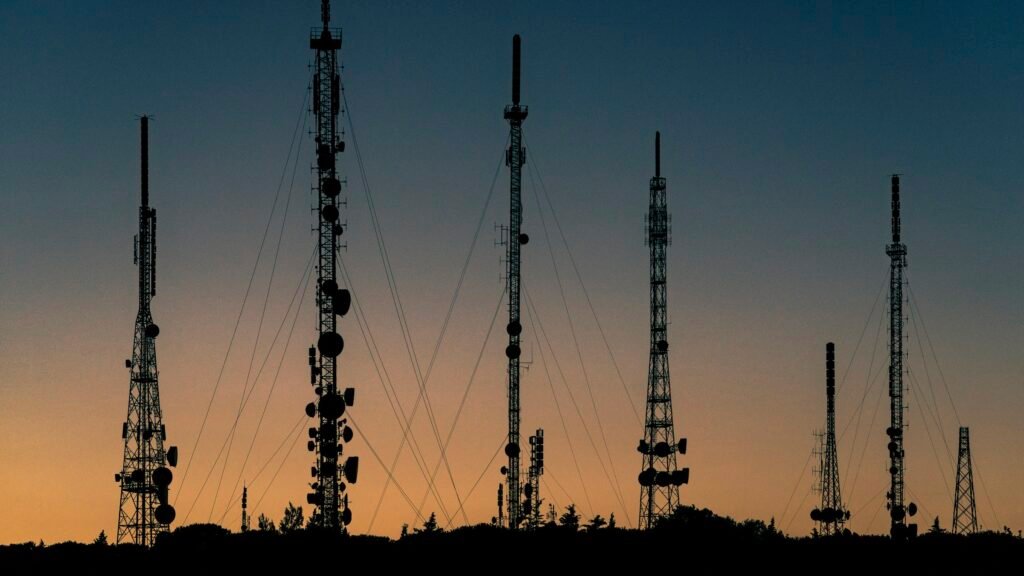
The sector is a steady part of the ICC caseload. In the ICC's dispute resolution statistics for 2025, telecoms and specialised technologies accounted for 5% of new cases. The real share of telecoms work is larger, because many construction, M&A and finance cases concern networks, towers, data centres or subsea cables. This guide explains where telecoms disputes come from, which of them can be arbitrated, how the regulator fits in, and what the 2026 Rules change for operators and investors.
Where Telecoms Disputes Come From
The industry combines heavy regulation with fast technological change. Operators commit billions to spectrum and network roll-out against revenue forecasts that depend on tariffs, competition and regulatory decisions they do not control. Vendors sign multi-year supply and managed services contracts priced on technology that may be obsolete before the contract ends. Governments, for their part, see spectrum as a scarce public resource and a source of revenue, and policy can change with each auction cycle.
| Dispute type | Typical parties | Usual legal basis | Recurring issues |
|---|---|---|---|
| Licence and spectrum | Operator or investor v state, ministry or regulator | Licence terms, concession, investment law or treaty | Revocation, renewal, fees, coverage obligations, expropriation |
| Interconnection and roaming | Operator v operator | Interconnection or roaming agreement; regulatory determinations | Termination rates, traffic disputes, unpaid balances, regulator jurisdiction |
| Network supply and managed services | Operator v equipment vendor or integrator | Supply, roll-out or managed services contract | Delay, acceptance tests, service levels, liquidated damages, price adjustment |
| Towers and infrastructure sharing | Operator v tower company | Master lease or sale-and-leaseback agreements | Escalation, colocation, site access, early termination fees |
| Satellite and subsea capacity | Capacity provider v operator, broadcaster or state agency | Capacity lease, IRU or consortium agreement | Termination, force majeure, take-or-pay, allocation of capacity |
| Joint ventures and M&A | Shareholders, buyers and sellers of telecoms businesses | Shareholders' agreement or SPA | Deadlock, regulatory approvals, warranties, earn-outs |
These categories overlap. A spectrum decision by a regulator can trigger a treaty claim by the foreign shareholder, a force majeure dispute with a vendor halfway through roll-out, and a deadlock between joint venture partners about whether to bid at the next auction. Identifying each clause and forum at the start is part of the job.
Licences, Spectrum and the State
The highest-value telecoms disputes usually involve the state. Licences can be revoked, suspended or not renewed; spectrum can be reallocated; licence fees, revenue shares and coverage obligations can be changed. Whether a foreign investor has an arbitral remedy depends on the instruments it holds. A licence or concession agreement may contain an arbitration clause. A national investment law may contain a standing offer to arbitrate. An investment treaty between the investor's home state and the host state may allow claims for unfair treatment or expropriation.
A well-known example of how such a dispute can travel is the Indian satellite spectrum dispute between Devas and Antrix. After the state-owned Antrix terminated a satellite capacity agreement in 2011, Devas obtained an ICC award in 2015, and the case then moved through set-aside proceedings in India, parallel treaty claims and enforcement litigation that reached the US Supreme Court in 2025. Our explainer on CC/Devas v Antrix follows that path. The practical lesson for telecoms disputes arbitration is that winning the award is often the midpoint, not the end.
When a claim is based on a treaty or an investment protection law, the 2026 Rules treat it differently. The emergency arbitrator provisions in Appendix IV do not apply where the arbitration agreement arises from a treaty or an investment protection law, and Article 14(6) provides that no arbitrator may share the nationality of any party in such cases unless the parties agree otherwise. Where a state or state entity is a party, Article 14(4) also allows the ICC Court to appoint arbitrators directly rather than through a National Committee. Our guide to treaty protection explains the substantive standards.
Interconnection and the Regulator
Interconnection disputes are the area where telecoms disputes arbitration meets public regulation most directly. Under the WTO Reference Paper on basic telecommunications of 1996, members that adopted it committed to ensure that a major supplier offers interconnection on non-discriminatory, transparent and cost-oriented terms, and that a supplier seeking interconnection can take disputes about terms and rates to an independent domestic body, which may be the regulator. Many national laws give that role to the telecoms regulator or a specialist tribunal.
That has two consequences for arbitration. First, some questions belong to the regulator by law: setting a regulated rate, determining whether a party has significant market power, or ordering access. An arbitral tribunal cannot rewrite a regulatory determination, though it can usually decide what a contract says, whether a party paid what it owed and what damages flow from a breach. Second, some legal systems channel disputes between licensees to a specialist body. In India, for example, the Telecom Regulatory Authority of India Act 1997 established the Telecom Disputes Settlement and Appellate Tribunal to hear disputes between the licensor and licensees and between service providers, and whether such disputes can instead be arbitrated has been litigated in the Indian courts.
Before filing, separate the claim into what the contract decides and what the regulator decides. Plead the contractual claim (unpaid interconnection charges, breach of a settlement mechanism, damages) and avoid asking the tribunal to fix a regulated rate. A respondent that can characterise the case as a regulatory dispute may raise an arbitrability objection at the seat or at the place of enforcement.
Vendor, Tower and Capacity Contracts
Most telecoms disputes arbitration between private parties concerns the contracts that build and run the network. Roll-out contracts for radio access, core and fibre networks look much like construction contracts: they have milestones, acceptance tests, liquidated damages for delay and performance, variation procedures and caps on liability. The disputes look similar too, and the evidence is often technical: logs, test results, network performance data and change requests. Expert evidence on causation and quantum is usually decisive.
Managed services and outsourcing contracts raise different issues. Service credits, benchmarking, step-in rights and exit assistance are common battlegrounds, and the operator's dependence on the vendor means the relationship often continues while the dispute runs. Tower agreements, especially after sale-and-leaseback transactions, are long-term and price-sensitive; escalation clauses, colocation charges and early termination fees can become contentious when operators consolidate or decommission sites.
Satellite capacity leases and subsea cable arrangements, including indefeasible rights of use (IRUs) and consortium agreements, combine long durations with heavy upfront investment. Termination, force majeure and the effect of government action on access to spectrum or landing rights are recurring themes. For technology licensing and standard essential patents, see our separate insight on FRAND arbitration and the wider technology and life sciences sector guide.
ICC Tools for Telecoms Disputes Arbitration
The 2026 Rules include several tools that suit the sector. The right choice depends on whether the dispute is a short payment claim, a complex roll-out case or a claim against a state.
| Need | 2026 ICC Rules tool | Telecoms use |
|---|---|---|
| Urgent relief before the tribunal exists | Article 31 and Appendix IV (emergency arbitrator) | Preventing termination of a capacity lease or drawing of a performance bond; not available for treaty or investment-law claims |
| Interim measures during the case | Article 29 | Preserving network access, continuity of service or confidential data |
| Several related contracts | Articles 8 to 11 (joinder, multiple contracts, consolidation) | Supply, services and financing contracts on the same roll-out |
| Hopeless claims or defences | Article 30 (early determination) | Disposing of claims manifestly without merit or outside jurisdiction |
| Smaller disputes | Article 32 and Appendix V (expedited procedure) | Applies automatically up to US$4 million for agreements concluded on or after 1 June 2026 |
| Very fast decision | Article 33 and Appendix VI (highly expedited arbitration) | Opt-in route for narrow payment or pricing disputes |
Article 22 also matters. It requires the tribunal to take account of the contract and relevant trade usages, which in telecoms may include industry standards and settlement practices for roaming and interconnection traffic. Confidentiality is another driver: commercial terms, network architecture and security information are sensitive, and the 2026 Rules now impose an express confidentiality duty on arbitrators in Article 12(8), although the parties' own confidentiality still depends on their agreement or the law of the seat. For urgent cases, our page on the ICC emergency arbitrator explains the procedure.
Drafting and Strategy for Telecoms Disputes Arbitration
Most problems in telecoms disputes arbitration can be reduced at the drafting stage. The following points come up repeatedly:
- Align clauses across the contract suite. Supply, services, licence and financing contracts for one network should use compatible ICC clauses with the same seat, so that Articles 10 and 11 can work.
- Carve out regulatory matters explicitly. State which questions go to the regulator, which go to expert determination (for example, technical acceptance) and which go to arbitration.
- Plan for continuity. Include a duty to keep performing during a dispute, and step-in or transition provisions for managed services.
- Address state counterparties. With licensing authorities or state-owned operators, check capacity and approvals, seek an express waiver of immunity from execution and consider treaty structuring before investing.
- Protect data. Network and customer data can be subject to localisation and privacy laws; agree a protocol for document production and hearings early.
Illustration: a tower company buys a portfolio of sites from a mobile operator and leases space back under a fifteen-year agreement with annual escalation. Three years later the operator merges with a rival and seeks to decommission overlapping sites. The tower company claims early termination fees; the operator says the merger was a regulatory requirement amounting to force majeure. The case turns on the drafting of the termination and force majeure clauses, the regulatory record and expert evidence on lost revenue, and it is well suited to an ICC tribunal with sector knowledge.
How TRW & Co Helps
TRW & Co advises operators, tower companies, vendors, investors and state-linked entities on telecoms disputes arbitration under the ICC Rules and other institutional rules. Our teams in Dhaka, London, Dubai, New York, Singapore and Delhi work on licence and spectrum disputes, interconnection and roaming claims, roll-out and managed services disputes, and capacity and infrastructure-sharing agreements. We help clients map contract, regulatory and treaty routes at the outset, prepare technical and quantum evidence with independent experts, pursue or resist interim relief, and plan enforcement against private and state counterparties. We also review dispute clauses before contracts are signed. To discuss a matter, please contact us.
Frequently asked questions
Can interconnection disputes be referred to ICC arbitration?
Often, but not entirely. Contractual questions such as unpaid charges, breach of a settlement procedure or damages can usually be arbitrated. Questions the law reserves to the regulator, such as fixing a regulated rate or ordering access, generally cannot be decided by a tribunal. In some countries a specialist body hears disputes between licensees, so check the national telecoms law at the seat and at the likely place of enforcement before filing.
Can a telecoms investor bring ICC arbitration against a host state over a licence?
Yes, if there is an arbitration agreement covering the state or its agency. That may be a clause in a licence or concession, a standing offer in a national investment law, or a treaty that refers disputes to the ICC. Under the 2026 Rules, treaty and investment-law cases exclude the emergency arbitrator and, unless the parties agree otherwise, no arbitrator may share a party's nationality.
Which ICC procedure suits a small roaming or interconnection payment claim?
For arbitration agreements concluded on or after 1 June 2026, the expedited procedure in Appendix V applies automatically where the amount in dispute does not exceed US$4 million, unless the parties opt out. For a narrow, document-based dispute where speed matters most, the parties can agree to highly expedited arbitration under Article 33 and Appendix VI, which targets an award within three months of the case management conference.
How is confidential network information protected in ICC arbitration?
The 2026 Rules require arbitrators to keep matters relating to the arbitration confidential, subject to limited exceptions. The parties are not bound by a general confidentiality rule under the ICC Rules, so they should agree confidentiality terms or seek a confidentiality order. Security-sensitive or personal data may also require a data protection protocol covering document production, storage and hearings.
Are telecoms disputes common at the ICC?
Yes. In the ICC's statistics for 2025, telecoms and specialised technologies accounted for 5% of new cases. Many further cases in construction, energy, finance and M&A also involve networks, towers, data centres or telecoms businesses, so the sector's practical footprint in ICC arbitration is wider than that single category suggests.
Sources
General information only, not legal advice. References to the ICC, the ICC Court and the ICC Rules describe their published rules and practice; TRW & Co is independent of the ICC.
 Sector Guides
ESG and Climate Change Disputes in Arbitration
ESG and climate disputes arbitration is growing as energy transition projects, carbon markets and sustainability obligations generate cross-border claims. We explain the main dispute types, the… 8 min read
 Sector Guides
Arbitrating With State-Owned Enterprises
State owned enterprise arbitration raises three questions that ordinary commercial cases do not: whether the state is bound, whether immunity blocks enforcement, and whether the enterprise's… 8 min read
 Sector Guides
Contracting With States: Capacity and Approvals
Sovereign contracts capacity approvals decide whether an arbitration clause with a state will survive a jurisdictional objection years later. We set out the pre-signature checks on… 8 min read