
The Netherlands as an Arbitral Seat
The Hague and Amsterdam seat options share one modern statute but different supervising Courts of Appeal. This insight explains the Dutch Arbitration Act, the three-month annulment window, the option to exclude cassation, what the Yukos litigation shows about Dutch court review and how to draft an effective ICC clause.
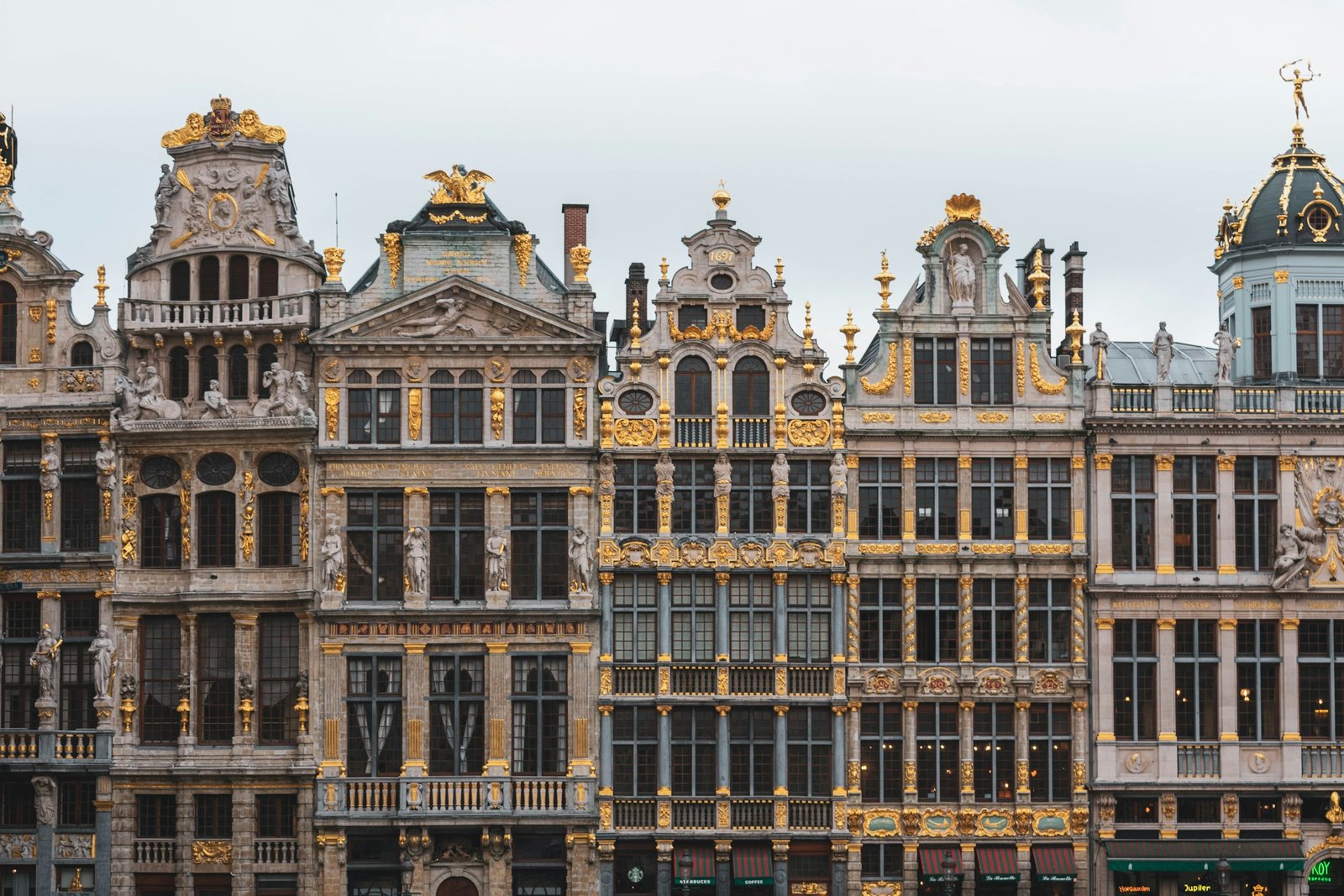
Key takeaways
- Both cities apply Book 4 of the Dutch Code of Civil Procedure, reformed with effect from 1 January 2015.
- Annulment goes directly to the Court of Appeal of the seat, within three months of dispatch.
- Parties may agree to exclude cassation to the Supreme Court unless a consumer is involved.
- Article 1065 allows only five annulment grounds, and mandate breaches must be serious.
- The Yukos set-aside proceedings ended when the Supreme Court dismissed Russia's appeal on 17 October 2025.
- Name the city, not just the country, so the supervising court is certain.
The Hague and Amsterdam Seat Options: Overview
The Netherlands offers two well-known arbitral seats, and the choice between The Hague and Amsterdam seat options matters mainly because it fixes which Court of Appeal will hear any challenge to the award. Both cities apply the same statute, the Dutch Arbitration Act in Book 4 of the Code of Civil Procedure, which was modernised with effect from 1 January 2015. Both also offer judges experienced in international disputes, a pro-enforcement tradition and a single-step route to the Court of Appeal followed by possible cassation to the Supreme Court.
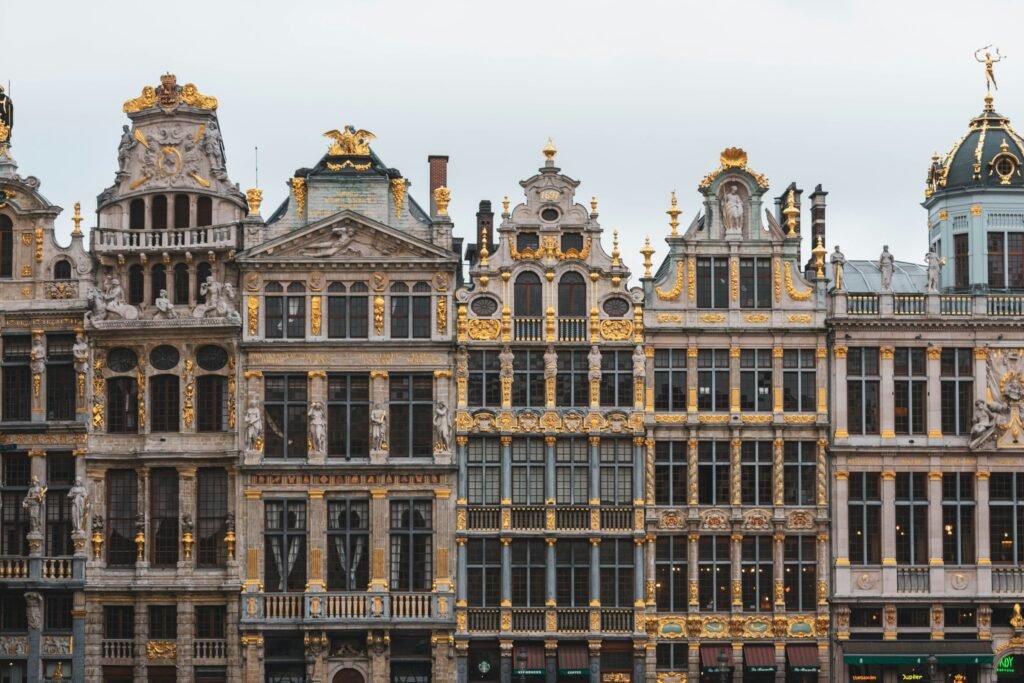
The Hague hosts the Permanent Court of Arbitration at the Peace Palace and has long been a venue for state-to-state and investor-state proceedings. Amsterdam is the commercial and financial centre and home to the Netherlands Commercial Court, an English-language chamber of the Amsterdam courts. For ICC users, either city can be named as the place of arbitration under Article 19 of the 2026 ICC Rules, with the ICC Court administering the case and scrutinising the award.
This insight explains the statutory framework, how set-aside proceedings work, what the Yukos litigation taught about Dutch court review, and the drafting choices that make a Dutch seat clause effective.
The Dutch Arbitration Act in Book 4
Dutch arbitration law sits in Articles 1020 to 1077 of the Code of Civil Procedure (Wetboek van Burgerlijke Rechtsvordering). Title 1 governs arbitrations seated in the Netherlands, and Title 2 deals with arbitrations seated abroad, including recognition and enforcement of foreign awards. The 2015 reform kept the Dutch system distinct from the UNCITRAL Model Law but brought it closer in substance, simplified court procedure and embraced electronic communication and flexibility on form.
| Issue | Provision | Effect for The Hague and Amsterdam seat cases |
|---|---|---|
| Jurisdiction objections | Article 1052 | A party that takes part without timely objecting may lose the right to argue there was no valid agreement |
| Timely objections generally | Article 1048a | Procedural complaints must be raised promptly or are waived |
| Form and reasons of the award | Article 1057 | The award must be signed and reasoned unless the law allows otherwise |
| Annulment court and deadline | Article 1064a | Court of Appeal of the seat district; three months from dispatch of the award |
| Annulment grounds | Article 1065 | Five grounds, including public policy |
| Foreign awards | Article 1075 | Recognition and enforcement under applicable treaties, notably the New York Convention |
Dutch law gives the parties wide autonomy. The arbitration agreement can be proved in writing in any form, including electronically, and the ICC Rules' provisions on electronic communication, virtual hearings and electronically signed awards fit comfortably within this framework, subject to the Article 1057 requirements on signature and reasons.
Annulment at The Hague and Amsterdam Seat Courts
Since 2015, an action to set aside is brought directly before the Court of Appeal (gerechtshof) for the district in which the seat is located. For a Hague seat that is the Hague Court of Appeal; for an Amsterdam seat, the Amsterdam Court of Appeal. Removing the former first instance before the District Court shortened challenges by a full stage.
Under Article 1064a, the right to seek annulment lapses three months after the date on which the award was sent to the parties. Where the award is served together with leave for enforcement, the other party may still bring an annulment claim within three months of service. A further appeal in cassation lies to the Supreme Court (Hoge Raad), but the parties may agree to exclude cassation, unless one of them is a natural person not acting in the course of a profession or business.
Article 1065(1) lists the only grounds for annulment:
- there is no valid arbitration agreement;
- the tribunal was constituted in breach of the applicable rules;
- the tribunal did not comply with its mandate;
- the award was not signed or did not give reasons as Article 1057 requires; or
- the award, or the way it was made, conflicts with public policy.
The mandate ground is deliberately narrow. Article 1065(4) provides that a failure to comply with the mandate does not lead to annulment if it is not serious, or if the party did not object in time. Combined with the waiver rules in Articles 1048a and 1052, this places a premium on raising objections during the arbitration rather than saving them for the challenge.
Court Support and Interim Relief
Dutch law confirms that an arbitration agreement does not prevent a party from asking the court for interim relief or from levying a prejudgment attachment. This is one of the practical strengths of a Dutch seat. Prejudgment attachment of bank balances, receivables, shares or other assets can be obtained on an ex parte application, often quickly, provided the applicant shows a prima facie claim and starts or pursues the main proceedings within the period the court sets. An arbitration can serve as the main proceedings for this purpose.
Under the ICC Rules, the tribunal may also order interim or conservatory measures once it has the file, and an emergency arbitrator under Article 31 and Appendix IV can act before the tribunal is constituted, including through the preliminary orders introduced in 2026. Article 29 expressly permits parallel applications to a competent court, so parties can combine a Dutch attachment with relief from the tribunal. The tribunal's orders are not themselves enforceable judgments, which is why many applicants go to the court first where assets are at risk.
Dutch law also recognises summary arbitral proceedings, in which an arbitral tribunal grants provisional relief in the form of an award. Whether that mechanism is available in an ICC case depends on the parties' agreement, and in most cases the ICC emergency arbitrator and the court route will be the more familiar options. For a broader view of the choices, see our guide to court-ordered interim relief in support of arbitration.
Dutch courts can also assist with evidence. A party may ask the court for a provisional witness hearing or for access to specific documents, subject to the applicable conditions. In an ICC case, it is sensible to coordinate any such application with the tribunal so it fits within the procedural timetable and does not prompt complaints about procedural fairness.
Yukos, Treaty Cases and Enforcement
Dutch courts have handled some of the most significant investor-state challenges, and the Yukos litigation is the clearest example. The three Energy Charter Treaty awards against Russia, made by tribunals seated in The Hague, were set aside by the District Court of The Hague on 20 April 2016. The Hague Court of Appeal reinstated them on 18 February 2020. On 5 November 2021 the Supreme Court upheld the jurisdiction findings but remitted Russia's fraud complaint to the Amsterdam Court of Appeal, which rejected it on 20 February 2024. The Supreme Court dismissed Russia's final appeal on 17 October 2025, ending the set-aside proceedings.
Those rulings later mattered abroad. As our insight on Hulley Enterprises v Russia explains, the English courts treated the Dutch decisions on whether Russia had agreed to arbitrate as binding in enforcement proceedings in London. Seat court decisions can therefore shape enforcement far beyond the Netherlands.
EU law adds a second layer. The Achmea judgment of the Court of Justice of the European Union, which concerned an award won by a Dutch insurer against Slovakia, held intra-EU treaty arbitration clauses incompatible with EU law. Dutch courts, as EU courts, must apply that case law, which makes the Netherlands a difficult seat for intra-EU treaty claims. Commercial ICC arbitration is not affected in the same way; see our analysis of Achmea and Komstroy.
Enforcing Awards in the Netherlands
Awards made in either city are Convention awards abroad, as the Netherlands is a long-standing party to the New York Convention. Inside the Netherlands, foreign awards are recognised and enforced under Article 1075, which applies the relevant treaty. Since the 2015 reform, the Court of Appeal decides such applications in place of the District Court, with a further appeal in cassation available.
Dutch courts apply the Convention grounds restrictively and have, in several high-profile cases, considered whether to enforce awards that were annulled at the seat. That question turns on the facts and on how the court assesses the foreign annulment decision, so parties should not assume either outcome. For the wider principles, see our guide to the New York Convention.
Illustration: a German contractor and a Kenyan state utility agree an ICC clause with an Amsterdam seat. After a final award, the utility seeks annulment, alleging that the tribunal decided an issue no one pleaded. The claim must be filed with the Amsterdam Court of Appeal within three months of dispatch of the award; the court will ask whether any departure from the mandate was serious and whether the utility objected in time. If the clause excluded cassation, the Court of Appeal's ruling is final.
Choosing Between The Hague and Amsterdam Seat Courts
Because the statute is identical, the practical differences between The Hague and Amsterdam seat choices are institutional rather than legal. Considerations include:
- Supervising court. The Hague Court of Appeal has particular experience with state and treaty matters; the Amsterdam Court of Appeal sits in the commercial centre and alongside the Netherlands Commercial Court.
- Hearing logistics. Under Article 19 of the ICC Rules hearings can be held anywhere after consulting the parties, so the seat need not be the venue. Many parties seat in one city and hear in the other, or elsewhere.
- Court language. Dutch is the default language of the ordinary courts. The Netherlands Commercial Court, operating since 1 January 2019, conducts proceedings and gives judgments in English where the parties agree to its jurisdiction; whether a particular arbitration-related application can be brought there depends on its rules.
- Counterparty perception. A state party may prefer The Hague for its neutrality and diplomatic associations; a financial institution may prefer Amsterdam.
Decide expressly whether to exclude cassation to the Supreme Court. Excluding it shortens annulment proceedings by one level but also removes a correction route if the Court of Appeal errs. Whatever you decide, name the city precisely: an ICC clause that says only "the Netherlands" leaves the ICC Court to fix the seat and leaves the competent Court of Appeal uncertain until then.
Drafting for The Hague and Amsterdam Seat Clauses
A short checklist for The Hague and Amsterdam seat clauses in ICC contracts:
- Name the city, not just the country, so the supervising Court of Appeal is certain.
- Decide whether to exclude cassation, and say so expressly in writing.
- Choose the language of the arbitration under Article 21 of the ICC Rules and consider whether English-language court support matters.
- If a state entity is involved, address waiver of immunity from execution separately from the arbitration agreement; see our page on enforcing awards against states.
- Train the team to record procedural objections promptly, because Dutch law treats late objections as waived.
How TRW & Co Helps
We advise companies and state entities on whether a Dutch seat suits their contract, and we draft ICC clauses that deal with the choice of city, cassation, language and state immunity. During proceedings, our teams in London, Dubai, Singapore, New York and Dhaka work with Dutch counsel on court support, annulment strategy before the Hague or Amsterdam Court of Appeal and the enforcement plan across the jurisdictions where assets sit. We also assess EU law risk where European states or treaty claims are involved. To discuss a Netherlands-seated matter, please contact us.
Frequently asked questions
Is there a legal difference between seating an arbitration in The Hague or Amsterdam?
No. Both seats apply the same statute, Book 4 of the Dutch Code of Civil Procedure. The difference is which Court of Appeal hears annulment claims: the Hague Court of Appeal for a Hague seat and the Amsterdam Court of Appeal for an Amsterdam seat. Practical factors such as court experience, logistics and counterparty perception usually decide the choice.
How long do I have to seek annulment of a Dutch-seated award?
Under Article 1064a, the claim must be brought within three months after the date on which the award was sent to the parties. If the award is served with leave for enforcement, the other party can still claim annulment within three months of that service. Further appeal in cassation to the Supreme Court is possible unless the parties excluded it.
Can the parties exclude cassation to the Dutch Supreme Court?
Yes. Article 1064a allows the parties to agree that no appeal in cassation is available against the Court of Appeal's annulment decision. The exclusion does not apply where one party is a natural person not acting in the course of a profession or business. The agreement should be express and in writing, ideally in the arbitration clause.
What are the grounds for setting aside an award in the Netherlands?
Article 1065(1) lists five: no valid arbitration agreement; improper constitution of the tribunal; failure by the tribunal to comply with its mandate; an award not signed or reasoned as required; and conflict with public policy. A breach of mandate that is not serious, or to which the party did not object in time, does not lead to annulment.
Can I litigate arbitration-related matters in English in the Netherlands?
The ordinary Dutch courts work in Dutch. The Netherlands Commercial Court, established on 1 January 2019, hears international commercial cases in English where the parties agree to its jurisdiction. Whether a specific arbitration-related application can be brought before it depends on its rules, so check them before relying on English-language court support.
Sources
General information only, not legal advice. References to the ICC, the ICC Court and the ICC Rules describe their published rules and practice; TRW & Co is independent of the ICC.
 Seats & Comparisons
ICC Hearing Centres and Venues
ICC hearing centres Paris Singapore and São Paulo are the venues most often considered for ICC hearings. We explain what the ICC's own Paris and São… 9 min read
 Seats & Comparisons
Seat Choice When Sanctions Are a Risk
Seat choice for sanctioned counterparties decides which sanctions laws apply, whether courts can stop parallel litigation and whether an award can be paid. We explain Russia's… 10 min read
 Seats & Comparisons
Choosing a Neutral Seat in Asia-Europe Contracts
Finding a neutral seat for Asian and Western parties is one of the hardest points in negotiating an ICC clause. We compare Singapore, Hong Kong, London,… 10 min read