
LNG Sale and Purchase Agreement Disputes
LNG SPA disputes test the risk allocation in long-term gas supply chains when markets swing or supply fails. This note explains take-or-pay and make-up mechanics, force majeure and sanctions, diversion and destination clauses, price reviews, and the 2026 ICC Rules tools that matter most in LNG arbitration.

Key takeaways
- Take-or-pay, force majeure and diversion are the three main sources of LNG SPA arbitrations.
- Whether a seller shortfall remedy is exclusive often decides the value of a buyer claim.
- Portfolio sellers may struggle to show force majeure prevented delivery from any source.
- Emergency arbitrators under Article 31 may now issue preliminary orders under the 2026 Rules.
- Article 10 helps bring SPA, shipping and terminal claims into one arbitration.
What LNG SPA disputes are about
LNG SPA disputes are disagreements under liquefied natural gas sale and purchase agreements: the long-term and, increasingly, medium-term contracts under which a liquefaction project or portfolio seller supplies cargoes to a buyer. Most arise from three pressure points. Take-or-pay obligations decide who bears the cost when the buyer cannot use the gas. Force majeure decides who bears the loss when production, shipping or regasification fails. Diversion and destination terms decide who captures the value when cargoes are worth more elsewhere. Price reviews are a fourth recurring source.
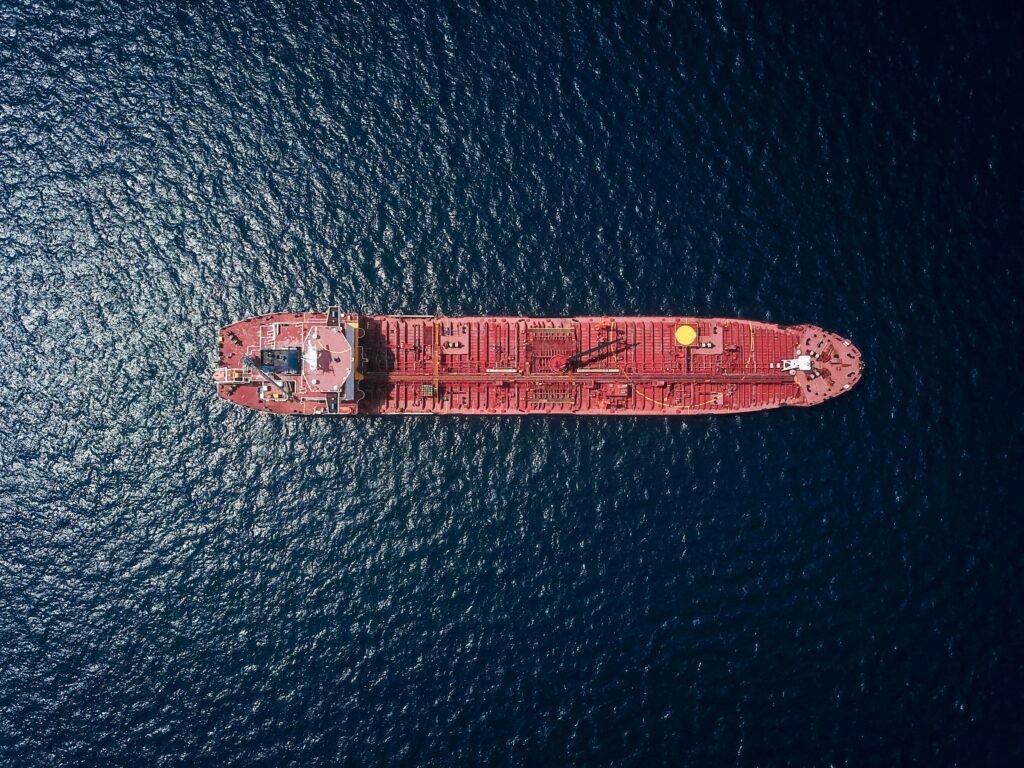
LNG contracts typically refer disputes to international arbitration with a neutral seat, and ICC arbitration is a common choice. Energy accounted for 15% of the 881 new cases filed under the ICC Arbitration Rules in 2025, according to the ICC's dispute resolution statistics. The sums at stake in a single cargo dispute can be substantial; a multi-year supply shortfall or a price reset can be far larger.
Market volatility in recent years has tested many SPAs at once: sharp price spikes made spot sales more attractive than delivery to term buyers, while supply interruptions and sanctions forced sellers to rely on force majeure. This note explains the contractual mechanics behind LNG SPA disputes and how the 2026 ICC Rules, in force since 1 June 2026, apply to them.
Take-or-pay and volume flexibility
A take-or-pay clause obliges the buyer to pay for a minimum annual quantity whether or not it takes delivery. It underpins project financing: lenders to a liquefaction project rely on the revenue stream it guarantees. Disputes centre on how the minimum is calculated, what reduces it, and whether a payment for gas not taken can later be recovered by taking "make-up" gas.
| Mechanism | How it works | Typical dispute |
|---|---|---|
| Annual contract quantity (ACQ) | Base yearly volume, set in an annual delivery programme | Whether the programme was properly agreed and which cargoes count |
| Downward quantity tolerance | Buyer may reduce volumes within a limit | Whether the right was exercised in time and in the correct form |
| Take-or-pay deficiency | Buyer pays for shortfall below the minimum | Calculation, deductions for seller shortfall and force majeure quantities |
| Make-up gas | Buyer may later take gas already paid for | Timing, priority over contract quantities and price applied |
| Deliver-or-pay | Seller compensates the buyer for its own shortfall | Whether the compensation cap is an exclusive remedy |
Two legal questions recur. First, is the take-or-pay payment a primary payment obligation or a damages clause? In jurisdictions with a penalty doctrine, buyers sometimes argue that a deficiency payment is a penalty. Take-or-pay is commonly analysed as the price of the buyer's option not to take gas, but the answer depends on the governing law and the clause's structure.
Second, is a contractual shortfall remedy exclusive? Many SPAs cap the seller's liability for failing to deliver at a fixed percentage of the contract price; whether the buyer can recover its full replacement cost in addition depends on careful reading of the exclusive-remedy language.
Deficiency claims are often run as debt claims, which suits early or expedited determination. Article 30 of the 2026 Rules allows a party to apply for early determination of claims or defences that are manifestly without merit, which can be useful against a defence to a clearly computed invoice.
Force majeure in LNG SPA disputes
Force majeure is the second major battleground in LNG SPA disputes. LNG chains are long and fragile: upstream gas supply, pipelines, liquefaction trains, ships, ports, regasification terminals and downstream grids. A failure at any point may prevent delivery or receipt. SPAs typically define force majeure as an event beyond the affected party's reasonable control that prevents performance, often with a list of examples, and require prompt notice and mitigation.
The disputes are fact-heavy. Was the event truly outside the party's control, or did it result from poor maintenance or a commercial choice? Did it prevent performance, or only make it more expensive? Could the seller have supplied from another source in its portfolio? Was notice given in time and with the information the clause requires? A seller with a portfolio of supply sources may face the argument that an outage at one plant did not prevent delivery from another.
The ICC Force Majeure and Hardship Clauses published in March 2020 offer model wording that parties sometimes incorporate or use as a benchmark. They distinguish force majeure, which excuses performance, from hardship, which concerns changed circumstances that make performance excessively onerous and may lead to renegotiation, adaptation or termination. Our note on force majeure and hardship claims explains how tribunals approach both.
Sanctions and force majeure
Sanctions add a further layer. A party may argue that sanctions make performance illegal or impossible, or that dealing with a sanctioned counterparty or vessel would expose it to penalties. Whether sanctions amount to force majeure depends on the clause, the applicable sanctions regimes and whether performance was in fact prevented. Tribunals also have to consider whether they can lawfully make an award involving sanctioned parties and how it will be enforced. Sanctions issues should be analysed at the outset, including their effect on paying advances on costs and on the ICC's ability to administer the case.
Sanctions-related LNG SPA disputes also raise evidential problems: payment channels may be blocked, witnesses may be unable to travel, and documents may sit in jurisdictions with blocking statutes. Planning for remote hearings and alternative payment routes at the first case management conference avoids later disruption.
Diversion, destination and reloading
Diversion rights determine whether a cargo can be sent to a different destination from the one agreed. Under delivery ex-ship (DES) arrangements the seller controls shipping and may want flexibility to divert cargoes to higher-value markets; under free-on-board (FOB) arrangements the buyer controls shipping and usually has greater freedom to choose the destination. Many SPAs require the parties to share the additional profit from a diversion, and disputes arise over how that profit is calculated, what costs are deducted and whether consent was required.
Destination restrictions also raise competition law questions in some markets. In its decision of 24 May 2018 in Case AT.39816, the European Commission made binding commitments under which Gazprom undertook to remove contractual restrictions on customers' ability to resell gas across borders in Central and Eastern Europe, and not to introduce them in future. Although that case concerned pipeline gas, it shows the regulatory scrutiny that destination clauses can attract, which in turn can affect whether a clause is enforceable as written.
LNG SPA disputes over diversion often involve claims for an account of profits, which requires disclosure of the onward sale price. Article 23(3) of the 2026 Rules allows the tribunal to make confidentiality orders and protect trade secrets, which helps where onward sales involve third parties who are not in the arbitration.
Quality, shipping and termination claims
Not every LNG SPA dispute is about volume or price. Off-specification cargoes generate claims when the gas quality falls outside the contractual range for heating value or composition. The SPA usually sets out whether the buyer must accept the cargo, whether it may reject it, and how treatment or blending costs are allocated. Measurement and testing records at the loading and discharge ports become the central evidence, and independent surveyors' reports are often decisive.
Shipping interfaces create a second category. Under DES sales, the seller's ships must berth at the buyer's terminal within scheduled windows; under FOB sales, the buyer's ships must arrive at the loading port. Late arrival, excess boil-off, demurrage and berth congestion all lead to claims that may be governed partly by the SPA and partly by charterparties or terminal use agreements with different dispute resolution clauses. Mapping which contract governs each element of loss is an essential first step.
Termination is the most serious category. Persistent non-delivery, prolonged force majeure, insolvency or sanctions may give one party the right to terminate a contract with many years left to run. The loss of bargain claim that follows can be very large and usually turns on market forward curves, the availability of replacement supply or offtake and the discount rate applied. Many SPAs cap or exclude consequential and loss-of-profit damages, so the interaction between the termination clause and the limitation of liability provisions should be examined at the outset.
Quantum in LNG SPA disputes
Damages in LNG SPA disputes are usually measured by the cost of replacement cargoes or, for a seller, the loss on resale, against the contract price. Disputes then focus on the appropriate market reference (a hub index, an assessed spot LNG price or actual replacement deals), the date of assessment and whether the claimant mitigated reasonably. Expert evidence from traders and market economists is standard, and tribunals expect each expert to explain why the chosen benchmark reflects the trades the claimant could actually have made.
Illustration: in a hypothetical DES contract, the seller declares force majeure after an outage at its liquefaction plant and cancels four cargoes in a winter of high prices, while selling other portfolio cargoes on the spot market. The buyer claims the cost of replacement cargoes. The tribunal would need to decide whether supply under the SPA was tied to that plant, whether the seller's spot sales show that delivery was possible, whether notice was valid, and whether any contractual shortfall compensation is the buyer's exclusive remedy.
Price reviews under LNG SPAs
Long-term LNG SPAs commonly price cargoes by reference to an oil index, a hub index or a blend, with a "slope" and a constant. Many include a reopener allowing either party to seek a revision when the market changes significantly. When negotiation fails, the matter goes to arbitration and the tribunal may be asked to reset the slope or the indexation. These cases have their own specialist dynamics, including tribunal-appointed experts under Article 26(3); our note on oil and gas price review arbitration covers them in detail.
Running LNG SPA disputes under the 2026 ICC Rules
Several features of the 2026 Rules matter in LNG SPA disputes.
- Urgent relief. A buyer facing cargo diversion, or a seller facing a threatened termination, may need relief before a tribunal is in place. Article 31 and Appendix IV allow an emergency arbitrator to order urgent measures. Under Article 7 of Appendix IV of the 2026 Rules, a party may also ask for a preliminary order, decided without notice to the other side, directing it not to frustrate the purpose of the application; the other parties must then promptly be given the opportunity to present their case. Court interim relief at the seat or where the cargo is located remains available under Article 29(2).
- Linked contracts. An LNG chain usually involves the SPA, shipping charters, terminal use agreements and sometimes downstream sales. Article 10 allows claims under more than one contract in a single arbitration where the arbitration agreements are compatible, subject to the Court's prima facie review under Article 7.
- Case management. The tribunal must hold an initial case management conference within 30 days of receiving the file under Article 24(1). That is the moment to agree on bifurcation of liability and quantum, expert sequencing and confidentiality protocols.
- Enforcement. Awards are enforceable in the many states party to the New York Convention, which matters where the counterparty is a state-owned buyer or a project company with assets abroad.
Smaller disputes need not be run at full scale. For arbitration agreements concluded on or after 1 June 2026, the expedited procedure in Appendix V applies automatically where the amount in dispute does not exceed US$4 million, unless the parties opt out (lower thresholds apply to older agreements). A single disputed demurrage or quality claim may fall within that range. Parties can also agree to the new Highly Expedited Arbitration under Article 33 and Appendix VI, which aims at an award within three months of the case management conference, for tightly defined questions such as the calculation of a deficiency payment.
Conversely, where several cargo disputes arise under the same SPA in quick succession, Article 11 allows the Court to consolidate pending ICC arbitrations where its conditions are met, which can avoid inconsistent findings on the same force majeure event.
Where the seller or buyer is a state-owned entity, the Court may appoint arbitrators directly under Article 14(4), and immunity from execution becomes an enforcement question to plan for early. See our guide on sovereigns and state-owned entities.
Run the contractual notices as if a tribunal will read them, because it will. Force majeure notices, annual delivery programme correspondence, diversion consents and take-or-pay invoices are the core evidence in most LNG SPA disputes. Ambiguous notices invite arguments that rights were waived or never properly exercised.
How TRW & Co helps
We advise LNG buyers, sellers, portfolio players and state-owned importers on SPA disputes, from early analysis of take-or-pay exposure, force majeure notices and diversion claims through to ICC arbitration and enforcement. We help draft and review notices while the contract is still being performed, coordinate shipping, market and quantum experts, and assess sanctions and competition law issues that may affect the dispute. Our teams in London, Singapore, Dubai, Dhaka, Delhi and New York work across the main LNG trading routes, including supply into South Asia. For support on an SPA dispute or a contract under negotiation, contact our team.
Frequently asked questions
Is a take-or-pay payment a penalty?
Often not, but it depends on the governing law and the clause. Take-or-pay is commonly analysed as a payment for the buyer's option not to take gas, a primary obligation rather than damages for breach. In legal systems with a penalty doctrine, buyers sometimes argue otherwise, so the clause should be drafted clearly as a primary payment obligation, linked to make-up rights that let the buyer recover the gas later.
Can an LNG seller rely on force majeure if it has other supply sources?
It depends on the SPA. If the contract ties supply to a specific project or train, an outage there may excuse non-delivery. If the seller is a portfolio supplier with flexibility to source from elsewhere, the buyer may argue that performance was not prevented, only made more costly. The force majeure definition, the source of supply clause and the mitigation obligation are decisive.
What is the difference between DES and FOB for diversion disputes?
Under delivery ex-ship terms the seller controls shipping and delivers at the buyer's terminal, so diversion questions usually concern whether the seller may redirect cargoes and share the profit. Under free-on-board terms the buyer takes delivery at the loading port and generally controls the destination, subject to any contractual restrictions. Profit-sharing and destination clauses must also be checked for competition law compliance in the relevant markets.
Can emergency relief stop a cargo diversion?
Possibly. Under Article 31 and Appendix IV of the 2026 ICC Rules, a party may apply for emergency measures that cannot await the constitution of the tribunal, and the emergency arbitrator may issue preliminary orders. Court relief at the seat or where the cargo is located is also available in appropriate circumstances. Speed is critical, so the application and evidence should be prepared as soon as diversion is threatened.
Where should LNG SPA arbitrations be seated?
Common choices include London, Singapore, Paris and Geneva, chosen for neutrality, supportive courts and New York Convention enforcement. The seat should be selected with the counterparty's assets and nationality in mind, and with any linked shipping or terminal agreements in view, so that related disputes can be heard together where possible.
Sources
- ICC 2026 Arbitration Rules (iccwbo.org)
- ICC Force Majeure and Hardship Clauses (March 2020)
- European Commission decision of 24 May 2018, Case AT.39816 Upstream Gas Supplies in Central and Eastern Europe
- ICC Dispute Resolution Statistics (2025 figures)
- Convention on the Recognition and Enforcement of Foreign Arbitral Awards (UNCITRAL)
General information only, not legal advice. References to the ICC, the ICC Court and the ICC Rules describe their published rules and practice; TRW & Co is independent of the ICC.
 Sector Guides
ESG and Climate Change Disputes in Arbitration
ESG and climate disputes arbitration is growing as energy transition projects, carbon markets and sustainability obligations generate cross-border claims. We explain the main dispute types, the… 8 min read
 Sector Guides
Arbitrating With State-Owned Enterprises
State owned enterprise arbitration raises three questions that ordinary commercial cases do not: whether the state is bound, whether immunity blocks enforcement, and whether the enterprise's… 8 min read
 Sector Guides
Contracting With States: Capacity and Approvals
Sovereign contracts capacity approvals decide whether an arbitration clause with a state will survive a jurisdictional objection years later. We set out the pre-signature checks on… 8 min read