
Commodity Trade Disputes Under ICC
Commodities trade disputes ICC arbitration handles differently from GAFTA and FOSFA, and the choice matters at contract stage. This note explains how the trade association systems work, when ICC is the better forum for bespoke, long-term and financed commodity trades, and how to draft a clause that avoids jurisdiction fights.

Key takeaways
- GAFTA and FOSFA offer fast two-tier London arbitration for standard grain, oilseed and vegetable oil contracts.
- Gafta Rules No. 125 impose a one-year time bar and a 30-day appeal window.
- ICC suits bespoke, long-term, financed and state-counterparty commodity contracts.
- Article 22(2) of the 2026 ICC Rules lets tribunals apply relevant trade usages.
- Mixing association and ICC clauses across a supply chain invites jurisdiction disputes.
Commodities trade disputes: ICC or trade association?
For most commodities trade disputes ICC arbitration is not the first port of call. Physical trade in grain, oilseeds and vegetable oils is dominated by standard contracts of the Grain and Feed Trade Association (GAFTA) and the Federation of Oils, Seeds and Fats Associations (FOSFA), each with its own London-based, two-tier arbitration system.
ICC arbitration becomes the better choice when the contract is bespoke rather than standard, when the commodity has no specialist association, when long-term supply, offtake or financing structures are involved, when a state trading entity or an unfamiliar counterparty is on the other side, or when the parties need emergency relief, multi-party tools or a seat outside England.
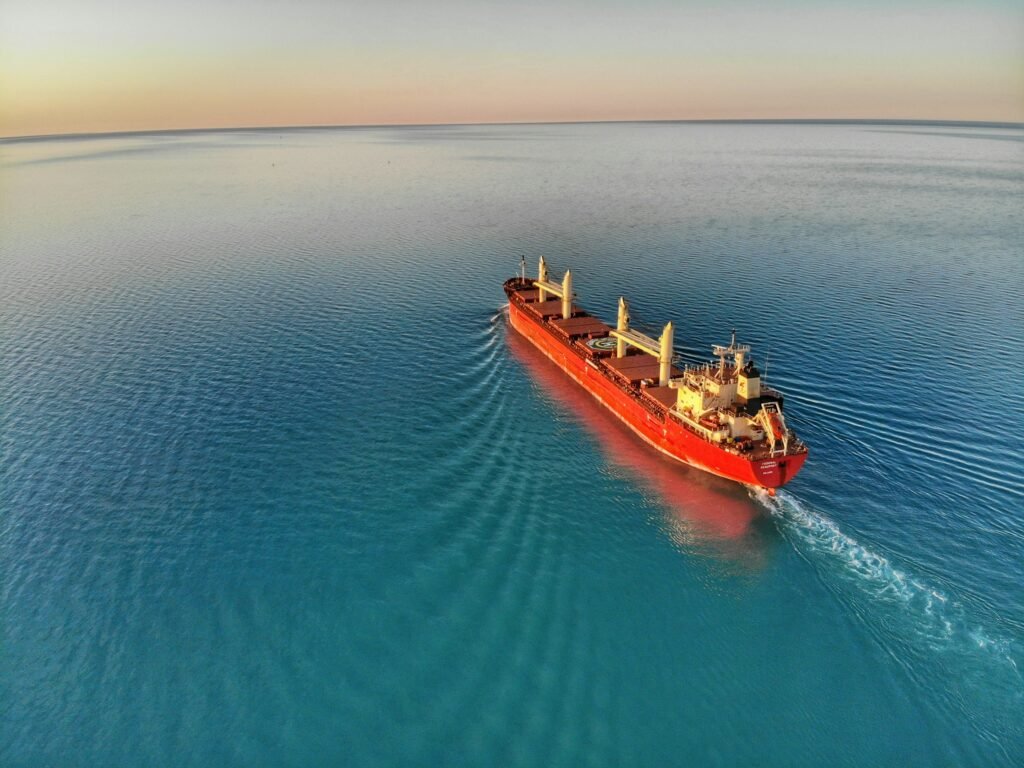
The choice is not about quality of justice. Association arbitration is fast, inexpensive and decided by people who know the trade. ICC arbitration offers institutional administration, a worldwide choice of seat, scrutiny of awards and procedural tools designed for complex disputes. This note explains when traders, producers, processors and financiers should prefer one over the other.
How GAFTA and FOSFA arbitration work
GAFTA's main rules are the Gafta Arbitration Rules No. 125, with an edition effective for contracts dated from 1 July 2026. A tribunal of three arbitrators or a sole arbitrator issues a first-tier award, and either party may appeal to a Gafta Board of Appeal, which is made up of three members if the first-tier award was made by a sole arbitrator and five if it was made by a three-member tribunal.
The appeal must be lodged, with the required deposit, by 12 noon on the 30th consecutive day after the award. The juridical seat is England, and the Arbitration Act 1996 applies except where the Rules modify it. Gafta Rules No. 126 provide a simplified procedure for smaller claims, with a sole arbitrator and no appeal, as GAFTA explains in its arbitration FAQ.
Time limits are strict. Under Rule 2.1 of Gafta 125, the claimant must serve notice of its intention to arbitrate within one year, counted from points that depend on the shipment terms, such as the end of the shipment period or final discharge under CIF contracts. A claim also lapses if neither party makes submissions within a year of the notice, unless renewed, with renewals capped at six years from the first notice.
FOSFA operates a similar two-tier system under its Rules of Arbitration and Appeal, most recently issued in an edition dated 1 April 2026, with a separate Small Claims Single Tier procedure. Other associations administer arbitration for cotton, sugar, coffee, cocoa and other soft commodities. Each system relies on arbitrators drawn from the trade, many of them experienced traders or brokers.
When commodities trade disputes ICC arbitration makes sense
There are several recurring situations in which, for commodities trade disputes ICC arbitration offers clear advantages over trade association systems.
- No association form. Metals, ores and concentrates, fertilisers, coal, petroleum products and many industrial commodities are traded on bespoke terms. Without an association, parties must choose an institution, and the ICC is a common default.
- Long-term supply and offtake. Multi-year agreements with price review, take-or-pay or volume flexibility clauses look more like energy contracts than spot sales and benefit from full document production, expert evidence and a reasoned award.
- Structured trade finance. Prepayment and offtake structures combine a supply contract, a facility, guarantees and security. Articles 8, 10 and 11 of the 2026 ICC Rules allow joinder, multi-contract claims and consolidation, provided the arbitration agreements are compatible.
- State and state-owned counterparties. National oil companies, state trading corporations and food security agencies often prefer an international institution and a neutral seat outside England.
- Urgent relief. The emergency arbitrator procedure under Article 31 and Appendix IV can address cargo diversion, release of documents or misuse of collateral before a tribunal is constituted.
- High-value or complex claims. Where quantum is large and the facts are contested, the two-tier association model, with a fresh appeal, can add time and cost rather than saving it.
ICC statistics reflect the breadth of trade-related work. In 2025, energy accounted for 15% of new ICC cases and general trade and distribution for 3.4%, according to the ICC's dispute resolution statistics; many commodity disputes also fall within energy, transportation and finance categories.
Side-by-side comparison
| Feature | GAFTA / FOSFA | ICC Rules 2026 |
|---|---|---|
| Contracts covered | Standard association contracts for grain, feed, oils, seeds and fats | Any contract; bespoke and long-term agreements |
| Seat | England (London) | Any seat; the Court fixes it if the parties have not |
| Structure | Two tiers: first-tier award and appeal board | Single tier, with Court scrutiny of the draft award under Article 37 |
| Arbitrators | Trade-qualified members of the association | Lawyers and industry specialists chosen by parties or the Court |
| Time limits | Strict contractual time bars, for example one year under Gafta 125 Rule 2.1 | Governed by the contract and applicable law |
| Fast track | Small claims rules without appeal | Expedited procedure, automatic up to US$4 million for agreements from 1 June 2026; opt-in Highly Expedited Arbitration |
| Urgent relief | Court support in England | Emergency arbitrator plus court support at the seat or where assets are |
| Multi-party | String arbitration provisions within the association | Joinder, multi-contract claims and consolidation |
Practical issues in commodities trade disputes ICC proceedings
Choosing ICC does not remove the commercial features of commodity trade. Tribunals in commodities trade disputes ICC cases regularly deal with the same issues that occupy association arbitrators: quality and quantity at loading or discharge, demurrage and laytime passed through from charterparties, documentary presentation under letters of credit, prohibition and force majeure clauses, and default clauses that calculate damages by reference to market prices. Article 22(2) of the 2026 ICC Rules requires the tribunal to take account of relevant trade usages, which allows market practice to be proved and applied.
Several practical points recur:
- String contracts. Where goods pass along a chain of buyers and sellers on association terms, a single ICC contract in the middle of the string can break the association's string arbitration mechanism. Consider whether the whole chain should use the same forum.
- Incoterms. The ICC's Incoterms rules, in their 2020 edition, allocate delivery, risk and cost. They do not decide title, payment or remedies, which remain matters for the contract and governing law.
- Sanctions. Commodity flows are heavily affected by sanctions regimes. Our note on sanctions compliance in ICC arbitration explains how they affect payment, performance and the conduct of proceedings.
- Force majeure and prohibition. Export bans, port closures and war risks feature in many disputes; see our note on force majeure and hardship claims.
- Payment security. Disputes over letters of credit and guarantees run alongside the sale contract dispute; see letter of credit and demand guarantee disputes.
Illustration: a South Asian state trading corporation buys edible oil from a Gulf-based trader under a bespoke two-year supply agreement with monthly shipments, payment by letters of credit and an ICC clause seated in Singapore. A price spike leads the seller to suspend shipments, citing force majeure. The buyer seeks an emergency order requiring shipments to continue pending the arbitration and later claims market damages. Neither GAFTA nor FOSFA rules would apply to this bespoke contract, and the ICC procedure allows the supply agreement, a parent guarantee and the financing bank's rights to be addressed in one coordinated process.
Costs, enforcement and challenge
Cost is often the first objection to using ICC for commodities trade disputes. ICC arbitrators' fees and administrative expenses are calculated on an ad valorem scale by reference to the amount in dispute, and for small claims an association procedure will usually be cheaper. For larger claims the gap narrows, and the 2026 schedule of fees lowers the scales for disputes under US$10 million. The expedited procedure, with a sole arbitrator and a streamlined timetable, also reduces cost for mid-sized claims.
Enforcement is broadly comparable. Association awards and ICC awards are both arbitral awards enforceable under the New York Convention, and the practical question is the counterparty's assets. Where a buyer or seller is based in South Asia, Africa or the Middle East, the seat and the clarity of the arbitration agreement matter more than the institution.
Awards on commodities trade disputes ICC tribunals issue are scrutinised by the ICC Court for form before signature, which can help at the enforcement stage. Association awards seated in England can be challenged in the English courts under the Arbitration Act 1996, as amended, and an ICC award can be challenged at whatever seat the parties chose.
Interim security is another practical difference. In association arbitration seated in London, a party seeking to secure its claim generally turns to the English courts or to ship arrest in the place where a vessel calls. In commodities trade disputes ICC proceedings, the parties can combine an emergency arbitrator application, court relief at a seat chosen for its supportive courts, and freezing or attachment orders where the counterparty's assets are located. For traders dealing with counterparties whose assets are concentrated in one jurisdiction, choosing a seat and institution that work well with that jurisdiction's courts can be decisive.
Drafting the dispute clause
Choosing the forum for commodities trade disputes ICC or association should happen at contract stage, not after the cargo has gone missing. Points to address include:
- Whether the contract is truly standard. If it incorporates a GAFTA or FOSFA form, its arbitration clause usually follows; deleting it requires clear drafting.
- Consistency across the chain and across related documents, including guarantees, financing and storage agreements.
- The seat. ICC allows a seat close to the parties' assets and courts, such as Singapore, Dubai, Paris or Geneva, as well as London.
- The amount and complexity of likely claims, and whether the expedited procedure should apply or be excluded.
- Time bars. If the parties want short contractual limitation periods similar to association rules, they must write them into the contract.
- Arbitrator expertise, for example by requiring experience in commodity trading or trade finance.
Our pages on ICC model clauses and the ICC emergency arbitrator provide further drafting guidance.
Do not mix forums by accident. A sale contract on GAFTA or FOSFA terms with an ICC clause added in a rider, or an ICC supply agreement whose individual shipments are confirmed on association forms, invites jurisdiction fights. Decide which system governs commodities trade disputes ICC or association for the entire relationship, and make every document say so.
How TRW & Co helps
We advise traders, producers, processors, state trading entities and trade financiers on commodities trade disputes, from forum selection to enforcement. Our teams in Dubai, Singapore, London, Dhaka, Delhi and New York review supply, offtake and financing structures, advise on whether ICC or association arbitration fits each contract, and act for claimants and respondents in ICC arbitrations and related court proceedings, including urgent relief over cargoes, documents and payment instruments. We also plan enforcement against counterparties and assets across South Asia, the Middle East and Africa. To discuss a contract or dispute, please contact us.
Frequently asked questions
Why do most grain and vegetable oil disputes go to GAFTA or FOSFA?
Because most physical trade in those goods uses the associations' standard contracts, which contain their arbitration clauses. The associations offer fast, inexpensive two-tier arbitration in London, with arbitrators drawn from the trade. Parties remain free to agree a different forum, but the standard forms, strict time bars and string provisions make association arbitration the market default.
When is ICC arbitration better for a commodity contract?
ICC arbitration is usually preferable for bespoke or long-term supply and offtake agreements, commodities without a specialist association, structured trade finance involving several contracts, disputes with state trading entities, and cases needing emergency relief or a seat outside England. It also suits large and complex claims where a full single-tier process is more efficient than a two-tier system.
What are the main time limits under Gafta Rules No. 125?
Under the edition effective for contracts from 1 July 2026, the claimant must serve notice of intention to arbitrate within one year, measured from points that depend on the shipment terms. Appeals must be lodged by 12 noon on the 30th consecutive day after the award. A claim lapses if no submissions are made within a year of the notice, unless renewed, up to six years.
Can an ICC tribunal apply trade usages in a commodity dispute?
Yes. Article 22(2) of the 2026 ICC Rules requires the tribunal to take account of the contract and any relevant trade usages. Market practice on matters such as quality certificates, documentary presentation and default calculations can be proved by evidence and applied, which helps ICC tribunals handle commodity disputes outside the association context.
Can an emergency arbitrator stop a cargo being diverted?
An ICC emergency arbitrator can order a party to the arbitration agreement to refrain from diverting a cargo or to preserve goods or documents, where the measures cannot await the constitution of the tribunal. The order binds the parties, not third parties such as carriers. Court relief where the cargo is located may also be needed.
Sources
General information only, not legal advice. References to the ICC, the ICC Court and the ICC Rules describe their published rules and practice; TRW & Co is independent of the ICC.
 Sector Guides
ESG and Climate Change Disputes in Arbitration
ESG and climate disputes arbitration is growing as energy transition projects, carbon markets and sustainability obligations generate cross-border claims. We explain the main dispute types, the… 8 min read
 Sector Guides
Arbitrating With State-Owned Enterprises
State owned enterprise arbitration raises three questions that ordinary commercial cases do not: whether the state is bound, whether immunity blocks enforcement, and whether the enterprise's… 8 min read
 Sector Guides
Contracting With States: Capacity and Approvals
Sovereign contracts capacity approvals decide whether an arbitration clause with a state will survive a jurisdictional objection years later. We set out the pre-signature checks on… 8 min read