
arbitrateAD: Abu Dhabi International Arbitration Centre
The arbitrateAD Abu Dhabi centre replaced ADCCAC on 1 February 2024 with modern rules, an institutional court and an ADGM default seat. We explain what happens to old Abu Dhabi Chamber clauses, the key features of the 2024 Rules, how they compare with the 2026 ICC Rules, and how to choose between the two.

Key takeaways
- arbitrateAD commenced operations on 1 February 2024, replacing ADCCAC under an Abu Dhabi Chamber resolution of November 2023.
- Old ADCCAC clauses lead to the 2024 Rules, but not to emergency or expedited procedures unless expressly agreed.
- Absent agreement on seat or place, the seat is ADGM unless the arbitrateAD Court decides otherwise.
- Expedited proceedings apply automatically up to AED 9 million, with an award within four months.
- Many features mirror the 2026 ICC Rules; differences lie in thresholds, timing, fees and track record.
The arbitrateAD Abu Dhabi Centre: The Short Answer
The arbitrateAD Abu Dhabi centre, formally the Abu Dhabi International Arbitration Centre, is the institution that replaced the Abu Dhabi Commercial Conciliation and Arbitration Centre (ADCCAC). It commenced operations on 1 February 2024 under new Arbitration Rules that came into force the same day. The 2024 Rules borrow heavily from international practice, including an institutional court that scrutinises awards, expedited proceedings, emergency arbitrators, early dismissal and funding disclosure, and they default to an ADGM seat. For ICC users the question is no longer whether arbitrateAD is credible, but when it is a better fit than ICC arbitration.
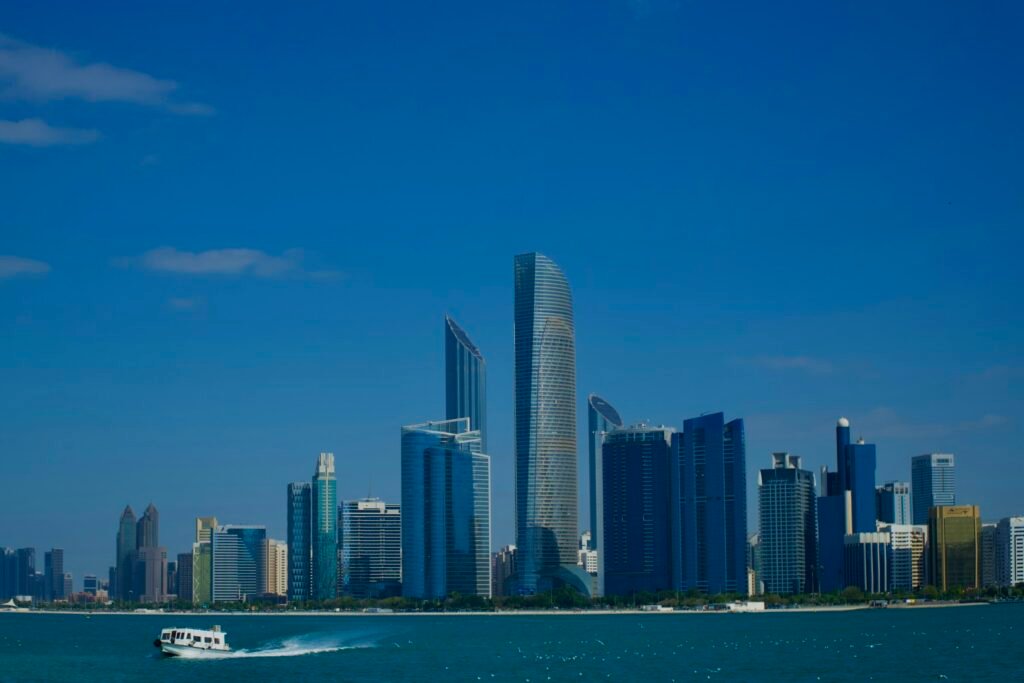
This note summarises how the centre was created, what happens to old ADCCAC clauses, the main features of the 2024 Rules and how they compare with the 2026 ICC Rules. It is written for parties negotiating Abu Dhabi contracts and for those holding older clauses that refer to the Abu Dhabi Chamber of Commerce.
From ADCCAC to arbitrateAD
According to the centre's own account, the Board of the Abu Dhabi Chamber of Commerce and Industry resolved on 30 November 2023, by Resolution No. 75, to reorganise and rename ADCCAC as the Abu Dhabi International Arbitration Centre. ADCCAC stopped accepting new cases on 1 February 2024, and from that date new cases are administered by arbitrateAD. Existing ADCCAC cases continue under the ADCCAC rules until they end or the parties agree to transition them.
The arbitrateAD Arbitration Rules (2024) deal expressly with older clauses. Article 1(1) applies the Rules where parties refer disputes to arbitration under the Rules, to the Centre or to the Abu Dhabi Chamber of Commerce. Article 1(2) applies them where parties agreed to arbitrate under the ADCCAC Rules, except that the emergency arbitrator and expedited provisions (Articles 35 and 36) do not apply unless expressly agreed. Article 1(3) applies the Rules to arbitrations commenced on or after 1 February 2024 unless otherwise agreed, and Article 53 keeps the 2013 ADCCAC Rules for arbitrations pending under them.
Institutionally, the Rules establish a Court of Arbitration that is independent of the Chamber (Article 3(2)), which appoints and replaces arbitrators, decides challenges, rules on joinder and consolidation, and scrutinises awards. Day-to-day administration sits with a Case Management Office and Secretariat.
The centre reports that it launched an Arabic version of its Rules and website in November 2025, which matters for Arabic-language proceedings with government-related parties. Where the parties have not agreed a language, the Case Management Office fixes the initial language and the tribunal decides once constituted (Article 23). Parties negotiating with Abu Dhabi entities should therefore agree the language expressly, together with any translation arrangements for documents and witness evidence, rather than leaving the point to be argued at the outset of the case.
Key Features of the 2024 Rules
Several provisions of the arbitrateAD Abu Dhabi centre Rules stand out for international users:
- Default seat (Article 22(2)). If the parties agree neither a seat nor a place, the seat is ADGM, unless the Court decides otherwise after hearing the parties. An agreed place of arbitration is treated as the seat.
- Tribunal size and nationality (Article 13). A sole arbitrator is the default unless the Court decides three are appropriate; a sole arbitrator or president must not share a party's nationality where the parties differ in nationality, unless all parties agree otherwise.
- Optional Terms of Reference (Article 24). The tribunal decides whether Terms of Reference are appropriate.
- Fast start (Article 25). The initial case management conference must take place within 21 days of transmission of the file.
- Time limit for the award (Article 38(3)). The award on the merits is due within nine months of the initial case management conference, extendable by the Court.
- Scrutiny (Article 40). Draft awards go to the Court, which may suggest modifications; no award is made without its approval.
- Early dismissal (Article 45). Claims or defences manifestly without legal merit, manifestly inadmissible or outside jurisdiction can be dismissed, normally within 30 days of the application.
- Funding disclosure (Article 48) and tribunal secretaries subject to party approval and independence requirements (Article 19).
Emergency Relief and Multi-Party Cases
Article 35 allows a party to apply for an emergency arbitrator before the tribunal is constituted, whether or not it has filed its Request. The Court appoints the emergency arbitrator if it is prima facie satisfied that the Centre has jurisdiction, and endeavours to do so within one day of receiving the application and the fee. The emergency arbitrator must rule within ten days of appointment, may act by order or award, and may grant preliminary measures before hearing the other side, with summary reasons.
If the applicant has not yet filed its Request, it must do so within 30 days of the decision, failing which the decision ceases to bind. The centre states that emergency applications are accepted only by a dedicated email address.
For complex projects, Articles 9 to 12 deal with multiple parties, claims under multiple contracts, joinder and consolidation. The Court decides requests for consolidation, which may be granted where all parties agree, where all claims are made under the same arbitration agreement, or where claims under compatible agreements arise from the same transaction or series of transactions, including a principal contract and its ancillary contracts, and consolidated cases proceed in the arbitration first commenced unless the Court decides otherwise. These tools resemble the ICC's own joinder and consolidation provisions, which makes it easier for construction and energy parties to use either institution for chains of related contracts.
Illustration: a hypothetical contractor on an Abu Dhabi infrastructure project holds a main contract referring disputes to the Abu Dhabi Chamber of Commerce and a later subcontract with an arbitrateAD clause. When the employer withholds payment, the contractor wants urgent relief to stop a call on its performance bond. Under the main contract, which predates arbitrateAD, the emergency arbitrator provisions do not apply unless expressly agreed, so the contractor may need to seek interim relief from a competent court instead. Under the subcontract, an emergency arbitrator is available. Aligning both clauses at signing would have avoided the mismatch.
The arbitrateAD Abu Dhabi Centre and ICC Compared
The table compares the arbitrateAD Abu Dhabi centre Rules with the 2026 ICC Rules, which apply to ICC arbitrations commenced on or after 1 June 2026. The similarities are deliberate; the differences lie in thresholds, timing and track record.
| Issue | arbitrateAD Rules 2024 | ICC Rules 2026 |
|---|---|---|
| In force | 1 February 2024 | 1 June 2026 |
| Default seat | ADGM unless the Court decides otherwise (Art. 22(2)) | Fixed by the ICC Court (Art. 19(1)) |
| Default tribunal | Sole arbitrator unless the Court decides on three (Art. 13(4)) | Sole arbitrator unless the Court decides on three (Art. 13(2)) |
| Terms of Reference | At the tribunal's discretion (Art. 24) | No longer mandatory; first case management conference within 30 days |
| Time for final award | Nine months from initial CMC, extendable (Art. 38(3)) | Fixed by the President of the Court (Art. 34) |
| Expedited procedure | Automatic up to AED 9 million; award within four months of file transmission (Art. 36) | Automatic up to US$4 million for agreements from 1 June 2026; award within six months of the CMC (App. V) |
| Emergency arbitrator | Appointment targeted within one day; ruling within ten days of appointment (Art. 35) | Appointment normally within two days; order within 15 days of the file (App. IV) |
| Early dismissal | Manifest lack of legal merit, inadmissibility or jurisdiction (Art. 45) | Manifestly without merit or outside jurisdiction (Art. 30) |
| Award scrutiny | By the arbitrateAD Court (Art. 40) | By the ICC Court (Art. 37) |
The ICC also offers an opt-in Highly Expedited Arbitration under Appendix VI, with an award due within three months of the case management conference, and its expedited procedure thresholds depend on when the arbitration agreement was concluded. At the dirham's long-standing peg to the US dollar, arbitrateAD's AED 9 million threshold equates to roughly US$2.5 million, so the ICC's automatic expedited track for new agreements now reaches larger claims, while arbitrateAD promises a faster final award.
Choosing Between arbitrateAD and ICC
Neither institution is better in the abstract. The arbitrateAD Abu Dhabi centre may suit domestic or regional disputes with Abu Dhabi government-related entities, contracts already referring to the Abu Dhabi Chamber, and parties who value a local institution with Arabic-language capability and an ADGM default seat. Its fees are payable in AED under its schedule of fees, which some parties find simpler.
ICC arbitration may suit larger cross-border disputes, multi-party projects with counterparties from several regions, and cases where enforcement is expected in many jurisdictions. The ICC brings a long track record, a global arbitrator pool, a Secretariat office in Abu Dhabi and published statistics: the ICC Dispute Resolution 2025 Statistics report 90 UAE parties in cases filed in 2025 and 19 ICC arbitrations seated in the UAE. Our insight comparing ICC, LCIA and SIAC sets out a wider institutional comparison.
If your contract refers disputes to "the Abu Dhabi Chamber of Commerce" or to the ADCCAC rules, assume it now leads to arbitrateAD under its 2024 Rules, but without the emergency arbitrator and expedited provisions unless you expressly agreed them. If you want those tools, or prefer ICC arbitration, amend the clause before a dispute arises.
Drafting an arbitrateAD or ICC Clause
Whichever institution you choose, name the seat expressly. The arbitrateAD model clause invites the parties to specify "Abu Dhabi Global Market (ADGM), or other City/Country", along with the number of arbitrators, language and governing law, and offers optional wording to opt out of the emergency arbitrator and expedited provisions. For ICC arbitration, the ICC model clauses should be supplemented with the seat, language and governing law. If you choose ADGM as the seat under either set of rules, the ADGM Arbitration Regulations will govern the arbitration and the ADGM Courts will supervise it.
Parties should also check authority. Onshore UAE courts have historically scrutinised whether the signatory had authority to agree to arbitration, and contracts with government-related entities may require internal approvals. These issues arise regardless of the institution chosen, so they belong on every Abu Dhabi signing checklist. Dubai-based parties may also wish to compare arbitrateAD with DIAC, discussed in our insight on the DIAC Arbitration Rules 2022.
How TRW & Co Helps With arbitrateAD Abu Dhabi Centre Cases
We advise on institutional choice for Abu Dhabi contracts, including whether the arbitrateAD Abu Dhabi centre or ICC arbitration better fits the transaction, and we draft and amend clauses accordingly. We act for claimants and respondents in arbitrateAD, ICC and other proceedings, including emergency and expedited applications, early dismissal requests and related court work in ADGM and onshore, alongside registered local practitioners where required.
Our Dubai office works with colleagues in London, Singapore, New York, Delhi and Dhaka on cross-border enforcement planning. To discuss a clause or a dispute, please contact our team.
Frequently asked questions
What happened to ADCCAC?
The Abu Dhabi Chamber of Commerce and Industry reorganised and renamed ADCCAC as the Abu Dhabi International Arbitration Centre (arbitrateAD) by a Board resolution of 30 November 2023. ADCCAC stopped accepting new cases on 1 February 2024, when arbitrateAD began operating. Cases already registered under the ADCCAC rules continue under those rules until they end or the parties agree to transfer them.
Does an old ADCCAC clause still work?
Yes. Article 1(2) of the arbitrateAD Rules applies the 2024 Rules where the parties agreed to arbitrate under the ADCCAC Rules, so new disputes are administered by arbitrateAD. However, the emergency arbitrator and expedited provisions in Articles 35 and 36 do not apply to those clauses unless the parties expressly agree. Parties wanting those tools, or a different institution, should amend the clause.
What is the default seat under the arbitrateAD Rules?
Under Article 22, an agreed place of arbitration is treated as the seat. If the parties have agreed neither a seat nor a place, the seat is ADGM, unless the arbitrateAD Court decides otherwise after giving the parties a reasonable opportunity to be heard. An ADGM seat brings the ADGM Arbitration Regulations and the ADGM Courts into play.
How does arbitrateAD expedited procedure compare with ICC?
arbitrateAD applies expedited proceedings automatically where claims and counterclaims together do not exceed AED 9 million, with a sole arbitrator and a final award within four months of file transmission. Under the 2026 ICC Rules, the expedited procedure applies automatically up to US$4 million for agreements concluded on or after 1 June 2026, with the award due within six months of the case management conference.
Can an arbitrateAD case be seated outside Abu Dhabi?
Yes. The parties may agree any seat, and the model clause invites them to specify ADGM or another city or country. Hearings and deliberations may also take place away from the seat. The seat determines the arbitration law and the supervising courts, so the choice should reflect where an award is likely to be challenged and enforced.
Sources
General information only, not legal advice. References to the ICC, the ICC Court and the ICC Rules describe their published rules and practice; TRW & Co is independent of the ICC.
 Middle East
 Energy Transition Disputes
Middle East energy transition disputes are growing with the region's hydrogen, solar, storage and grid programmes. We explain where claims arise, from EPC delays and technology… 9 min read
 Middle East
Onshore UAE Court Support for Arbitration
UAE onshore court support for arbitration rests on Federal Law No. 6 of 2018, as amended in 2023. We explain which Court of Appeal acts, how… 10 min read
 Middle East
Arbitration in Lebanon and Jordan
Lebanon and Jordan arbitration rests on two civil-law models: Lebanon's French-style Code of Civil Procedure and Jordan's Egyptian-inspired Arbitration Law No. 31 of 2001. This guide… 8 min read