
Hong Kong Arbitration Ordinance Guide
This Hong Kong Arbitration Ordinance guide explains how Cap. 609 supports ICC arbitrations seated in Hong Kong: its Model Law base, the optional Schedule 2 court review, emergency and interim relief, enforcement in the Mainland, third-party funding and outcome-related fee structures, and the law reform work under way in 2026.

Key takeaways
- Cap. 609, in force since 1 June 2011, applies one Model Law-based regime to all Hong Kong-seated arbitrations.
- Section 81 limits challenges to Model Law grounds within three months unless Schedule 2 applies.
- Schedule 2 adds appeals on law and serious irregularity challenges only on express or automatic opt-in.
- Emergency arbitrator relief is enforceable with leave under sections 22A and 22B.
- Outcome-related fee structures for arbitration have been fully permitted since 16 December 2022.
- A Department of Justice working group has been reviewing the Ordinance since late 2025.
Hong Kong Arbitration Ordinance Guide: The Essentials
This Hong Kong Arbitration Ordinance guide begins with the core structure. The Arbitration Ordinance (Cap. 609), in force since 1 June 2011, applies a single regime based on the UNCITRAL Model Law to both domestic and international arbitrations seated in Hong Kong, including ICC cases. Awards can be set aside only on Model Law grounds within three months, unless the parties have opted in to additional court review under Schedule 2. The Ordinance supports emergency relief, tribunal and court interim measures, confidentiality, third-party funding and, since December 2022, outcome-related fee structures for lawyers.
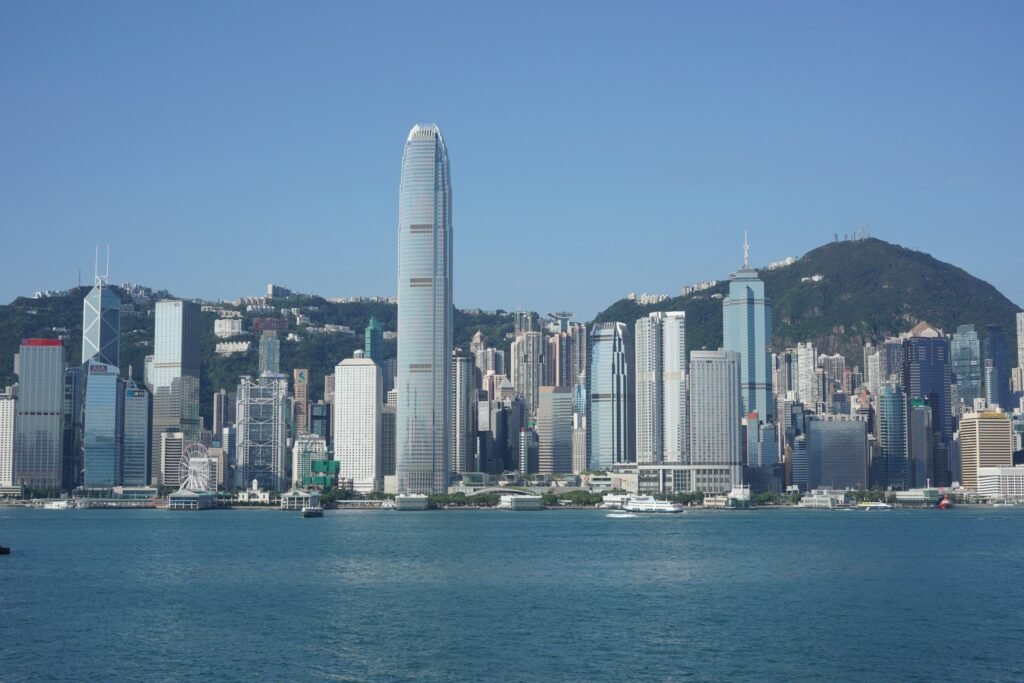
Hong Kong's position also rests on its arrangements with the Mainland, which allow Hong Kong-seated awards to be enforced in Mainland China and, for qualifying institutional arbitrations, interim measures to be sought from Mainland courts. A Working Group on Arbitration Law Reform, chaired by the Secretary for Justice, has been reviewing the Ordinance since late 2025. This guide explains the framework and what it means for ICC users.
The Model Law Base and Court Support
Cap. 609 gives effect to most articles of the Model Law, supplemented by Hong Kong-specific provisions. Key features include:
- Stay of proceedings. The court must refer parties to arbitration where an action is brought in breach of an arbitration agreement, unless the agreement is null and void, inoperative or incapable of being performed.
- Confidentiality. Section 18 prohibits the parties from publishing or disclosing information about the arbitral proceedings and the award, subject to limited exceptions, and court proceedings under the Ordinance are heard otherwise than in open court unless the court orders otherwise.
- Interim measures. The tribunal may grant interim measures under Part 6, and section 45 allows the Court of First Instance to grant interim measures in support of arbitrations seated in or outside Hong Kong.
- Emergency relief. Since 2013, sections 22A and 22B have made emergency relief granted by an emergency arbitrator enforceable with the leave of the court, whether the relief was granted in or outside Hong Kong. That covers orders made under Article 31 and Appendix IV of the 2026 ICC Rules.
- Arbitrability of IP disputes. Part 11A confirms that disputes over intellectual property rights may be resolved by arbitration.
Our page on court-ordered interim relief compares Hong Kong's court powers with those of other leading seats.
Tribunal Powers and Procedure Under the Ordinance
A practical Hong Kong Arbitration Ordinance guide must also cover what happens inside the arbitration. The Ordinance leaves procedure largely to the parties and the institutional rules, but it supplies default rules and powers that matter in ICC cases.
- Composition and challenges. The Model Law rules on appointment and challenge apply, supplemented by Hong Kong provisions. In an ICC case, the ICC Court handles appointments and challenges under the Rules, with the court's role limited to the safeguards the Model Law preserves.
- General powers. Unless the parties agree otherwise, the tribunal may order security for costs, direct discovery of documents, give directions on evidence and order preservation of property. It may also award interest and decide on costs, including by reference to the conduct of the parties.
- Arbitrators as mediators. Section 33 allows an arbitrator to act as a mediator with the written consent of all parties, while section 32 deals with the appointment of mediators. If the mediation fails, the arbitrator must disclose to all parties, before resuming the arbitration, any confidential information obtained during the mediation that the arbitrator considers material. Our note on Gao Haiyan v Keeneye shows why this safeguard matters.
- Enforcement of tribunal orders. Orders and directions made by a tribunal, in or outside Hong Kong, can be enforced with the court's leave in the same manner as a court order.
These powers sit alongside the ICC Rules rather than replacing them. For example, the 2026 Rules make the first case management conference mandatory and provide for early determination of manifestly unmeritorious claims; nothing in Cap. 609 prevents an ICC tribunal from using those tools in a Hong Kong-seated case, provided it treats the parties equally and gives each a reasonable opportunity to present its case.
Setting Aside and the Schedule 2 Opt-In Provisions
Section 81 adopts Article 34 of the Model Law as the exclusive recourse against an award, subject to Schedule 2. The grounds are the familiar ones: incapacity or invalid agreement, lack of notice or inability to present one's case, excess of jurisdiction, irregular composition or procedure, non-arbitrability and public policy. The application must be made within three months of receipt of the award.
Hong Kong courts read these grounds narrowly. In C v D [2023] HKCFA 16, the Court of Final Appeal held that compliance with a pre-arbitration escalation step is presumptively a question of admissibility for the tribunal, not a jurisdictional question for the court, so it cannot ordinarily found a set-aside application. Our note on C v D and escalation clauses explains the reasoning.
Even where a ground is made out, the court retains a discretion and may decline to set aside an award if the breach could not have affected the outcome. The public policy ground is reserved for awards whose enforcement would offend the most basic notions of morality and justice in Hong Kong. Article 34(4) of the Model Law also allows the court to suspend set-aside proceedings so that the tribunal can eliminate the grounds for setting aside, a useful alternative where the defect is curable. Anyone using this Hong Kong Arbitration Ordinance guide to assess a challenge should therefore focus on prejudice and outcome, not merely on whether an irregularity occurred.
Schedule 2 contains optional provisions that give the court additional powers. They allow the court to consolidate arbitrations, to decide a preliminary question of law, to set aside an award for serious irregularity, and to hear an appeal on a question of law, generally with leave. Under sections 99 to 103 these provisions apply in two ways:
| Route | When Schedule 2 applies | Relevance to ICC users |
|---|---|---|
| Express opt-in (s.99) | The arbitration agreement expressly provides that some or all Schedule 2 provisions apply | Rare in international ICC clauses; must be a deliberate choice |
| Automatic application (s.100) | Agreements made before, or within six years after, 1 June 2011 that provide for "domestic arbitration" | The six-year window closed on 1 June 2017; check older domestic-style clauses |
| No opt-in | All other agreements | Only the Model Law grounds under s.81 are available |
The ICC waiver of recourse in Article 38(3) of the Rules sits comfortably with this structure: section 81 is the only route for most ICC awards, and parties who want an appeal on a question of law must expressly opt in to the relevant Schedule 2 provision.
Enforcement, the Mainland and Macao
Part 10 of the Ordinance deals with enforcement. Hong Kong awards, New York Convention awards, Mainland awards and Macao awards each have their own division, and enforcement in Hong Kong requires the leave of the court. Grounds for refusing enforcement follow the New York Convention model.
Hong Kong courts treat enforcement as close to a mechanical process. Applications for leave are made without notice, and the award debtor may then apply to set aside the order granting leave within a short period. Even where a ground for refusal is established, the court retains a residual discretion to enforce, and it expects parties to raise objections during the arbitration rather than hold them in reserve for the enforcement stage. A party that participated in the arbitration without objecting to a procedural irregularity will find it difficult to rely on that irregularity later. Courts have also signalled that unsuccessful challenges to enforcement may attract costs on an indemnity basis, which raises the price of tactical resistance.
Because Hong Kong and the Mainland are parts of the same country, the New York Convention does not apply between them. Instead, the 1999 Arrangement Concerning Mutual Enforcement of Arbitral Awards, as amended by a 2020 Supplemental Arrangement, governs reciprocal enforcement. The Supplemental Arrangement permits simultaneous enforcement applications in both places and covers preservation measures before or after enforcement proceedings. A separate Arrangement, in effect since 1 October 2019, allows parties to Hong Kong-seated arbitrations administered by qualifying institutions to apply to Mainland courts for preservation of assets, evidence or conduct. The Department of Justice publishes the texts of these arrangements with the Mainland.
For practical detail, see our notes on enforcing Hong Kong awards in the Mainland and the Mainland interim measures arrangement.
Funding and Outcome-Related Fees: A Hong Kong Arbitration Ordinance Guide to Part 10A and Part 10B
Part 10A of the Ordinance permits third-party funding of arbitration, subject to a Code of Practice for funders and disclosure obligations, including notice of the funding agreement and the funder's identity to the other parties and the tribunal. Our third-party funding guide sets out how this interacts with the funding disclosure provisions in the ICC Rules.
Part 10B, introduced by legislation passed in June 2022, allows lawyers to agree outcome-related fee structures for arbitration. The regime became fully operational on 16 December 2022, when the Arbitration (Outcome Related Fee Structures for Arbitration) Rules took effect. Three structures are permitted:
- Conditional fee agreements, with a success uplift not exceeding 100% of the benchmark fee;
- Damages-based agreements, with the lawyer's payment capped at 50% of the financial benefit obtained by the client; and
- Hybrid damages-based agreements, combining a reduced fee during the case with a damages-based payment, again capped at 50% of the financial benefit, with limits on what the client pays if no financial benefit is obtained.
The rules apply to arbitrations, including arbitrations seated outside Hong Kong where services are provided in Hong Kong, together with certain related proceedings. They are a meaningful option for claimants with strong cases but constrained budgets, and they can be combined with third-party funding. Respondents should be alert to their likely effect on settlement dynamics and on costs exposure.
If you use an outcome-related fee structure or third-party funding in a Hong Kong-seated ICC arbitration, plan the disclosures early. The Ordinance and its rules require notice of certain funding and fee arrangements, and the 2026 ICC Rules also require disclosure of funders and similar entities so that arbitrator conflicts can be checked. Late disclosure invites procedural disputes that distract from the merits.
Reform Agenda and Practical Points From This Hong Kong Arbitration Ordinance Guide
In late October 2025 the Department of Justice established a Working Group on Arbitration Law Reform, chaired by the Secretary for Justice, to review the Ordinance and recommend amendments to strengthen Hong Kong as an international arbitration centre. It held its first meeting on 17 November 2025. In September 2026 the Department launched a one-month consultation on draft amendments reflecting the Working Group's recommendations, grouped around speed and convenience, confidentiality, scope, and fairness and justice. At the time of writing those amendments had not been enacted, and users should check the latest position before relying on any proposed change in a clause or a live dispute.
Pending reform, the existing Ordinance already offers a mature framework. Points that recur in ICC practice include:
- Specify the seat as Hong Kong and avoid wording that could be read as merely choosing a hearing venue.
- Decide on Schedule 2 consciously. If you want an appeal on a question of law or court consolidation, opt in expressly; otherwise leave Schedule 2 out.
- Check older clauses. Agreements made before 1 June 2017 that refer to "domestic arbitration" may attract Schedule 2 automatically.
- Use the Mainland arrangements. Where the counterparty's assets are in the Mainland, confirm that the ICC office administering the case qualifies under the interim measures arrangement and build simultaneous enforcement into strategy.
- Respect confidentiality. Section 18 applies by default; draft disclosure carve-outs for lenders, insurers, auditors and funders, and remember that court proceedings may still result in published, anonymised judgments.
Illustration: a hypothetical Hong Kong trading company obtains an ICC award seated in Hong Kong against a Mainland manufacturer. It applies for leave to enforce in Hong Kong against a local subsidiary's receivables and, at the same time, applies to the competent Mainland intermediate people's court under the Supplemental Arrangement, while seeking preservation of the manufacturer's bank deposits there.
The total amount recovered across both jurisdictions cannot exceed the sum awarded, and each court applies its own grounds for refusal. Coordinating the applications, and keeping each court informed of steps in the other, is essential.
For a comparison with Singapore, see Singapore vs Hong Kong; for the wider framework, see our page on Hong Kong as a seat.
How TRW & Co Helps
We draw on this Hong Kong Arbitration Ordinance guide when advising clients on Hong Kong-seated ICC arbitrations and on disputes with Mainland counterparties. Our teams in Singapore, London, Dubai, New York, Delhi and Dhaka advise on clause drafting, Schedule 2 choices, emergency and interim relief, funding and fee arrangements, and enforcement strategy, working with Hong Kong solicitors and counsel where court proceedings are required and with Mainland-qualified lawyers for steps in the Mainland. We act for claimants and respondents. To discuss a Hong Kong-seated dispute or clause, contact our team.
Frequently asked questions
Does the Hong Kong Arbitration Ordinance follow the Model Law?
Yes. Cap. 609 gives effect to most articles of the UNCITRAL Model Law and applies a single regime to domestic and international arbitrations seated in Hong Kong. It adds Hong Kong-specific provisions on confidentiality, emergency relief, interim measures, funding and fee arrangements, and optional additional court review under Schedule 2.
Can I appeal a Hong Kong award on a point of law?
Only if Schedule 2 applies. Appeals on questions of law, and challenges for serious irregularity, are available where the parties have expressly opted in, or where an agreement made before 1 June 2017 provided for "domestic arbitration" and Schedule 2 applies automatically. Otherwise, section 81 limits recourse to the Model Law set-aside grounds.
Are ICC emergency arbitrator orders enforceable in Hong Kong?
Yes. Under sections 22A and 22B of the Arbitration Ordinance, emergency relief granted by an emergency arbitrator, whether in or outside Hong Kong, is enforceable in the same manner as an order of the court, with the court's leave. This covers orders made under the ICC Rules' emergency arbitrator provisions.
What outcome-related fee structures are allowed in Hong Kong arbitration?
Since 16 December 2022, lawyers may agree conditional fee agreements with an uplift of up to 100% of the benchmark fee, damages-based agreements capped at 50% of the client's financial benefit, and hybrid damages-based agreements subject to similar caps. The rules sit in Part 10B of the Ordinance and the related 2022 Rules.
How are Hong Kong awards enforced in Mainland China?
Through the 1999 Arrangement Concerning Mutual Enforcement of Arbitral Awards between the Mainland and Hong Kong, as supplemented in 2020, rather than the New York Convention. The Supplemental Arrangement allows simultaneous applications in both places. A separate arrangement in effect since 1 October 2019 allows qualifying institutional arbitrations to seek Mainland interim preservation measures.
Sources
- Arbitration Ordinance (Cap. 609), Hong Kong e-Legislation
- HKSAR Government press release on the Outcome Related Fee Structures for Arbitration Rules (9 November 2022)
- HKSAR Government press release: first meeting of the Working Group on Arbitration Law Reform (17 November 2025)
- Department of Justice: arrangements with the Mainland
- ICC 2026 Arbitration Rules (iccwbo.org)
General information only, not legal advice. References to the ICC, the ICC Court and the ICC Rules describe their published rules and practice; TRW & Co is independent of the ICC.
 Seats & Comparisons
ICC Hearing Centres and Venues
ICC hearing centres Paris Singapore and São Paulo are the venues most often considered for ICC hearings. We explain what the ICC's own Paris and São… 9 min read
 Seats & Comparisons
Seat Choice When Sanctions Are a Risk
Seat choice for sanctioned counterparties decides which sanctions laws apply, whether courts can stop parallel litigation and whether an award can be paid. We explain Russia's… 10 min read
 Seats & Comparisons
Choosing a Neutral Seat in Asia-Europe Contracts
Finding a neutral seat for Asian and Western parties is one of the hardest points in negotiating an ICC clause. We compare Singapore, Hong Kong, London,… 10 min read